






- The Wall Street Journal says builders face higher costs across materials, labor, services, borrowing and regulation, and some are cutting production as demand stays stagnant.
- UBS estimated tariffs then in place add about $8,200 to the cost of every home, while Owens Corning raised shingle prices up to 8% in April and 6% to 9% in June.
- Builders have reported tighter credit for 18 straight quarters, per NAHB, and Congress’s new housing law doesn’t directly loosen the local rules where regulation is most stringent.
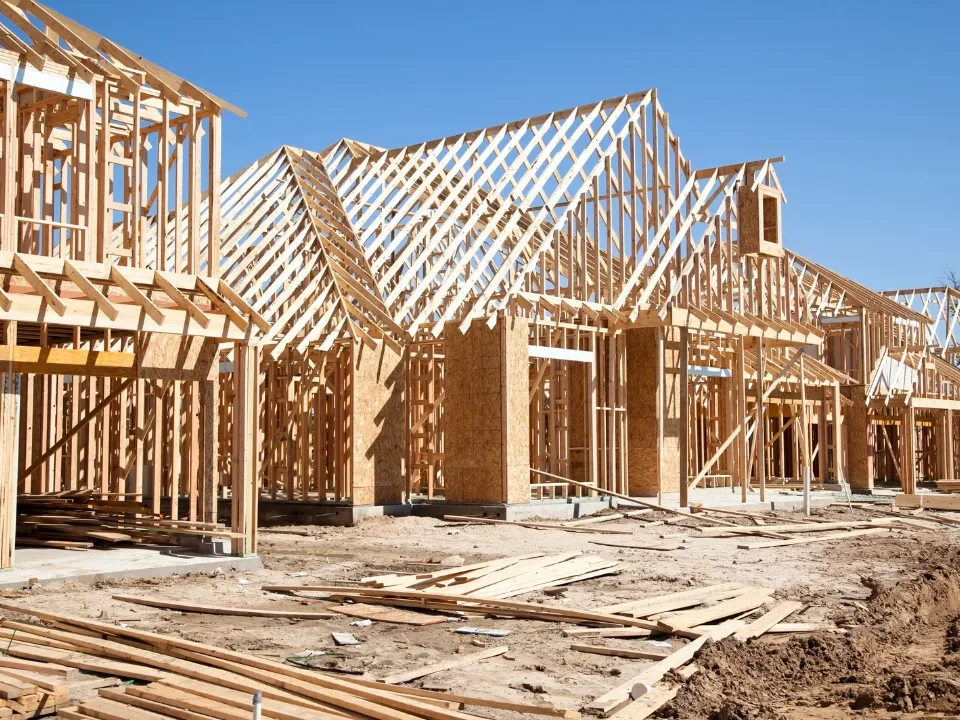
Building a house is getting more expensive on every front, and The Wall Street Journal says the home building costs squeeze is already cutting production.
Tariffs, the Iran war, the AI build-out and pricier borrowing have raised the cost of materials, labor and debt. Efforts to ease regulation haven’t fixed it.
Get Smarter about what matters in CRE
Stay ahead of trends in commercial real estate with CRE Daily – the free newsletter delivering everything you need to start your day in just 5-minutes
Materials
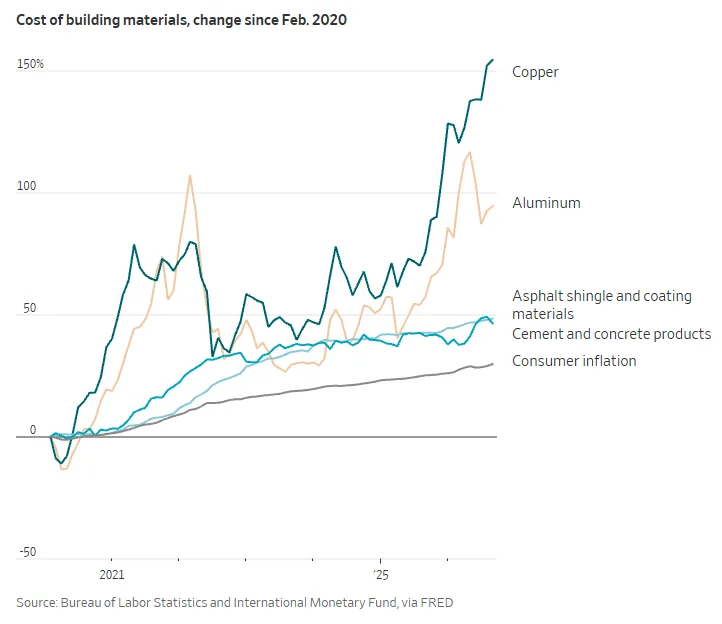
Tariffs have lifted prices across drywall, windows and lumber. A 50% levy on aluminum imports, plus higher energy bills, has pushed that metal up sharply.
In a September estimate, UBS put the tariffs’ toll at about $8,200 per home.
Shingles, PVC pipe and other petroleum-based inputs have jumped with the Iran conflict. Owens Corning lifted shingle prices by as much as 8% in April, then 6% to 9% more in June. Data center demand is also heating up copper.
Labor and Logistics
Skilled trades are being pulled toward data centers, which need electricians and HVAC technicians in bulk. Many workers are choosing those projects over homes.
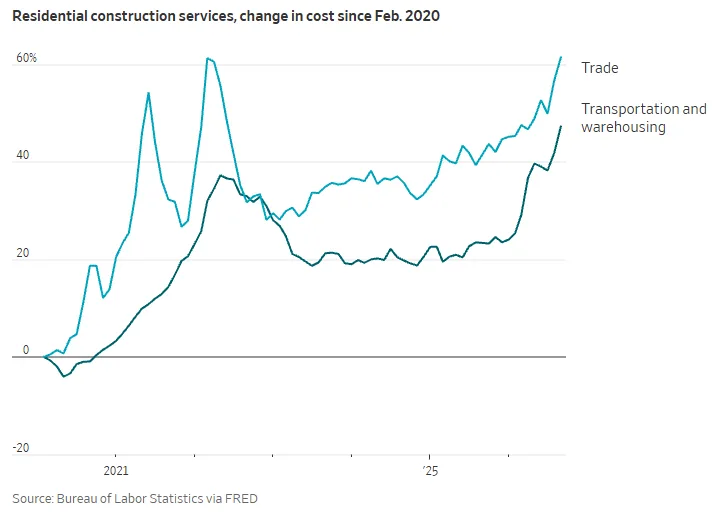
The immigration crackdown has also thinned some builders’ crews, forcing higher pay for remaining workers and delays that add interest, equipment and insurance costs.
Record diesel prices raise delivery costs for everything from plywood to concrete, and wholesalers face tariff and energy costs of their own.
Rates and Rules
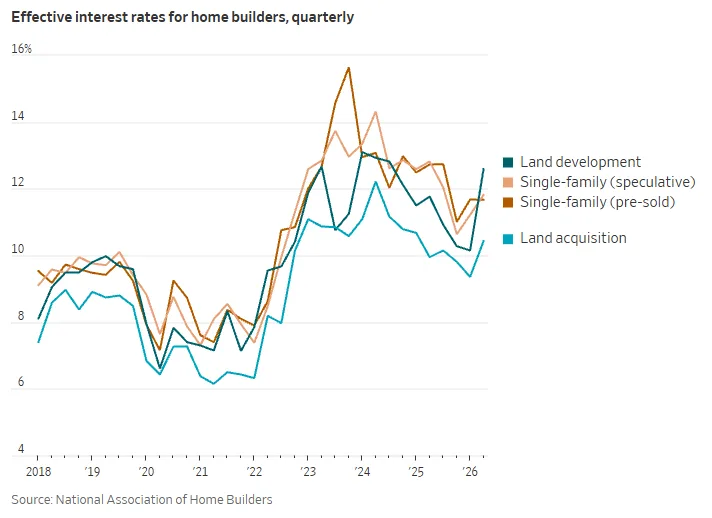
Higher mortgage rates cut demand and force builders into costly rate buydowns. Credit conditions have tightened for 18 straight quarters, builders told a National Association of Home Builders survey.
Public builders’ longer-term corporate debt is getting pricier too, as the 10-year Treasury yield sits at multidecade highs.
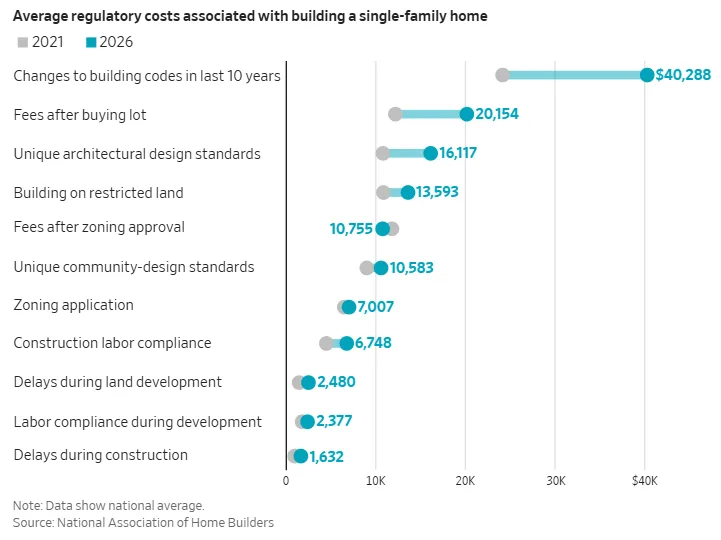
Congress passed its largest housing package in decades this year, but it doesn’t directly loosen the local rules where regulation bites hardest. Voters in many places still oppose density, and new energy and fire codes add complexity.
Why It Matters
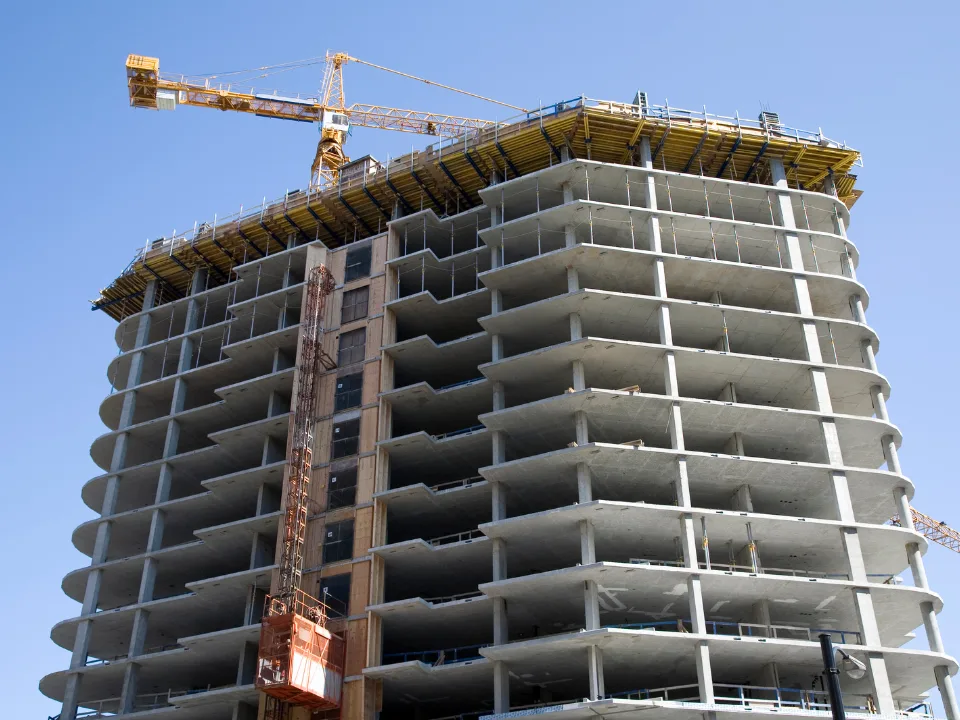
The cost squeeze is already thinning the pipeline. Marcus & Millichap’s outlook, covered in our brief on shrinking construction pipelines, found apartment construction running 50% below its 2023 high and industrial 60% under its 2022 peak.
For owners of existing buildings, that means less competing supply later.
What’s Next
The supply effect is showing up in the numbers. RealPage counted about 82,000 apartment completions in Q3, roughly half the peak, as we reported in our apartment completions brief.
Watch tariffs, energy prices and the 10-year yield. Until one of them eases, builders will keep pulling back.