






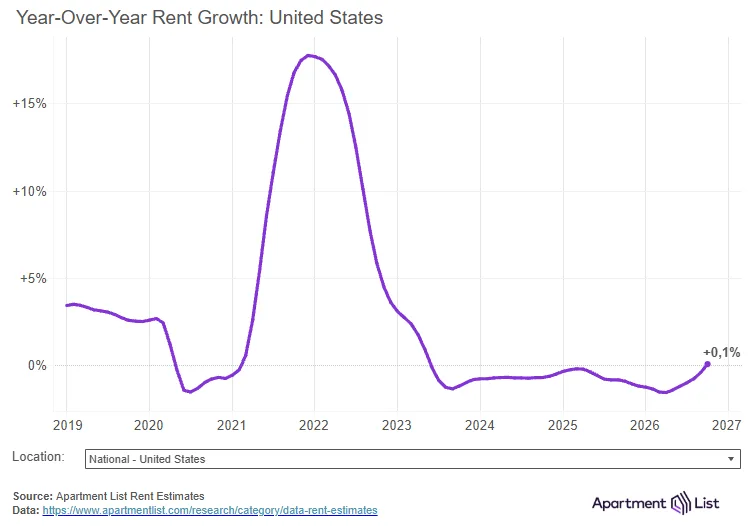
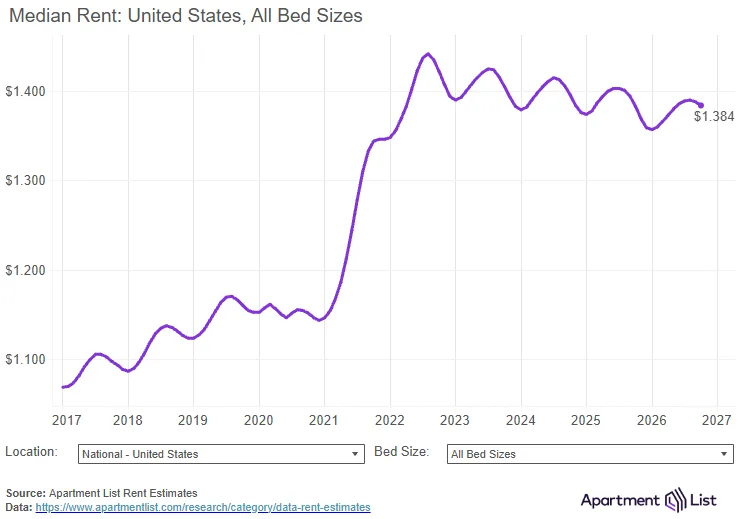
- National median rent hit $1,384 in October, up 0.1% from a year earlier, the first annual gain since mid-2023, after bottoming at -1.6% in April.
- Vacancy eased to 7.0% from a 7.3% February peak, yet 32% of properties offer a month or more of free rent and leasing takes 36 days.
- Sun Belt declines are narrowing while San Francisco and San Jose surge, pointing to a rental market that is stabilizing but not yet tight.
Annual apartment rent growth is positive again, ending a streak of declines that began in mid-2023, though only barely, according to Apartment List’s October report.
The national median is $1,384, up 0.1% on the year. In dollars, that is a gain of about $1.
Get Smarter about what matters in CRE
Stay ahead of trends in commercial real estate with CRE Daily – the free newsletter delivering everything you need to start your day in just 5-minutes
A Mild Off-Season
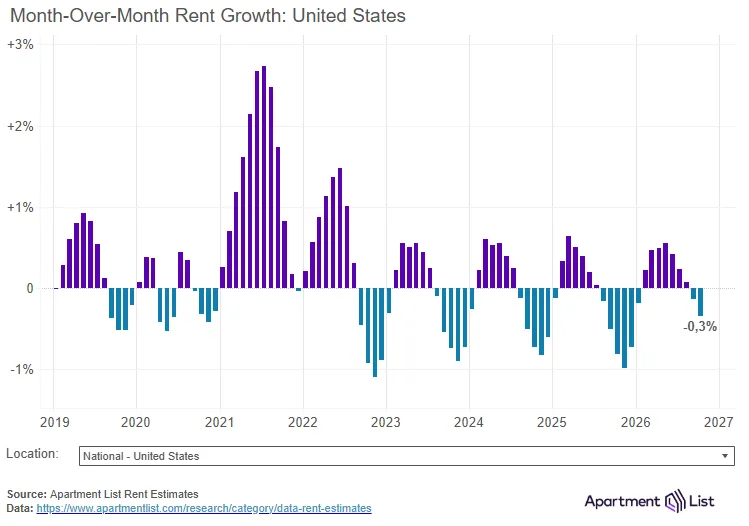
From September, rents slipped 0.3%, the second straight monthly decline. That is a normal fall dip, and a gentle one.
October 2025 fell 0.8%, and the pre-pandemic 2017-2019 stretch averaged a 0.4% drop. Annual growth bottomed at -1.6% in April before climbing back.
Rents remain about 4%, or $58 a month, under their mid-2022 peak. The median one-bedroom is $1,215 and the two-bedroom $1,369.
Softness Hasn’t Gone Away
Vacancy dropped to 7.0% from February’s 7.3%, the loosest reading since the firm began tracking in 2017. It is still above the 6.4% average of 2017 to 2019.
Apartment List also launched a concessions measure this month. It shows 32% of properties offering at least a month of free rent, versus 28% a year ago.
Units took 36 days to lease, the slowest October since tracking began in 2019.
Sun Belt Steadies, Bay Area Surges
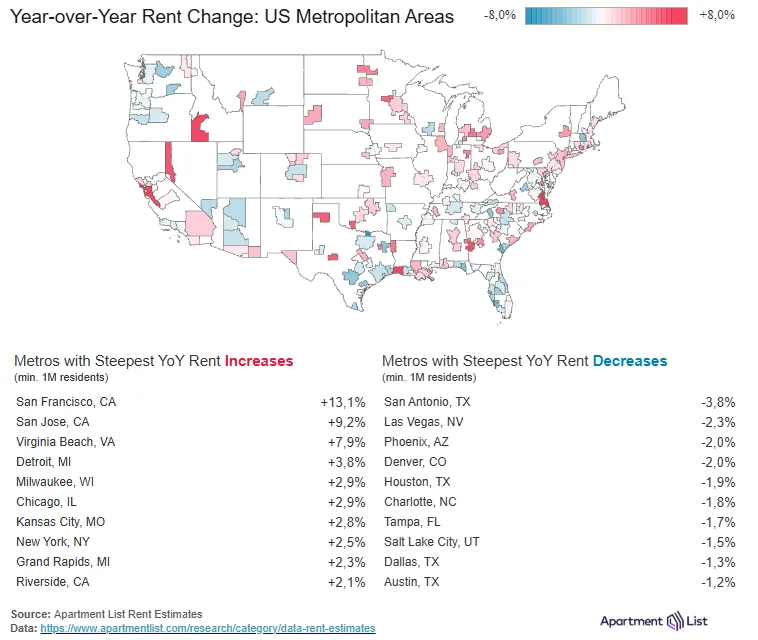
Between September and October, rents declined in 45 of the 55 large metros, yet 35 are up from last year. San Antonio has the steepest annual drop at 3.8%.
Austin is down just 1.2%, a big improvement from a 6.2% slide in 2025, as new building tapers and vacant units fill. Charlotte, Tampa, Phoenix and Denver still post some of the largest declines, though smaller than in January.
At the other end, the San Francisco and San Jose metros are up 13% and 9% on AI-driven hiring, and San Francisco proper is up 24%. Detroit, Milwaukee, Chicago and Kansas City fill out most of the rest of the top 10 with steady gains.
Why It Matters
The supply wave is fading. Apartment List says 2024 brought more than 600,000 new multifamily units, the most since 1986, and deliveries have slowed since.
CRE Daily’s brief on Q3 RentPulse showed the same split: national vacancy at 7.8%, the lowest since late 2023, even as concessions rose and Austin’s discount rate stayed among the highest.
What’s Next
Apartment List forecasts that 2026 will end as the first full year of rent gains since 2022, with 2027 following suit. The risks are soft sentiment and sticky inflation, though rising mortgage rates could keep would-be buyers renting.