






- U.S. coworking grew 2.4% to 9,612 locations in Q3, a net gain of 228, as footprint rose 1.2% to 168.36M SF, and flex now makes up about 2.5% of office inventory.
- The West led growth with 72 new locations, Portland and Jacksonville were the fastest-growing markets, and Manhattan passed Washington, D.C. for fourth in locations as D.C. lost five.
- Average space size shrank for a third straight quarter to 17,515 SF and the top five brands hold just 24% of locations, so the market is growing through small, independent operators.
U.S. coworking grew by a net 228 locations in Q3 2026, ending at 9,612, a 2.4% gain, according to CoworkingCafe’s report.
Footprint grew 1.2% to 168.36M SF, and flex space is now about 2.5% of office inventory, up from 2.34% in Q2.
Get Smarter about what matters in CRE
Stay ahead of trends in commercial real estate with CRE Daily – the free newsletter delivering everything you need to start your day in just 5-minutes
Growth Cools, and Spreads
Quarterly location growth has stepped down from 3.2% to 2.7% to 2.4% across the first three quarters, and square footage growth went 2.9%, 1.5%, 1.2%.
The top 50 markets still hold 77% of locations and 86% of square footage, but smaller markets grew too.
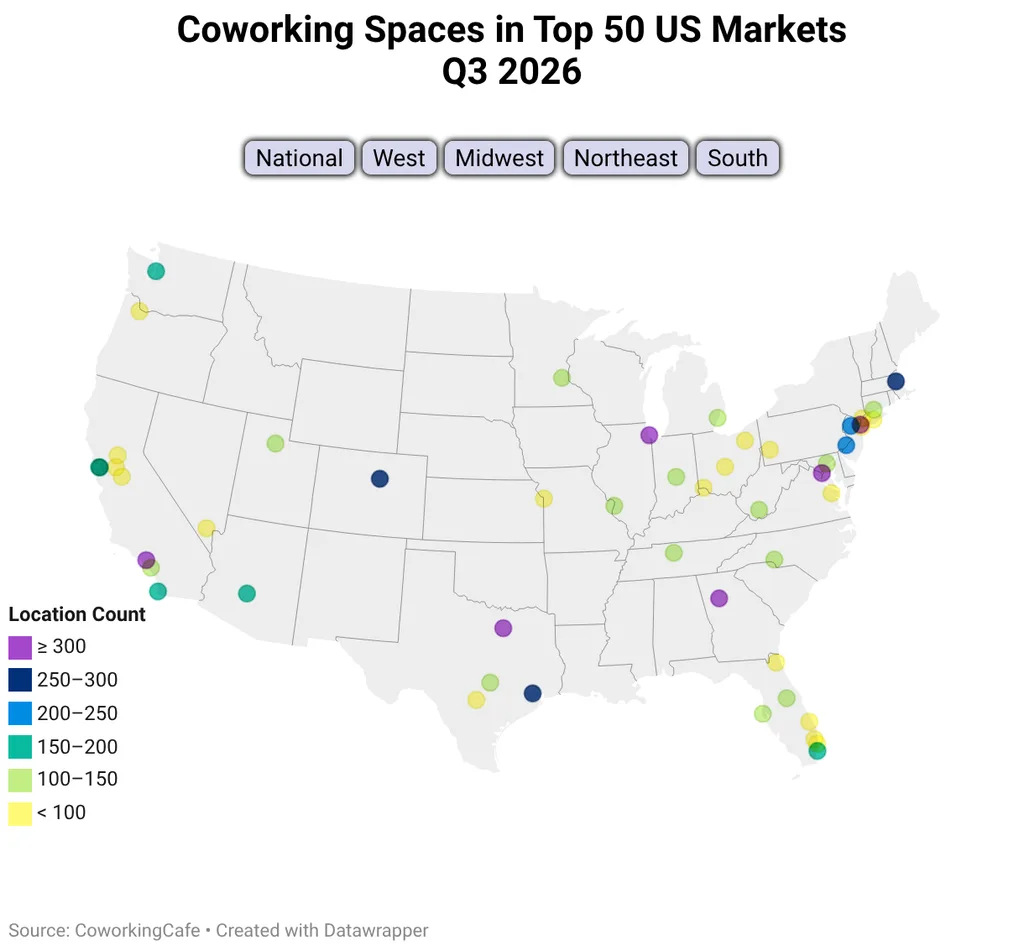
The West led by region, with 72 new locations (up 3.5%) and 40.22M SF in total. The Northeast alone shed space, down 0.6% to 33.22M SF as Manhattan and Pittsburgh contracted.
Who Moved
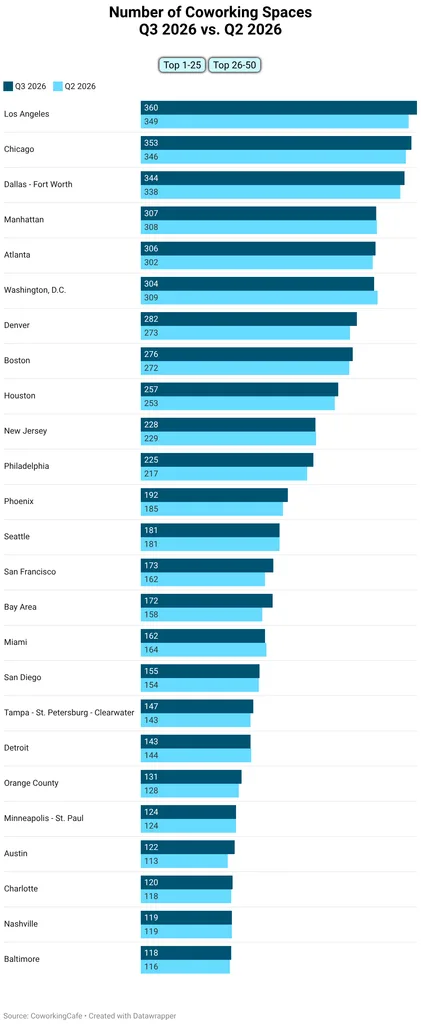
L.A. still leads with 360 locations after adding 11. Chicago has 353 and Dallas-Fort Worth 344. Manhattan, at 307, passed Washington, D.C. for fourth, and Atlanta (306) also edged ahead of D.C.
Portland led the top 50 in growth, adding eight locations for a 10.1% gain. The Bay Area added 14, the most of any market, and Jacksonville rose 9.4%.
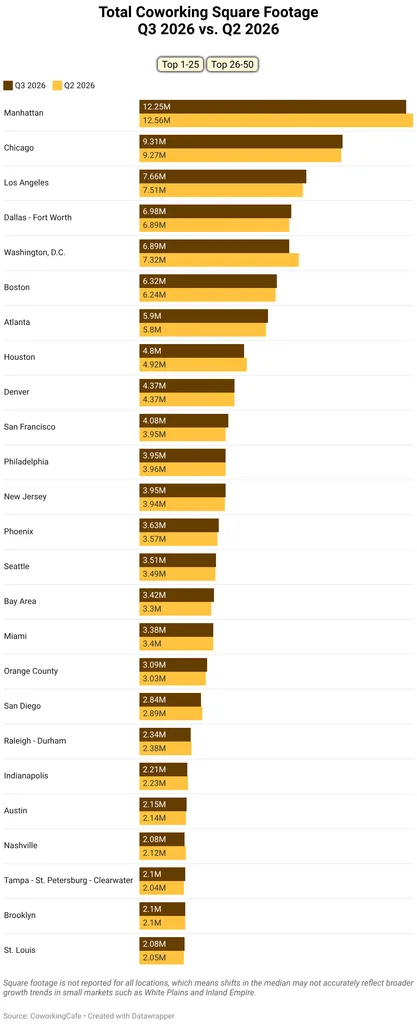
Manhattan still has the biggest footprint at 12.25M SF. D.C. lost about 438,000 SF, down 6%, the largest decline.
Smaller Spaces, Steady Prices
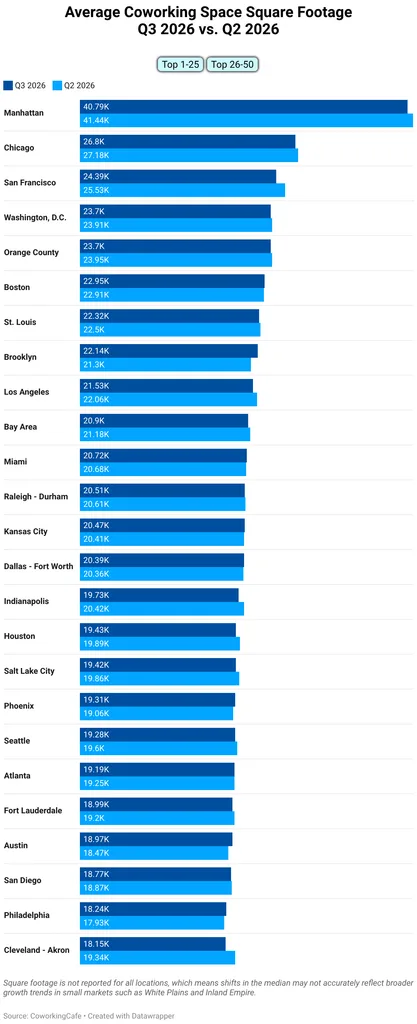
Average space size fell for the third quarter running, by 1.2% to 17,515 SF, as new openings run small. Manhattan averages 39,888 SF.
Pricing held. The median membership stayed at $219 a month and virtual offices at $169. Day passes fell from $34 to $30.
Brands Versus Independents
The five largest operators netted 91 spaces, up 4.2% to 2,275. Regus leads with 1,339. HQ grew fastest at 7.5%, adding 29 to reach 417, while WeWork slipped from 149 to 148.
Independent and regional operators still run about 76% of locations.
Why It Matters
The data lines up with another read. CRE Daily’s coverage of Hubble’s Q3 report put coworking inventory at the same 168.4M SF and the flex share of office stock at 2.5%.
Flex keeps winning small amounts of share every quarter, even as growth cools.
What’s Next
Yardi Research director Peter Kolaczynski points to management agreements and landlord-run flex brands behind some of the larger market swings, and Yardi is tracking that segment as buildings add flexible options.