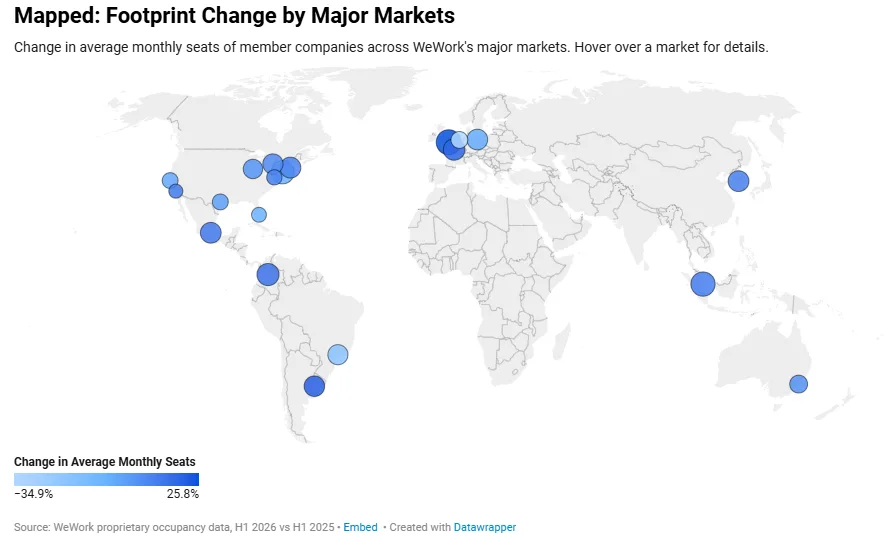




- Average company footprint at WeWork rose 9.9% to 11.5 seats in H1 2026, led by small businesses at 14.8% growth, and 14 of 20 major markets saw footprints grow.
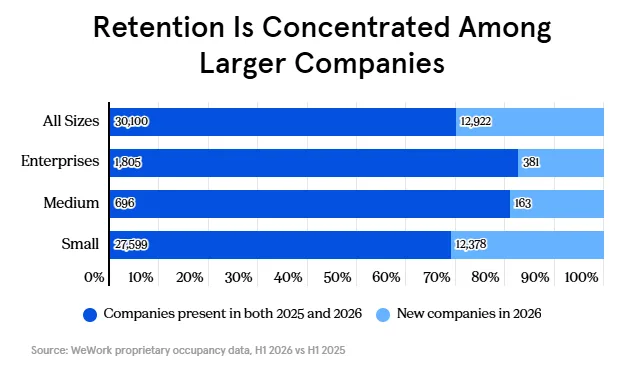
- Of 30,100 companies present in both periods, 81% kept or expanded space, and departures fell from 41% to 35%, about 6,500 fewer exits year over year.
- On Demand reservations rose 20.4% to 82,241 a month, which WeWork links to hybrid schedules of two to three office days a week.
Companies in WeWork’s network grew their average footprint 9.9% in the first half of 2026, according to WeWork Business Intelligence’s mid-year flex snapshot. Average space per company rose to 11.5 seats from 10.5 a year earlier.
The data compare H1 2025 with H1 2026 across 43,022 member companies and 20 major markets.
Get Smarter about what matters in CRE
Stay ahead of trends in commercial real estate with CRE Daily – the free newsletter delivering everything you need to start your day in just 5-minutes
Small Businesses Lead
Small businesses grew from 7.8 to 9.0 seats on average, up 14.8%. Enterprises expanded 5.6% from 105 to 111 seats, while mid-size firms held at about 33.
About 12,900 new companies joined the network, roughly 12,400 of them small businesses. Retention was 83% for enterprises, 81% for mid-size firms and 69% for small businesses.
Retention and Deal Size
Among 30,100 companies present in both periods, 81% kept or grew their space. Departures fell from 41% to 35%, about 6,500 fewer exits.
The average agreement covered 10.7 desks, up from 10.3, with an average term of 11 months.
Market by Market
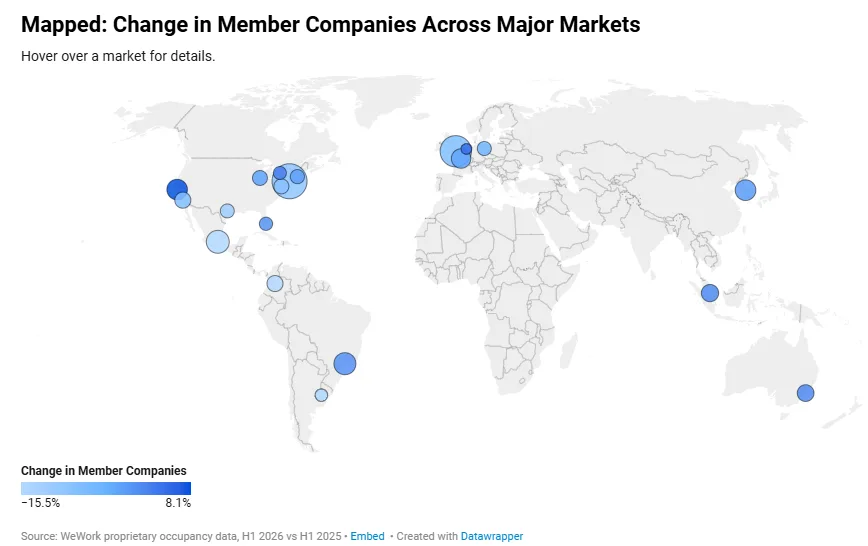
Footprints grew in 14 of 20 major markets, led by London at 26%, Buenos Aires at 21% and Paris at 19%. In North America, Los Angeles rose 13%, Washington, D.C., and Boston each rose 10%, and Toronto rose 8%.
San Francisco added 8% more companies, with enterprises up 11%. WeWork notes office vacancy there fell about 5 percentage points in a year. Miami had the highest share of companies retaining or expanding space at 91%.
On Demand Climbs
On Demand reservations averaged 82,241 a month, up 20.4% from 68,279, or about 14,000 more bookings monthly. WeWork ties the growth to hybrid work patterns, with most employees in the office two to three days a week.
London drove about 10,700 monthly reservations, and usage rose 70% in Amsterdam and 36% in Berlin.
Why It Matters
The data point to flex as a durable part of corporate real estate strategy, not just an overflow option. WeWork’s North America president Luke Robinson said even large enterprises are leaning on flex while reducing long-term commitments.
The figures come from WeWork’s own network, so they reflect its members rather than the broader office market.
What’s Next
WeWork’s EMEA president said flexible space is about 10% of central London offices and is expected to reach 20% by 2030. Watch whether landlords respond with more flex floors and shorter terms.