



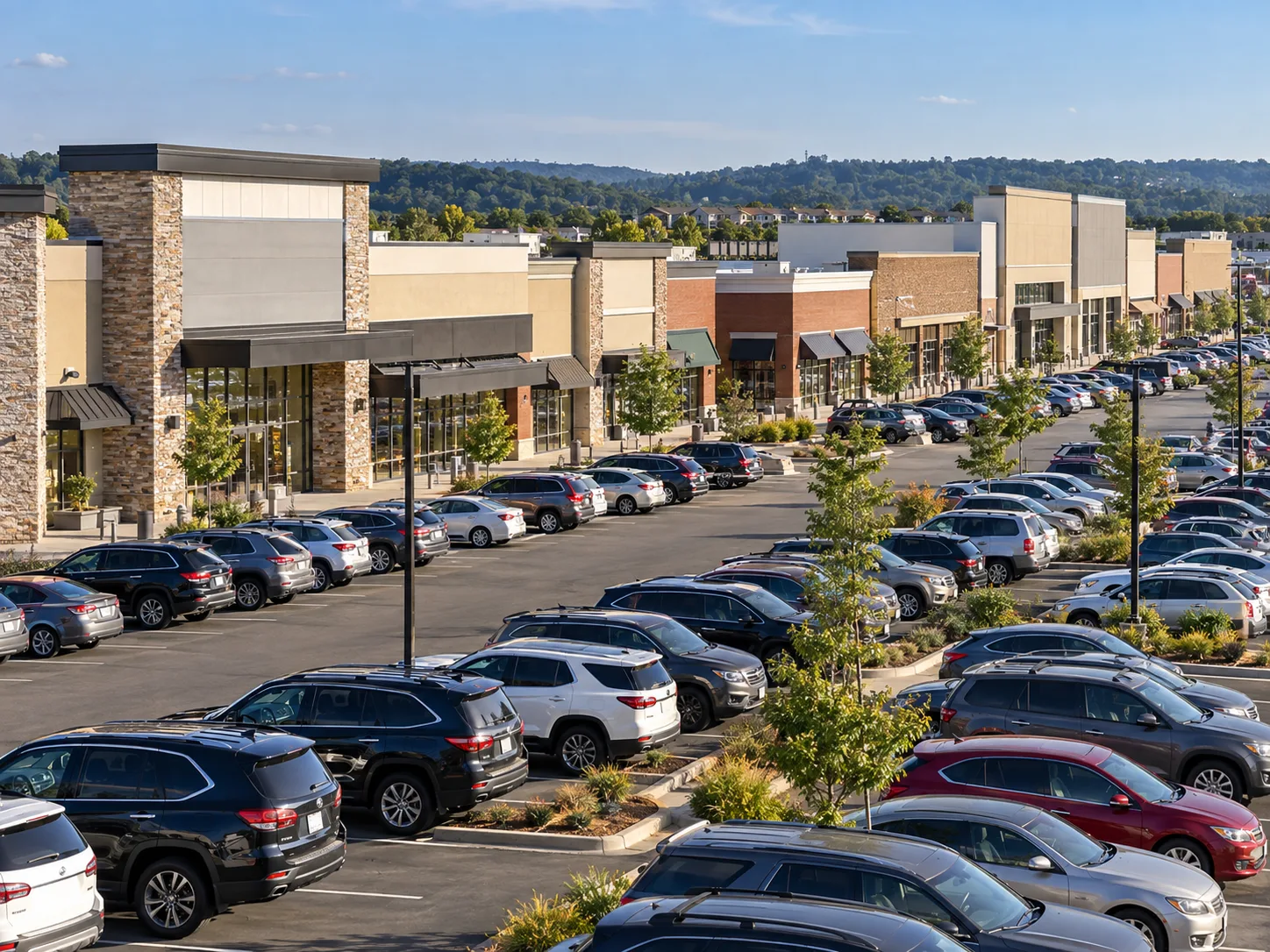
- US retailers posted a net gain of 127 stores through Aug. 28, adding 28.6M SF of occupied retail space.
- Retail recorded 10.2M SF of positive Q2 net absorption while vacancy remained near 4.4%.
- Q2 completions fell to a record-low 5.2M SF as construction costs continued to outpace rent growth across most markets.
Bisnow reports that US retail leasing and store growth are accelerating while new construction remains constrained. Coresight Research counted a net gain of 127 store openings through Aug. 28, representing 28.6M SF of newly occupied space. Through the same point in 2025, retailers had closed a net 1,954 stores. The reversal is strengthening demand for a limited pool of available properties.
Get Smarter about what matters in CRE
Stay ahead of trends in commercial real estate with CRE Daily – the free newsletter delivering everything you need to start your day in just 5-minutes
Retail Demand Turns Positive
JLL measured 10.2M SF of positive net absorption in the second quarter, compared with a roughly equal amount of negative absorption a year earlier. Grocers and discount retailers continue to expand, including Whole Foods, Aldi, Ross Dress for Less, and TJ Maxx. Specialty brands such as Fabletics and Warby Parker are also growing.
Bookstores have joined the rebound. The source notes 422 new independent bookstore openings alongside expansion by larger players such as Barnes & Noble. The mix shows that demand is broadening beyond the categories that carried retail through the earlier recovery.
The Details
Supply is not keeping pace. National retail vacancy is about 4.4%, while construction volume remains roughly 40% below 2016 levels. CBRE recorded only 5.2M SF of completions in the second quarter, a record low.
Economics are the main constraint. Average retail rent has increased 19% since the second quarter of 2020 to just under $25 PSF. Over the same period, common construction materials such as cement, lumber, and sheet metal have risen 30% to 60% from February 2020 levels, according to the Associated General Contractors of America. That gap makes many new projects difficult to justify.
Growth Markets Break From the National Pattern
Texas, Arizona, Florida, and Nevada are among the markets where population growth and less expensive land can still support development. JLL reported rent growth in the mid-2% range in Dallas and Houston, while Phoenix reached 4.3%. Dallas also has a retail construction pipeline about 40% larger than the national average.
South Florida remains a target for brands, especially in luxury retail, but new projects are increasingly preleased instead of speculative. Adirondack Capital Partners’ Brittany Feinberg said tenant demand is strong while available space remains limited. Miami’s luxury districts have become important targets for flagship stores. Even there, however, developers need committed tenants and strong rents before projects can justify today’s construction costs.
Why It Matters
Low vacancy is colliding with historically weak construction, limiting space for retailers that want to expand. That creates a landlord-favorable environment. Retailers must plan growth around existing availability, preleasing, and markets where rents can support higher development costs.
The demand base is also split across income segments. Discount stores represented 30% of 2026 openings through August, up from 28% in 2025. Aldi announced 173 openings and Ross Stores announced 103, totaling 5.6M SF. At the same time, luxury retail is expanding in select high-income markets. Coresight Managing Director John Harmon said higher-income consumers are also seeking value, while lower-income shoppers continue to depend on discount formats.
Investment Demand Follows Prime Retail
Retail investment sales reached $33B in 2026 through the period covered by the source, the strongest start since 2022. High-street properties are drawing particular attention. Boston’s Newbury Street recorded $162M across nine second-quarter deals, including a $60M Chanel flagship sale at nearly $6K PSF.
That investment appetite does not solve the development shortage. Outside select high-growth metros, owners still need rents high enough to offset inflated construction costs. Feinberg said developers increasingly need committed tenants in place before new projects can pencil.
What’s Next
Retailers are likely to keep competing for a constrained set of quality locations if store growth stays positive and construction remains weak. JLL expects high construction costs to persist, with data-center development also competing for labor and materials. The markets able to pair population growth, available land, and above-average rent gains should remain the most viable for new retail construction.