



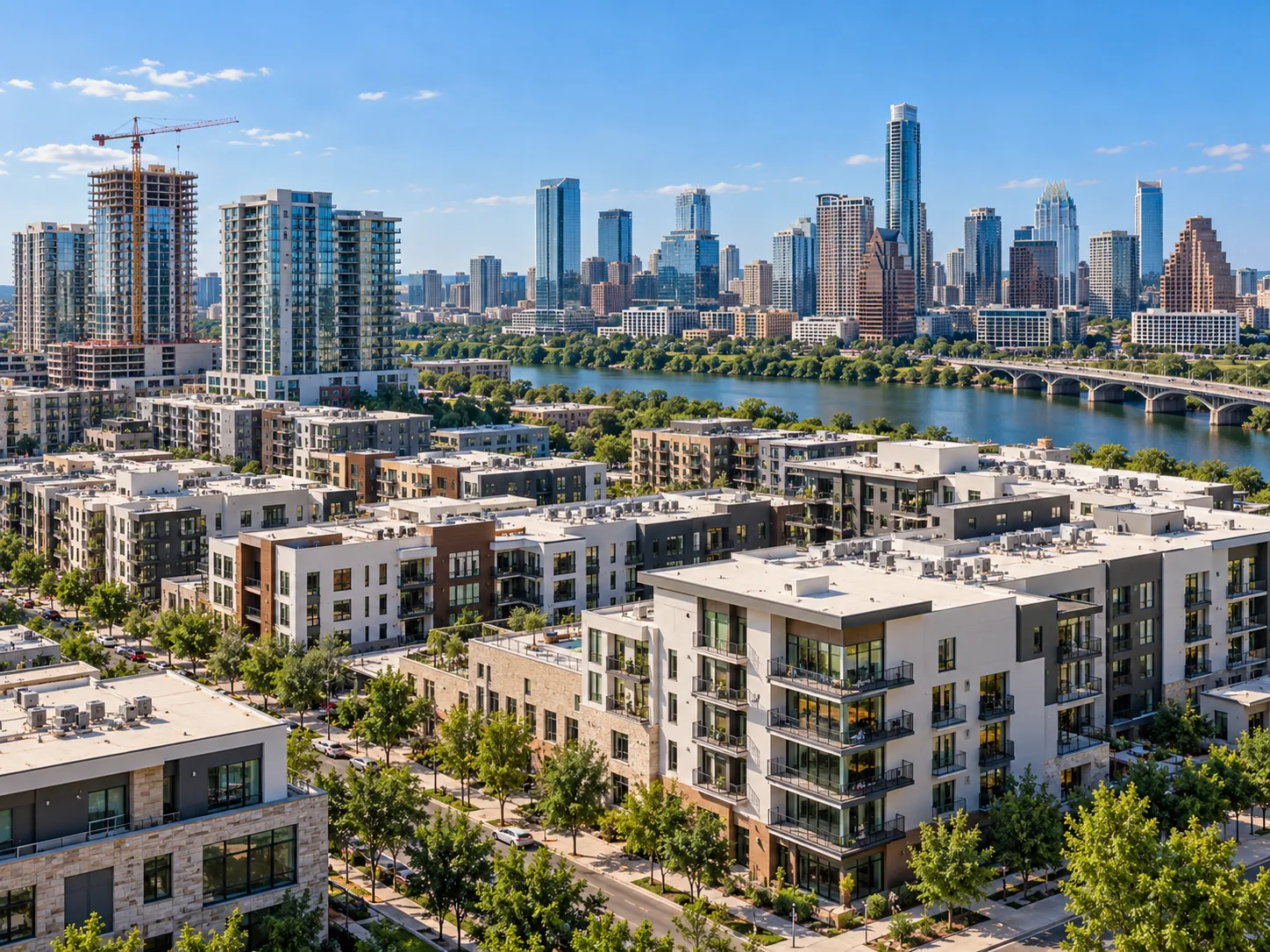
- Austin effective rents rose 1.8% in Q2 to $1,316 after 12 consecutive quarters of decline.
- Vacancy fell to 12.3% from a 15.8% peak in Q3 2024, while year-over-year effective rents remained down 3.9%.
- Analysts expect concessions and excess supply to burn off gradually, with stronger apartment fundamentals developing into 2027 and 2028.
Bisnow reports that Austin multifamily rents increased in the second quarter for the first time in three years. Northmarq measured a 1.8% quarterly rise in effective rents to $1,316 after 12 straight quarters of decline. The increase marks an early shift for a market still working through severe oversupply.
Get Smarter about what matters in CRE
Stay ahead of trends in commercial real estate with CRE Daily – the free newsletter delivering everything you need to start your day in just 5-minutes
Oversupply Defined the Downturn
Austin’s apartment inventory expanded about 33% from 2020 through 2025, according to Marcus & Millichap. Developers responded to rapid population and job growth with an aggressive building cycle. The resulting supply pushed vacancy higher and forced rents lower. Matthews Senior Associate Richard Waterhouse called Austin a national outlier for delivered supply. He also highlighted the depth of the rent declines.
Vacancy peaked at 15.8% in the third quarter of 2024. It fell to 12.3% by the second quarter of 2026, according to Matthews. Effective rents were still down 3.9% year over year after concessions. However, the decline improved from 7.4% a year earlier.
The Details
Analysts increasingly see the market near an inflection point as deliveries slow and excess inventory clears. JLL Managing Director Ryan McBride said the second-quarter increase was the first quarter-over-quarter rent growth since fall 2022. He expects apartment fundamentals to improve further in 2027 and 2028.
Waterhouse expects rental rates to be flat to slightly positive over the next 12 months before steadier growth follows. Some developers are more bullish. Presidium Group co-CEO Cross Moceri said Austin could see double-digit rent growth within 36 months. He also acknowledged that several pressures would need to reverse.
Concessions Still Shape Effective Rents
The recovery is not uniform across Austin. East Austin has about 2,473 units under construction, equal to 14.4% of inventory, according to Matthews. Crescent Communities’ Marcy Phillips said that supply could delay rent growth in the submarket.
Concessions also remain widespread. RealPage Market Analytics found that 37% of stabilized Austin units offered concessions in July. That was the highest share among individual US markets. The average discount was 15.2%. Waterhouse said some properties are offering up to 10 weeks of free rent. Cutting that to six weeks could produce an 8.3% effective-rent improvement without changing the advertised rate.
Why It Matters
Austin’s recovery still depends on clearing excess supply and reducing concessions across its apartment stock. The market has moved beyond the worst vacancy point. Still, investors face a wide gap between early improvement and normalized fundamentals.
That distinction matters for underwriting. Mill Creek Residential Managing Director Matthew Bunch said buyers should remain realistic until values and rents show clearer recovery. At the same time, falling vacancy and renewed quarterly rent growth give owners a measurable basis for improvement.
Population Growth Supports the Demand Case
Austin surpassed 1M residents in 2025 after adding more than 4,000 people from July 2024. The source ties that growth to a strong job market and continued in-migration. Embrey Chief Investment Officer Garrett Karam expects some central and adjacent submarkets to improve faster than the metro overall. He pointed to low supply and economic development momentum.
National multifamily conditions are also becoming more supportive. The source notes that absorption has reached its highest level since 2024 while vacancy has fallen. Austin still has more inventory to digest than many markets. However, those demand trends are improving the backdrop.
What’s Next
The next phase will depend on how quickly concessions burn off and how sharply the delivery pipeline contracts. Analysts generally expect improvement over the next one to two years rather than an immediate reset. Submarkets with less new supply could recover first. Areas such as East Austin may take longer to regain pricing power.