



- Green Street says mall values increased 13% over the past year, the strongest gain among 10 commercial property sectors.
- Limited new supply, resilient consumer spending and tenant upgrades have supported occupancy, rent growth and investor interest.
- Major owners including URW and CBL are increasing exposure again, although mall values remain below their decade-ago peak.
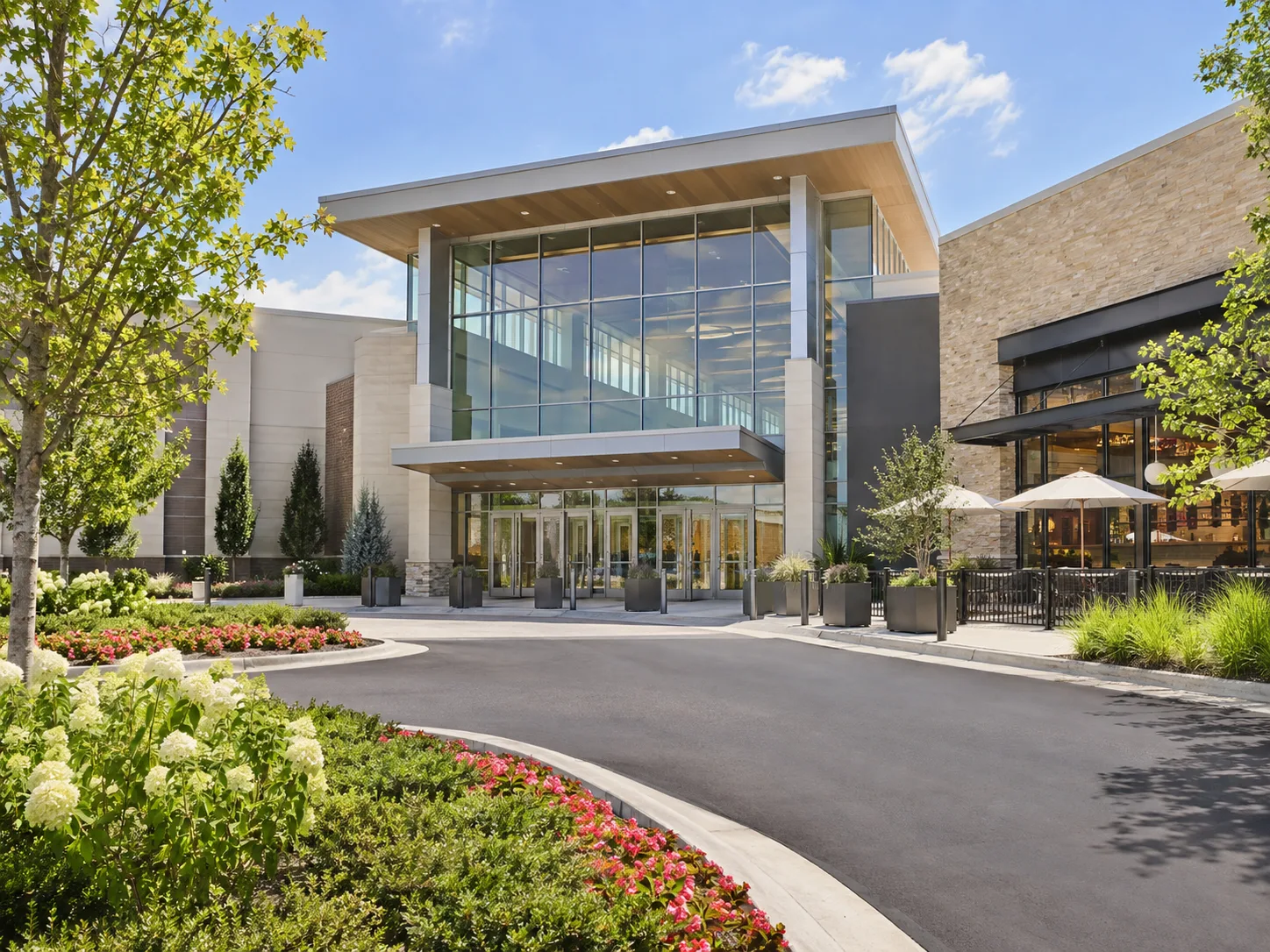
The Wall Street Journal reports that malls have become the top-performing commercial real estate sector after years of distress. The latest mall value data from Green Street show prices up 13% over the past year. That leads all 10 commercial property sectors. The gain is also more than double the increase in overall CRE prices. Investors are returning as occupancy and rent growth improve.
Get Smarter about what matters in CRE
Stay ahead of trends in commercial real estate with CRE Daily – the free newsletter delivering everything you need to start your day in just 5-minutes
Mall Values Lead CRE
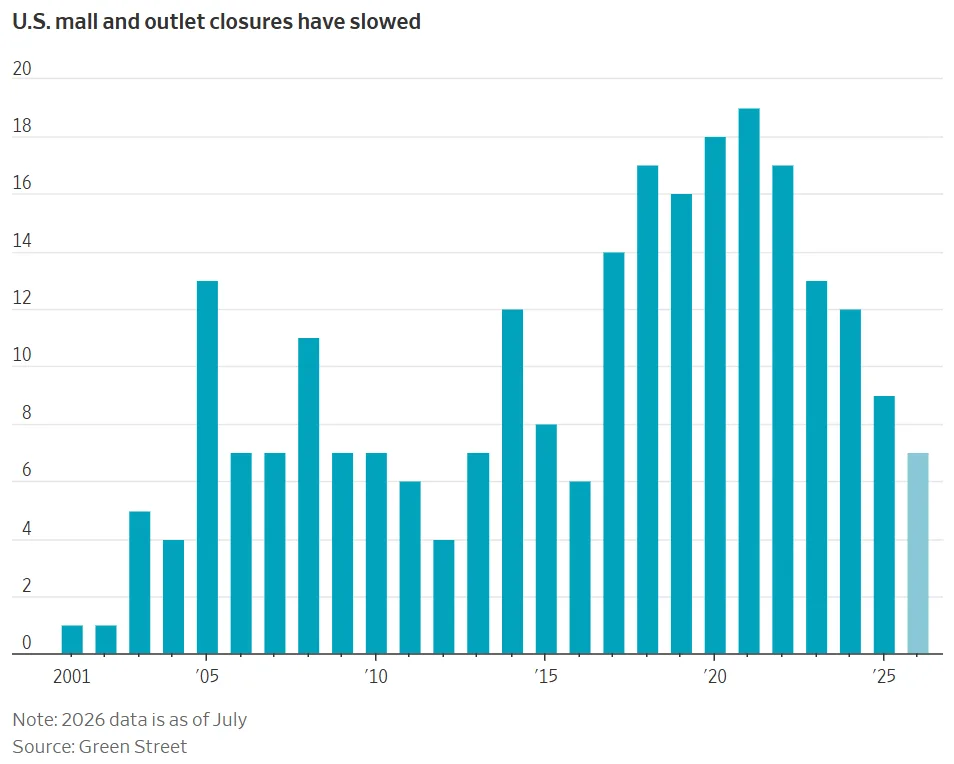
Limited new supply has helped mall performance. Resilient consumer spending and fewer retailer bankruptcies have also strengthened operations. Leading owners continue to renovate properties and add tenants that face less direct online competition. Luxury stores, restaurants and entertainment venues are becoming more important. Retail resilience has therefore become a larger investment theme. The shift marks a sharp reversal from the pandemic period, when closures and department-store failures weakened foot traffic.
Investors Return to the Sector
Simon Property Group shares surpassed their previous record high in July for the first time since 2016. The stock has also outperformed the S&P 500 during the past 12 months. Unibail-Rodamco-Westfield has reversed course in the US as well. Four years after planning an exit, the company is investing again. It committed nearly $1B this year to buy out partners at Westfield UTC and Westfield Southcenter. The deals gave URW full control of both malls. URW CEO Vincent Rouget said rent growth is running at levels the company has not seen since the early 2010s. He also said US tenant sales and NOI growth are beating the broader portfolio average.
A Smaller Mall Universe
Green Street estimates that roughly 200 malls have closed since 2008. About 900 remain in operation across the US. That reduced supply has helped surviving properties. URW said its US portfolio is now a growth driver, with tenant sales and NOI growth above the broader company average. The owner shed many weaker regional properties but still owns 14 US malls that rank among the country’s top performers. That smaller universe gives stronger centers fewer direct competitors than they faced before the long wave of closures.
Middle-Market Malls Improve
The recovery is not limited to trophy assets. CBL Properties said foot traffic and sales are rising across its portfolio. Its stock has gained 48% since the start of the year. The company has bought five properties since July 2025. That follows years of portfolio reduction, including more than two dozen malls sold or surrendered since 2013. CBL spent a year in bankruptcy protection after the pandemic hit. CBL’s renewed acquisition activity signals confidence that selected malls can again support investment rather than only defensive asset management.
A Refinance Case Study
CBL’s West County Center in St. Louis shows how financing conditions have shifted. In 2022, the 1.2M SF mall could not refinance maturing debt. Lenders were avoiding midtier malls at the time. The property’s value had fallen 30% over the previous decade, and vacancy was rising. Conditions have since improved. Tenant sales are up 13% since 2023. Cheesecake Factory and Urban Outfitters are set to open. CBL expects to close a refinancing within 60 days.
Why It Matters
Scarcity is now working in the sector’s favor. Years of closures and limited construction reduced competitive supply. Successful owners also invested in stronger properties and updated tenant mixes. Those moves are supporting occupancy, sales and rent growth across both high-end and middle-market malls.
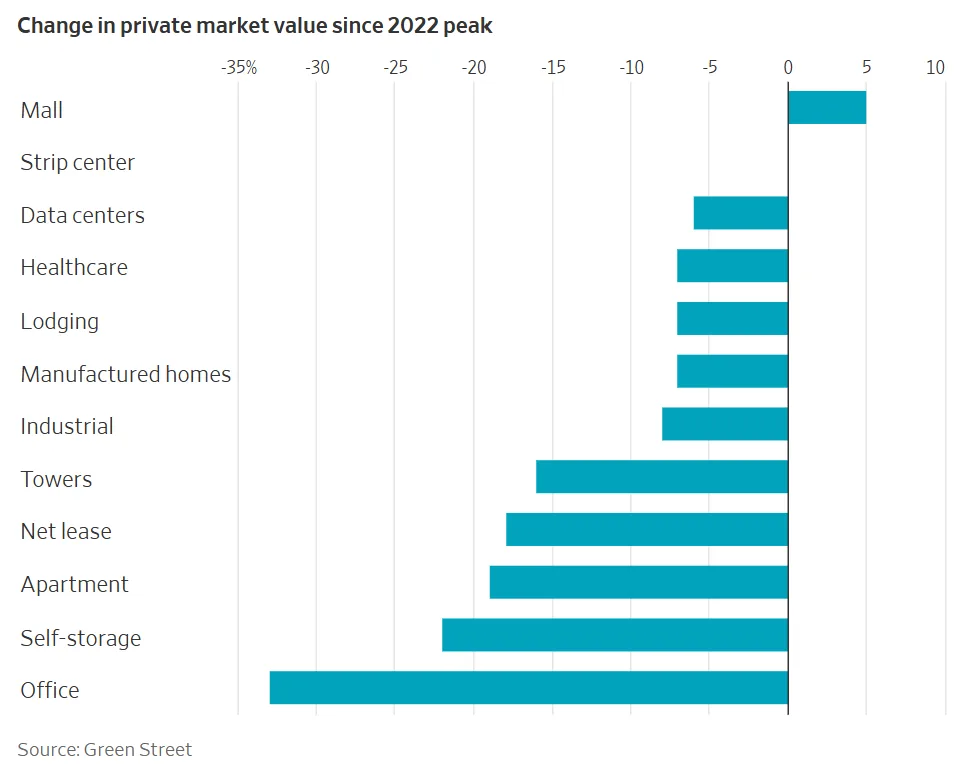
However, mall values still remain well below their peak from a decade ago. Some investors also question how durable restaurant and entertainment demand will be. The strongest properties are benefiting from both scarcity and deliberate reinvestment. Weaker centers still need a credible operating plan to capture the same recovery.
What’s Next
Investors will watch whether the newer tenant mix can sustain current gains. Entertainment and restaurant concepts can be difficult to replace if they fail. For now, stronger operations are reopening financing options and drawing fresh capital. The next test is whether improving fundamentals can keep lifting values after the sector’s sharp one-year rebound.