



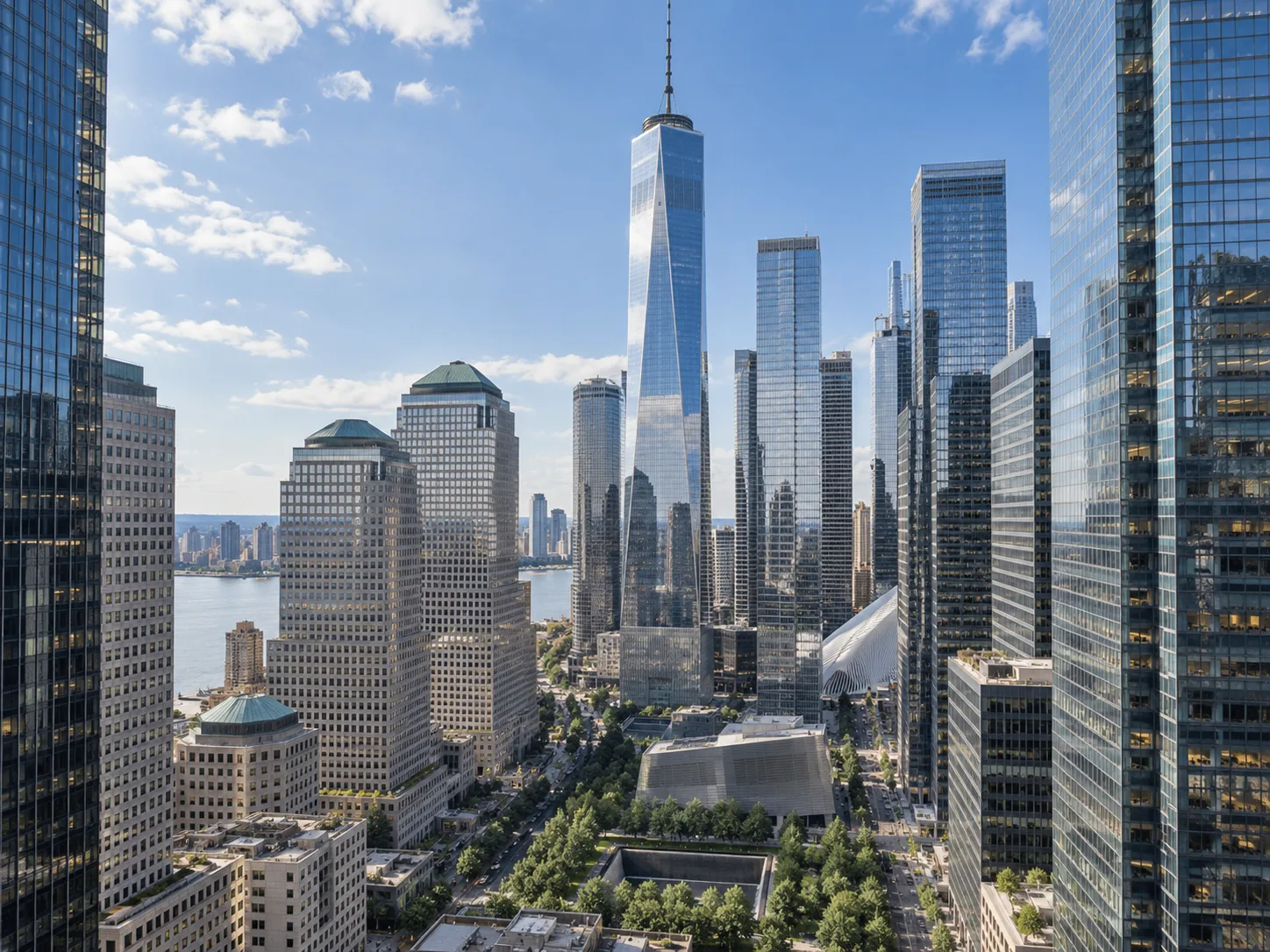



- Lower Manhattan tenants leased about 4M SF through June, more than double the year-earlier volume, according to Cushman & Wakefield.
- Downtown asking rents rose 8% year over year in July to $61.91 PSF, the highest level since 2020, CBRE reported.
- Tech and AI tenants are adding momentum, while lower rents give downtown a relative value advantage against Midtown.
Bloomberg reports that Lower Manhattan is regaining office demand as companies seek less expensive alternatives to Midtown. Cushman & Wakefield data in its coverage of the downtown rebound show tenants leased about 4M SF south of Canal Street through June, excluding renewals. That was more than double the prior-year volume and the submarket’s strongest first half since 2019.
Get Smarter about what matters in CRE
Stay ahead of trends in commercial real estate with CRE Daily – the free newsletter delivering everything you need to start your day in just 5-minutes
Downtown Leasing Rebuilds Momentum
The recovery follows a long period of uneven demand in the Financial District. The pandemic pushed many occupiers toward buildings near Midtown transit hubs. That shift tightened Midtown vacancies and lifted rents. Lower Manhattan now offers more choices at lower asking rates, giving relocating tenants another option as premium space becomes more competitive elsewhere.
The district has also spent years working through earlier setbacks. Bloomberg noted the long recovery since the September 11 attacks and the disruption from the Great Recession. The latest leasing gains therefore represent more than a simple pandemic rebound. They show companies again considering downtown as a practical location for expanding teams.
American Express added a major vote of confidence early this year. The company decided to move its headquarters to 2 World Trade Center. That commitment allowed Silverstein Properties to start construction on the final major office building planned at the World Trade Center site. Groundbreaking took place in July.
Tech Demand Adds a New Tenant Base
Tech and AI companies are taking a meaningful share of new downtown space. Mercor and Norm Ai recently leased offices at 1 World Trade Center. Scale AI also moved from Chelsea to the tower. Its new office can support a team of roughly 500 people.
Durst Organization said 1 World Trade Center is now 97% occupied. The tower opened in 2014 and contains 71 office floors. Eric Engelhardt of Durst said leasing has broadened across law, financial services, and technology firms. He also said the building has seen competing offers for the same space during the past six months.
Pricing Still Favors Downtown
CBRE data show downtown asking rents reached an average $61.91 PSF in July. That was 8% above a year earlier and the highest downtown level since 2020. Midtown rents rose 4% over the same period, while Midtown South gained 2%.
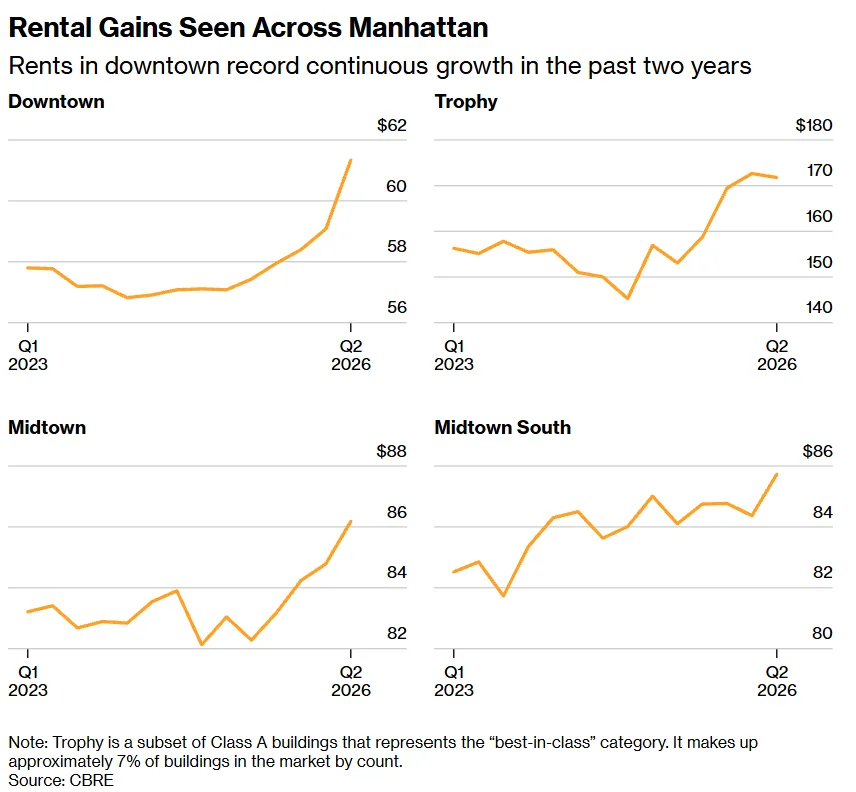
The Manhattan office recovery is also pushing tenants to compare value across submarkets. CBRE put average asking rents at $85.77 PSF in Midtown and $86.34 PSF in Midtown South. Downtown therefore still carries a sizable discount even after its faster rent growth.
Inventory changes are helping the pricing picture. Cushman & Wakefield noted that older downtown office buildings are being converted to housing, including 55 Broad St. Removing obsolete office stock reduces available supply and can support rent growth in the remaining buildings.
Midtown Sets the Benchmark
Midtown remains Manhattan’s strongest post-pandemic office submarket and has the lowest vacancy. Trophy buildings continue to command record pricing. Bloomberg reported an April deal at 9 W. 57th St. above $327.50 PSF and an Nscale agreement at One Vanderbilt around $320 PSF.
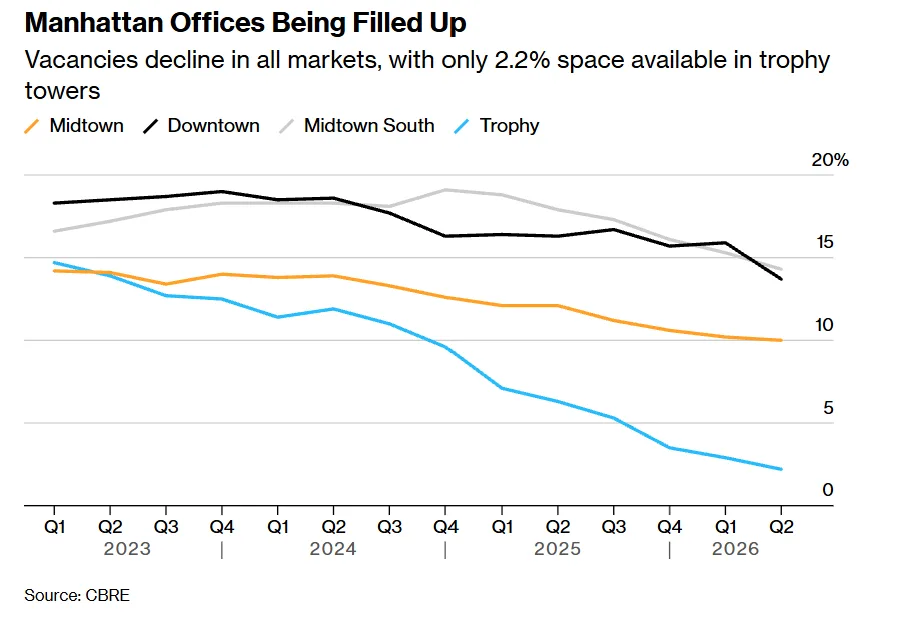
AI demand is especially concentrated in Midtown South. CBRE said the area captured about 62% of AI leasing since 2025. Anthropic’s 462,513 SF lease at 330 Hudson St. was Manhattan’s largest July lease. With limited new premium supply, demand that cannot find a fit in the strongest districts is creating more room for downtown to compete.
That spillover does not erase downtown’s pricing gap. It gives tenants another bargaining point when Midtown trophy options are scarce or expensive. For landlords, the opportunity is to convert renewed relocation activity into sustained occupancy before the rent discount narrows further.
Lower Manhattan also has a broader range of available space than the tightest Midtown locations. That choice is part of the appeal for companies that want quality offices without competing for the most expensive trophy floors.