




- U.S. retailers posted a net loss of 144 stores through July 2026 as closures narrowly outpaced openings, but incoming locations averaged nearly double the square footage of closing ones, pushing net retail space up 26.1 million square feet, according to Coresight Research.
- IKEA, Publix, Bass Pro Shops, Meijer and Rural King led large-format expansion, while American Signature, Walgreens and Saks Fifth Avenue accounted for the year’s biggest footprint contractions.
- The store-count gap has narrowed sharply from a net loss of 1,778 locations over the same period in 2025, signaling retailers are consolidating into fewer, bigger boxes rather than retreating from physical retail altogether.
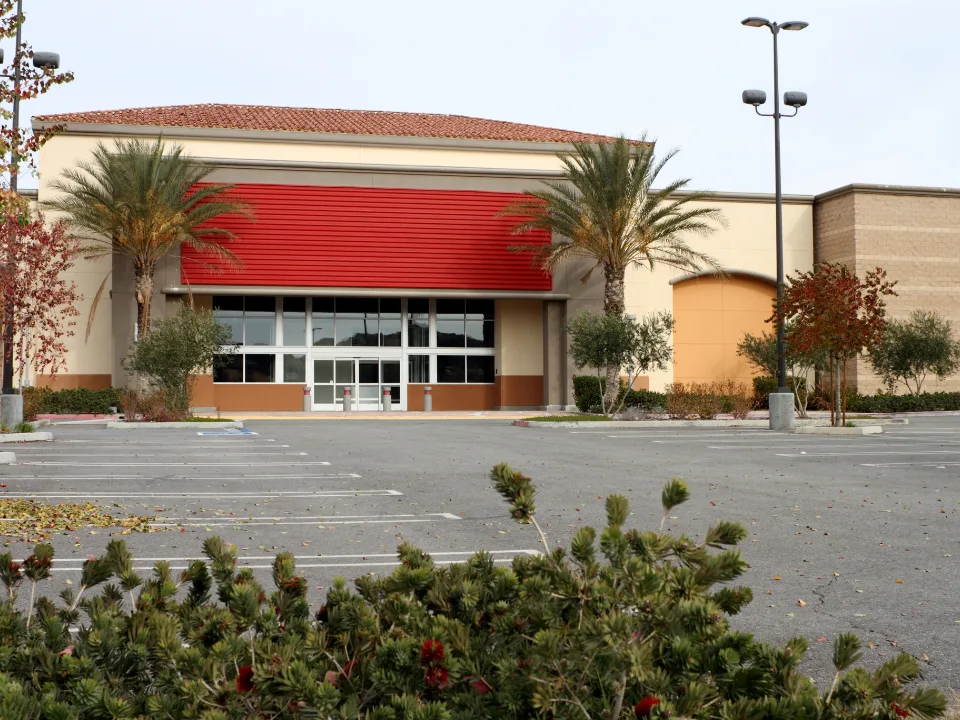
U.S. retailers announced more store closures than openings through the first seven months of 2026, but a net space gain of 26.1 million square feet shows the industry trading store count for scale, according to GlobeSt. Retailers announced 3,255 openings representing an estimated 63 million square feet against 3,399 closures totaling 36.9 million square feet through July 31, per Coresight Research’s July Store Tracker Extra report. The result: a net loss of 144 stores by location count, even as total retail square footage kept climbing.
Get Smarter about what matters in CRE
Stay ahead of trends in commercial real estate with CRE Daily – the free newsletter delivering everything you need to start your day in just 5-minutes
Bigger Boxes, Fewer Doors
The gap between opening and closing sizes points to a broader reshaping of physical retail already underway: chains have spent recent years shedding smaller, underperforming locations while betting on larger-format stores that double as fulfillment hubs. Coresight’s data shows that shift accelerating in 2026, with the average new store spanning roughly 19,350 square feet — nearly 80% larger than the average closure, at about 10,860 square feet.
The Retail Store Closures by the Numbers
IKEA led large-format expansion with 14 openings against three closures, a net gain of 11 locations and an estimated 1.2 million square feet. Publix Super Markets added roughly 756,000 square feet across 12 planned stores with no announced closures, while Bass Pro Shops, Meijer and Rural King combined for another 1.24 million square feet of new space. On the contraction side, American Signature’s 122 closures erased an estimated 6.1 million square feet, the largest single reduction in the report, followed by Walgreens’ net loss of about 3.49 million square feet from 350 closures against one opening. Saks Fifth Avenue closed 18 stores for 2.7 million square feet, and Kroger’s 40 shutters against two openings wiped out a net 2.53 million square feet. Rounding out the largest contractions, Amazon Fresh’s 57 closures removed 2.28 million square feet, Saks Off 5th’s 57 closures accounted for 1.71 million square feet, and Eddie Bauer’s 217 store closures — the highest location count of any chain in the report — totaled 1.52 million square feet.
Zooming Out
The pullback among mall-based and off-price chains adds to distress landlords are already managing — Saks Fifth Avenue’s 18 closures compound retail disruption tenants tied to the Saks portfolio are causing at shopping centers nationally. At the other end of the spectrum, discount retailers accounted for 1,046 of this year’s openings, or 32.1% of the total, extending the store-opening momentum seen in recent expansion pushes by value-oriented and specialty chains.
Why It Matters
For landlords and investors, the data suggests physical retail isn’t shrinking so much as reshaping — fewer, larger boxes are absorbing more square footage even as store counts erode, which changes how much leasable space actually needs backfilling. Apparel, footwear and accessories retailers accounted for the largest share of 2026 closures at 1,103 locations, or 32.4% of the total, according to Coresight, underscoring that soft-goods categories remain the most exposed to store rationalization even as grocery, off-price and outdoor-recreation concepts expand. Landlords with exposure to department-store anchors and off-price boxes tied to Saks, Eddie Bauer or Amazon Fresh should expect continued backfill work, while centers anchored by discount or warehouse-format tenants are more likely to see demand hold steady or grow.
What’s Next
With five months left in Coresight’s tracking period, additional swings are likely as retailers finalize holiday-season real estate plans. The current trajectory — a net loss of just 144 stores compared with 1,778 a year earlier — points toward a more stable, if smaller, store count heading into 2027, with net square footage likely to keep expanding as long as large-format openings keep outpacing shrinking-format closures. Watch whether grocery and off-price operators keep filling the space vacated by struggling department and specialty chains, since that handoff — more than the raw store count — will determine how quickly landlords can re-tenant the square footage coming back onto the market.