



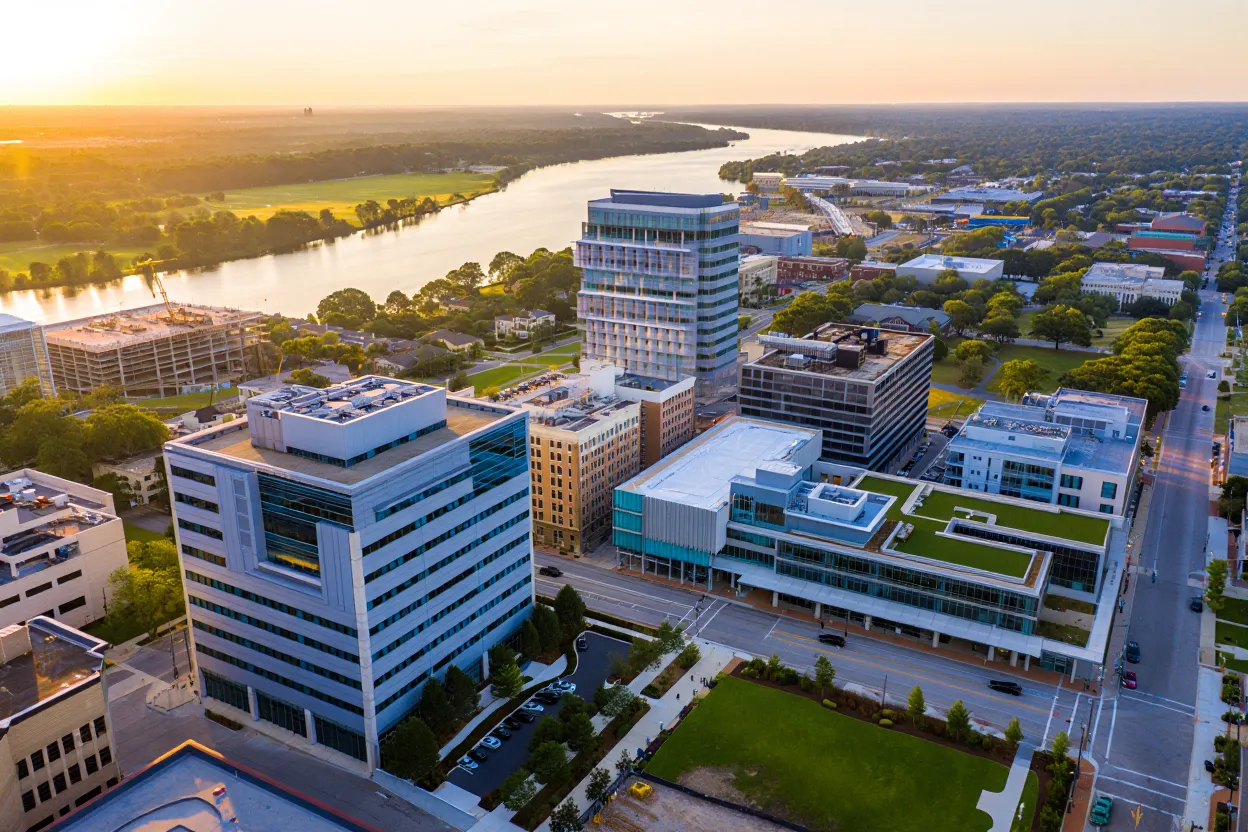
- LinkedIn ranks Augusta, Georgia as the top US city on the rise for jobs and talent, with Richmond, Virginia and Reno, Nevada close behind.
- These metros stand out for affordable living, strong tech, defense, healthcare sectors, and increasing remote work options, per LinkedIn’s analysis.
- The shift highlights growing CRE opportunity in secondary and tertiary markets previously overlooked in favor of coastal cities.
Secondary Markets Outpace Coastal Darlings
LinkedIn’s new “Cities on the Rise” list is challenging old assumptions about where jobs and talent are clustering in the US. As reported by Globe St, Augusta, Georgia, Richmond, Virginia, and Reno, Nevada, top the social network’s ranking, with a focus not on traditional coastal leaders, but on secondary and tertiary metros. The ranking draws from LinkedIn’s own data on job growth, hiring rates, and professional migration trends, painting a picture of new hotbeds for commercial real estate (CRE) opportunity.
This matters because these cities offer a confluence of affordability, career mobility, and economic diversity. Investors are paying closer attention to CRE prospects where tech, defense, and healthcare anchors merge with lifestyle perks—shifting the investment narrative away from high-priced gateway markets.
Get Smarter about what matters in CRE
Stay ahead of trends in commercial real estate with CRE Daily – the free newsletter delivering everything you need to start your day in just 5-minutes
The Details
Augusta clinched LinkedIn’s top spot in part due to its robust cybersecurity and medtech ecosystems. The presence of the US Army Cyber Command at Fort Gordon, along with Augusta University’s cybersecurity programs and a cluster of public-private employers, gives the market a unique employment base. The city’s median household income is $55,485, with average homes listed at $396,195. About 26.5% of employees work remotely, per LinkedIn.
Richmond’s second-place finish mirrors its success as both a tech infrastructure and healthcare hub. That momentum aligns with recent research showing the metro has become the nation’s fastest-growing data center market, strengthening long-term demand for digital infrastructure. With 155 data centers and top employers like Capital One and Virginia Commonwealth University, it boasts a median income of $64,585 and an average home listing of $553,215. Remote and hybrid roles combine for roughly 23% of jobs. Reno, in third, leverages its innovation credentials—Tesla, data centers, and the University of Nevada, Reno—with a notably higher median income of $80,760. However, affordability is tightening, given average home listings at $1.19M and nearly 30% of jobs performed remotely or in hybrid mode.
A National Migration To Opportunity
Secondary and tertiary metros’ rising profiles are not new, but LinkedIn’s analysis provides hard data to confirm a pattern: talent and employers are moving beyond gateway cities in search of affordability and lifestyle. Markets like Sarasota, Harrisburg, and Charleston also make LinkedIn’s top 25, suggesting this is a broader trend rather than a few outliers. Notably, many cities on the list anchor their economies with strong education, healthcare, tech, and manufacturing employers, attracting both job seekers and CRE investment.
This migration is reinforced by remote work trends, with sectors such as advanced manufacturing and healthcare now intermingling with flexible positions. The resulting hybrid labor markets underpin a diverse tenant mix, increasing need for office, flex, and medical space in these metros.
Why It Matters
For CRE investors, LinkedIn’s data set is another confirmation that the country’s growth narrative is shifting. As prime coastal city opportunities become more scarce and expensive, smaller metros like Augusta, Richmond, and Reno offer an attractive balance of job creation, talent inflow, and affordability. According to LinkedIn’s July 2026 report, these markets not only provide robust local economies anchored by sectors like cybersecurity, healthcare, and advanced manufacturing, but also attract workers seeking lower costs of living and remote work options.
The numbers reinforce the trend: Augusta’s sub-$400K home listings and high remote work rates, Richmond’s expanding healthcare and data center footprint, and Reno’s innovation economy at the crossroads of affordability and demand. This convergence creates fertile ground for development, repurposing, and investment in office, industrial, multifamily, and healthcare properties. Moreover, capital chasing yield is increasingly willing to consider these “rising cities” as institutionally viable bets.
However, this realignment does not override classic underwriting concerns. Each market’s sector mix, labor draw, and development pipeline need close scrutiny. LinkedIn’s methodology—relying on hiring, job posting, and professional migration patterns—offers valuable insight, but should complement, not replace, fundamentals-based CRE analysis. Still, as traditional top 10 investment markets face headwinds, these rankings are an increasingly relevant read on US growth potential.
What’s Next
With talent and employers clustering in smaller, affordable metros, CRE deal flow in these cities is expected to heat up. Investors may target mixed-use, lab, and flex office projects closely tied to leading industries like tech and healthcare. Markets atop LinkedIn’s list—Augusta, Richmond, Reno—will likely see more institutional investments and portfolio rebalancing as capital seeks growth and yield outside core gateways. As employers continue to pursue hybrid workforces, demand for flexible commercial space in these rising cities bears watching through year-end 2026 and beyond.