




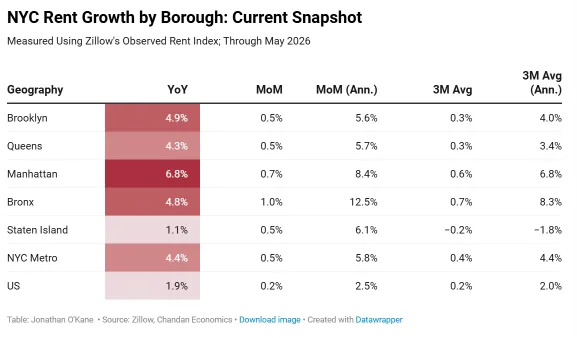
- NYC rent growth hit 4.4% year-over-year in May, outpacing the 1.9% US average.
- Manhattan led annual gains at 6.8%, while the Bronx posted the strongest monthly increase at 1.0%.
- Short-term momentum is broadening, with all five boroughs showing positive monthly rent growth.
NYC’s Rental Market Surges Beyond National Pace
NYC rents bucked the trend in May 2026, posting stronger gains than the broader US market across every borough. According to Chandan Economics’ latest breakdown, citing Zillow’s Observed Rent Index (ZORI), annual rent growth for the NYC metro clocked in at 4.4%, far outstripping the 1.9% national figure. Manhattan maintained its post-pandemic resurgence, driving overall city performance, but other boroughs are gaining steam.
This acceleration should catch the eye of multifamily operators tracking local vs. national trends. With both short- and long-term indicators in positive territory—including a three-month annualized pace of 4.4%—NYC’s rental market continues to demonstrate resilience as fundamentals elsewhere cool.
Get Smarter About What Matters in New York
Subscribe to our free newsletter covering the biggest commercial real estate stories across the five boroughs — delivered in just 5 minutes.
Momentum Shifts Across Boroughs
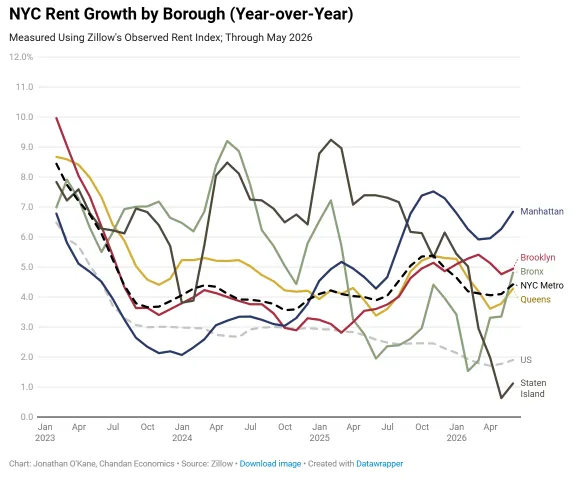
Behind the headline growth, timing and geography tell a more nuanced story. Manhattan is still the clear leader on an annualized basis, posting a strong 6.8% year-over-year increase, with Brooklyn (4.9%), the Bronx (4.8%), and Queens (4.3%) trailing closely. Staten Island lags with an annual gain of just 1.1%, but even there, short-term growth has stabilized.
The Bronx stole the spotlight in May with a 1.0% month-over-month rent increase—the top pace among all boroughs. Manhattan followed at 0.7%, while Brooklyn, Queens, and Staten Island each recorded 0.5%. This broader spread of short-term gains marks a shift from the earlier, Manhattan-centric rebound, reflecting more widespread demand.
Short-Term Gains Signal Broadening Strength
May data confirms what owners and investors already sensed. NYC rent growth now extends beyond pricey Manhattan neighborhoods.
Manhattan’s proximity premium remains strong. Tenants still value easy access to jobs and amenities. However, other boroughs are catching up.
Citywide, the three-month moving average for annualized rent growth reached 4.4%. That more than doubles the 2.0% national rate. Similar trends emerged earlier this year, when citywide gains held steady despite uneven borough performance. National rents also accelerated. Still, NYC posted stronger and broader gains. The Bronx’s surge reflects demand for more affordable neighborhoods. Meanwhile, Staten Island returned to positive growth. That suggests stabilization after weakness earlier in 2026.
Why It Matters
Citywide rent gains create benefits and challenges. Multifamily investors may find NYC more attractive as other gateway markets lag. Chandan Economics and Zillow data through May 2026 show citywide rents rose 4.4% year over year. That growth can expand margins and reduce lease-up risk for new projects.
However, steady rent increases may deepen affordability concerns. Those issues already shape New York’s policy debates. As growth spreads beyond Manhattan, officials may face pressure to intervene. At minimum, they may increase regulatory scrutiny. That risk is higher in neighborhoods posting strong gains this year. Meanwhile, Staten Island’s rebound may offer a signal for weaker submarkets. Economic trends and migration patterns still shape rental demand.
What’s Next
The summer leasing season will likely set the tone for year-end apartment revenues. If rents keep rising at twice the national pace, landlords may gain pricing power. They could also benefit from stronger leasing activity.
Operators will watch for signs of strain. Higher rents may push tenants toward cheaper options or increase vacancies. Meanwhile, economic shocks or weaker hiring could quickly alter local trends as 2026 progresses.