







- Companies are pivoting toward assigned seating models as employees push back against hot-desking and generic flex office design.
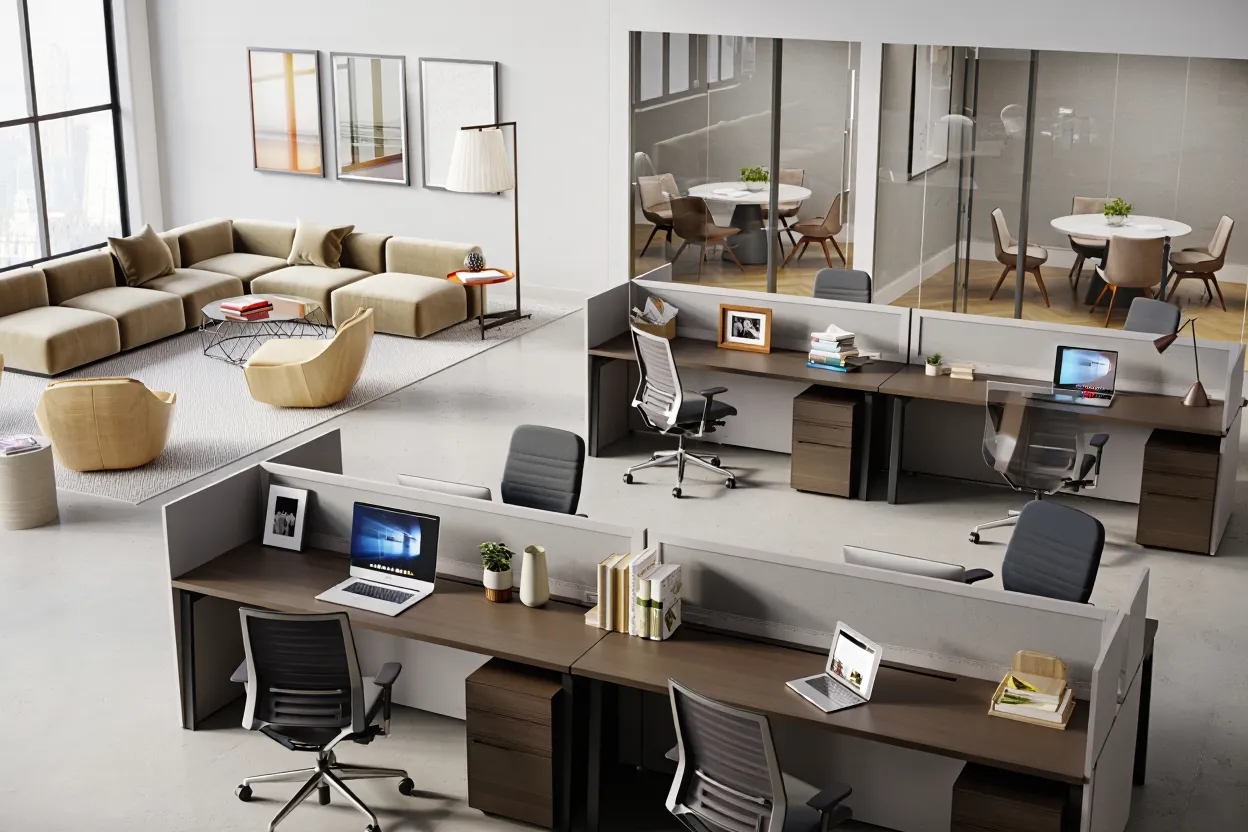
- Gensler and HubStar data show a notable rise in demand for enclosed spaces and personalized workstations, with sentiment and productivity concerns driving the shift.
- This reversal signals a broader move away from pure cost-cutting toward talent retention and thoughtful amenitization in the New York office sector.
Flex Experiment Meets Its Limits
Over the last several years, New York office landlords and occupiers have aggressively leaned into flex workspaces, betting that open seating and adaptable floors would win over hybrid teams. As Bisnow reports from its recent New York Office Conference, panelists are now questioning if those millions spent on flexibility have delivered the intended results. The tone is shifting as programmatic hot-desking and touch-down stations appear to undermine both employee satisfaction and company culture, despite their touted operational savings.
This reversal marks a clear pivot from early-pandemic orthodoxy. With executives from Scotiabank, Cushman & Wakefield, and The Durst Organization on stage, the consensus was clear: talent wants predictability, not just space efficiency. Linda Foggie, Global Head of Real Estate and Corporate Services at Scotiabank, summed it up: the trend toward assigned seating is real, if still understated.
Get Smarter about what matters in CRE
Stay ahead of trends in commercial real estate with CRE Daily – the free newsletter delivering everything you need to start your day in just 5-minutes
The Details
According to HubStar’s analysis of more than 27,000 workplaces, enclosed offices in US office environments jumped from just 4% in 2023 to 10% in 2025. Meanwhile, Gensler’s global 2025 survey of over 16,000 office workers found that nearly 1 in 5 still lack an assigned desk. But demand is clear: 60% of respondents want a dedicated workstation. Employee sentiment data tells a similar story — 87% of employees with an assigned seat feel a sense of belonging at work, compared to 74% in hot-desking environments. Productivity appears tied to these patterns as well; 80% of those with assigned desks report being able to focus, as opposed to 67% in flex setups.
These figures highlight a move away from pure cost optimization and toward workplace strategies that prioritize experience and retention. As iCapital Network’s Gabrielle Rubin Deveaux noted, companies are “shifting from rightsizing to optimizing,” seeking higher-impact, personalized experiences even if the overall footprint shrinks.
Sentiment, Belonging, and Hybrid Complexity
CRE decision-makers face a new calculus where sentiment and engagement rival badge swipes as leasing drivers. Gensler data indicates that employees crave not just a desk, but connection and agency over their workspace. The push for assigned seating comes as hybrid policies evolve and previously underutilized collaborative areas take on fresh importance.
The evolution isn’t just about who sits where. Office design is adapting to a post-pandemic norm where collaboration, focus, and casual interaction must coexist. According to HubStar, the average conference room-to-desk ratio now stands at one to eight, and collaboration spaces occupy around 40% of the office — up from a traditional one-third share. Moreover, most meetings now occur in rooms built for six or fewer, even as those oversized boardrooms gather dust. This mismatch produces friction for hybrid teams navigating both collaboration and solo work in real time.
Why It Matters
Assigned seating reflects a more mature workplace strategy. CRE leaders now focus less on desk occupancy. Instead, they measure how supported and connected employees feel. HubStar found that personalized workplaces can boost retention and productivity.
The shift also affects leasing decisions. Tenants now prioritize layout and amenities over flexible floor plans. Panelists at Bisnow’s event said assigned seats improve collaboration, strengthen teams, and reduce workspace anxiety. These benefits matter in a tight labor market. As generative AI reshapes work, offices must support culture as well as costs. Companies increasingly view floors as experience hubs instead of rows of shared desks. This mirrors trends in other sectors, where operators design spaces to encourage longer visits and stronger user engagement. Landlords also use detailed utilization data to refine their offerings.
Landlords are sharing more workplace data with tenants. Rudin’s Jane Luger highlighted this trend during the panel. Most landlords already collect occupancy and usage data. They can now align those insights with tenant goals. This can help customize spaces, improve amenity returns, and keep buildings occupied.
What’s Next
Assigned seating will likely gain momentum as hybrid work patterns stabilize. Employers continue to adjust strategies to retain talent. HubStar’s data shows rising demand for enclosed and personalized workstations. Flexible space will remain part of the mix. However, landlords may invest more in targeted amenities. Tenants may also seek both private work areas and quality collaboration spaces.
Landlords and occupiers that share utilization data can better differentiate their portfolios. Workplace design will continue to evolve through experimentation. Many companies still seek the right balance between privacy, flexibility, and amenities.