







- Short-duration, drive-thru visits to quick-service restaurants fell 6.8% year-over-year in May per Placer.ai.
- Full-service restaurants and experiential dining gained momentum even as drive-thru traffic declined.
- CRE investors should reexamine assumptions about outparcel and net lease assets anchored by pure convenience demand.
Drive-Thru Momentum Falters for Fast-Food and Fast-Casual Chains
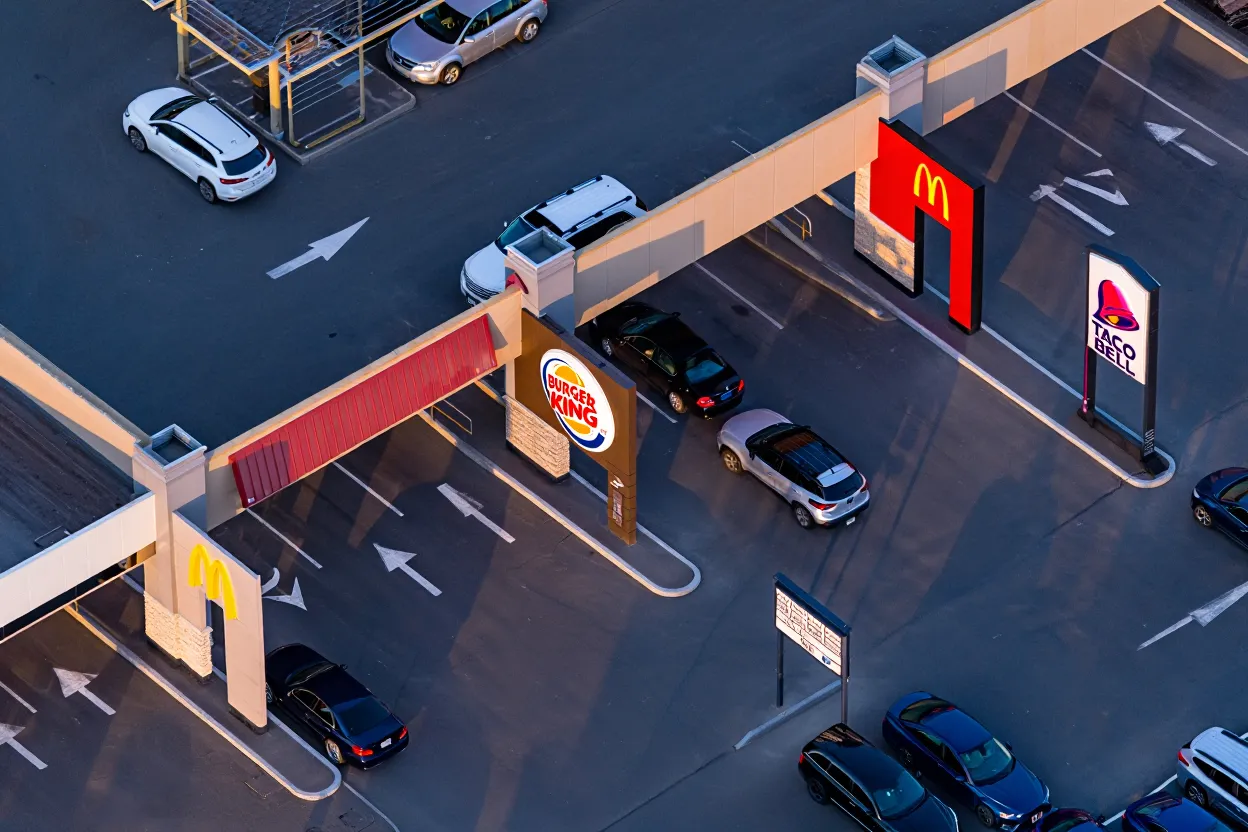
Globe St reports that convenience-driven restaurant visits, long a safe bet for CRE retail investors, are showing signs of fatigue. According to the latest Dining Index from Placer.ai, drive-thru and short-duration transactions, which include drive-thru, pickup, and delivery visits under 10 minutes, trailed broader restaurant traffic in May. These findings put a spotlight on net lease and outparcel investments heavily concentrated in quick-turn formats. For years, the drive-thru lane has been regarded as a rent roll backbone and resilient performer, particularly during the pandemic. Now, that assumption is facing its first real test as consumer behavior evolves and overall market headwinds, including inflation and rising fuel costs, begin to reshape habitual dining patterns.
Get Smarter about what matters in CRE
Stay ahead of trends in commercial real estate with CRE Daily – the free newsletter delivering everything you need to start your day in just 5-minutes
The Details
Placer.ai data reveals that quick-service restaurant short-duration visits dropped 6.8% year-over-year in May 2026, significantly more than the segment’s total 4.4% traffic decline. Fast-casual restaurants also saw a 1.9% decrease in short visits—the segment’s first decline this year—while total fast-casual traffic actually stayed positive at a 0.7% annual increase. In contrast, full-service restaurants posted a 0.7% gain in visits, rebounding after declines in March and April. Placer.ai attributes the uptick partially to the five Sundays in May 2026, including Mother’s Day, which typically supports sit-down dining. The divergence between overall and short-duration visits highlights that consumers are rebalancing away from strict convenience and leaning back into experiential, on-premises dining.
Consumers Rebalance Priorities as Traffic Gaps Widen
The gap between drive-thru visits and overall restaurant traffic continues to widen. Fast-food and fast-casual brands once relied on drive-thru and to-go orders. Now, diners increasingly choose restaurants based on value and experience. Higher fuel prices also influence behavior. Consumers may avoid extra car trips for a quick meal, according to Placer.ai.
Meanwhile, operators and landlords long favored drive-thru formats for development and acquisitions. Recent investment activity also showed growing competition between quick-service and fast-casual tenants for net lease locations. They now face a more complex demand profile. This shift complicates underwriting for net lease assets and outparcel pads. The challenge is greater in markets facing inflation and tighter budgets.
Why It Matters
For CRE investors, convenience no longer guarantees demand. Placer.ai’s May 2026 data shows drive-thru and short visits lagging broader traffic trends. In 2021 and 2022, car-focused layouts and net lease assets commanded strong premiums. Today’s market looks less certain. Full-service restaurant visits rose 0.7% after two monthly declines. That increase suggests many diners still prefer sit-down meals, especially during holidays and special events.
Weaker drive-thru traffic challenges assumptions behind many recent outparcel and net lease deals. If the trend continues, assets tied to convenience demand may face pricing pressure or slower leasing. At the same time, full-service restaurants remain resilient. Lower fuel costs could also support a rebound. As a result, tenant mix and flexibility matter more in underwriting. Landlords and investors should closely evaluate visit patterns and channel exposure across net lease portfolios.
What’s Next
Going forward, investors will be watching whether the recent softening in drive-thru and short-duration restaurant traffic proves structural or is just a summertime blip. Placer.ai notes the summer travel season and potential for moderating gas prices could buoy quick-service visits in coming months. However, changing consumer priorities—favoring perceived value and experience over routine on-the-go meals—are unlikely to fully reverse. Market participants with drive-thru-heavy rent rolls should consider rebalancing their portfolios or investing in locations capable of capturing both convenience and experiential demand. Monitoring visit composition and adapting underwriting models will be critical as CRE retail dynamics continue to evolve into late 2026.