






- Developer Asher Luzzatto acquired four distressed downtown Denver office buildings at steep discounts and plans to convert them into roughly 1,100 apartments and mixed-use community space.
- Denver’s central business district vacancy rate has climbed to nearly 40%, the highest among the top 50 US office markets, according to CBRE, creating a rare opening for large-scale office-to-residential projects.
- The success or failure of Denver office conversions could influence how other struggling downtowns approach office distress, housing shortages, and post-pandemic urban recovery.
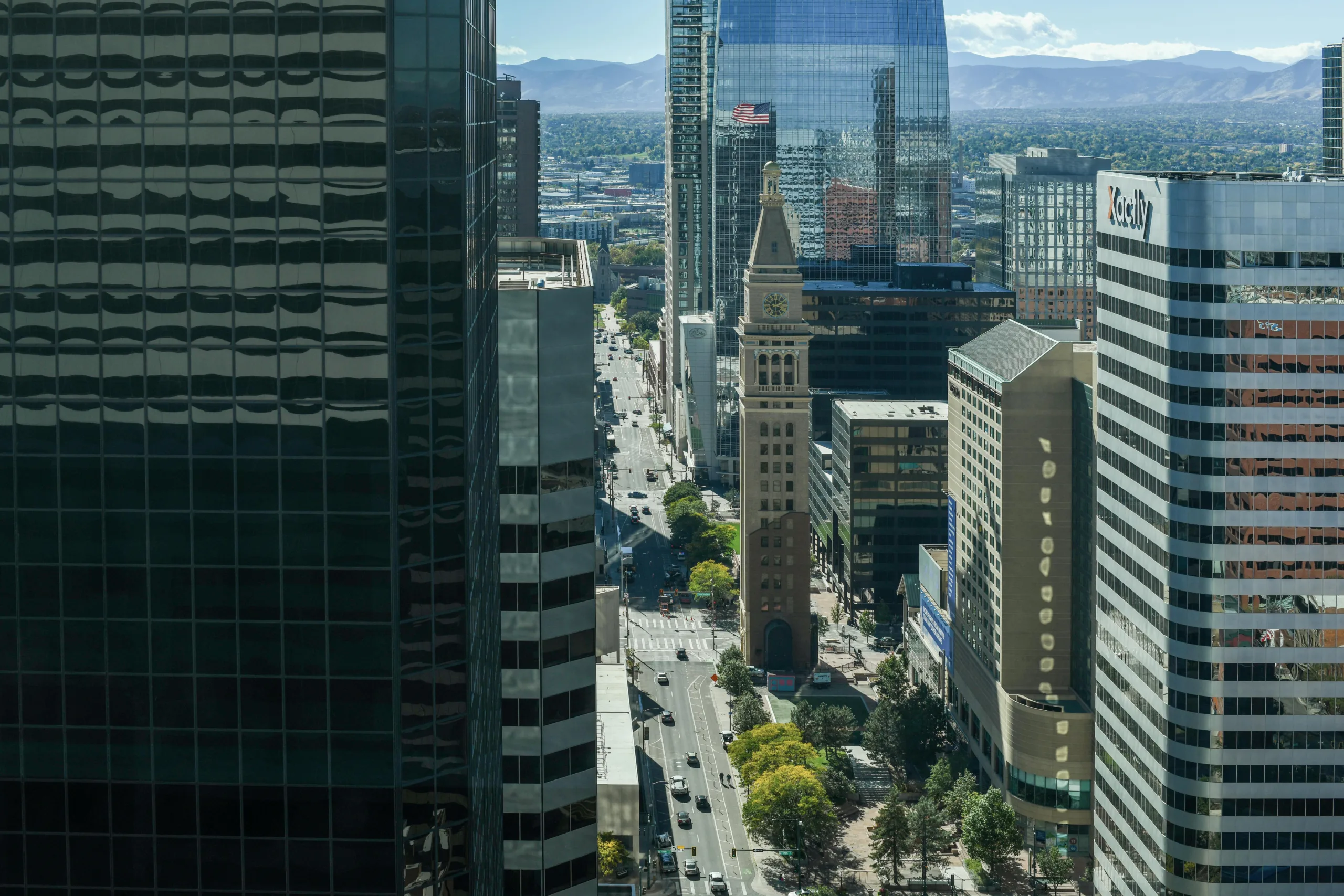
Downtown Denver’s office collapse has created one of the country’s biggest tests for office-to-residential conversion economics, reports The WSJ. Developer Asher Luzzatto is betting that deeply discounted towers, combined with a growing push for urban housing, can help revive a central business district hollowed out by remote work.
Luzzatto, founder of The Luzzatto Company, has acquired four downtown Denver office buildings over the past year, including the 785K SF Energy Center complex. His plan calls for converting large portions of the portfolio into approximately 1,100 apartments alongside retail, cultural, and community-oriented uses designed to rebuild neighborhood activity.
Get Smarter about what matters in CRE
Stay ahead of trends in commercial real estate with CRE Daily – the free newsletter delivering everything you need to start your day in just 5-minutes
Denver’s Office Distress Reaches A Tipping Point
Denver’s central business district now carries nearly 40% office vacancy, the highest among the nation’s top 50 office markets, according to CBRE. Like many US downtowns, Denver expanded aggressively during decades when office demand anchored urban economies. That model weakened sharply after 2020 as hybrid work reduced commuter traffic and companies shifted toward suburban campuses and mixed-use districts.
The resulting drop in office values has been dramatic. Luzzatto purchased the Energy Center towers for roughly $5.25M in late 2025, about 97% below the property’s 2013 valuation. Two additional towers he acquired were previously valued near $100M when Blackstone owned them in 2015.
That repricing is what makes Denver office conversions financially viable today. Earlier in the office downturn, many developers argued conversions remained too expensive because acquisition costs were still too high relative to apartment rents and construction expenses.
The Details
Luzzatto plans to convert half of the Energy Center complex plus two additional office towers into multifamily housing. Initial plans call for roughly 750 units in the first phase, with rents ranging from approximately $1,700 for studios to $4,500 for three-bedroom apartments. About 75 units will be designated affordable housing.
The redevelopment strategy goes beyond apartments. Luzzatto plans to activate the properties with amenities including a bookstore, bakery, wine-and-beer bar, daycare center, art gallery, and children’s museum. A large glass-covered atrium between two buildings is expected to become a central gathering space for residents and visitors.
The project also secured a major public-sector endorsement earlier this year. In March 2026, the Downtown Denver Development Authority approved a $63M loan package for the redevelopment effort, marking the agency’s largest financing commitment to date.
Still, conversion costs remain substantial. Luzzatto estimates asbestos remediation and window replacements alone could cost roughly $30M across two buildings. The projects must also comply with Denver’s strict energy-efficiency standards and modern residential building codes.
Office-To-Residential Momentum Grows Nationwide
Denver office conversions are part of a broader national shift as distressed office assets increasingly move into the residential pipeline. According to RentCafe, office-to-apartment conversion projects in the US pipeline reached 90,300 units at the start of 2026, up 28% year over year.
New York remains the country’s most mature conversion market, though activity has spread beyond Lower Manhattan into Midtown. Washington, DC developers are pursuing more aggressive redesign strategies to bring light and ventilation into deep office floorplates. Chicago, Cleveland, and other cities are also expanding conversion incentives.
Calgary offers one of the closest comparisons to Denver’s situation. After a severe office glut tied to energy-sector weakness, Calgary launched a subsidized conversion program in 2021 that helped spur nearly two dozen projects. Developers there report strong leasing demand and profitable operations on completed buildings.
Denver, however, faces unique headwinds. The city’s outdoor-oriented workforce embraced remote work during the pandemic. That reduced pressure for a large-scale office return. At the same time, suburban business districts continue attracting tenants and investment. Industrial landlords are also managing rising availability as new supply enters the market across Denver. Districts like Cherry Creek, River North, and Union Station have captured much of the city’s newer mixed-use growth.
Why It Matters
The economics behind office distress are beginning to create opportunities that barely existed two years ago. Massive valuation declines are allowing developers to acquire towers for less than replacement cost, potentially unlocking conversion projects that previously failed underwriting tests.
For cities, the stakes are high. Downtowns built primarily around daytime office populations are struggling to maintain retail activity, tax revenue, and street-level vibrancy. Adding permanent residents is increasingly viewed as one of the few realistic paths toward stabilizing urban cores.
But demand remains uncertain. Some Denver residents and workers still perceive downtown as unsafe or inactive compared to suburban alternatives. Others simply do not want to live in former office environments, even after conversion.
The broader question is whether enough renters will choose an urban residential lifestyle over newer suburban multifamily product. If projects like Luzzatto’s lease successfully, they could provide a blueprint for repositioning obsolete office inventory across other struggling CBDs.
What’s Next
Construction timelines for the first Denver office conversions are expected to ramp up over the next year as financing and permitting move forward. Market watchers will closely monitor leasing performance, construction costs, and whether public incentives continue expanding for similar projects.
More distressed office assets are also likely to trade at steep discounts throughout 2026, especially in markets with persistently weak occupancy. That could create additional conversion opportunities for developers willing to navigate complex redesigns and uncertain demand.
For Denver, the next phase of recovery may depend less on bringing workers back five days a week and more on whether developers can build a true residential neighborhood inside a downtown originally designed almost entirely for offices.