




- Private equity firms own at least 11,800 apartment properties totaling nearly 3M units, or roughly 13% of US apartments, according to a May 2026 PESP report.
- More than 45% of those units were acquired since 2021, with Blackstone alone controlling more than 230,000 apartments nationwide.
- The highest concentrations of private equity-owned apartments are in fast-growing Sunbelt markets where renter cost burdens and affordability pressures have accelerated.
Private equity firms have rapidly expanded their footprint in the US apartment market, now controlling nearly 3M units nationwide, according to updated analysis from the Private Equity Stakeholder Project (PESP). The May 2026 report found that private equity firms own at least 11,800 apartment buildings, representing about 13% of all apartment units in the country.
The growth has been especially pronounced since the pandemic-era housing boom. PESP found that private equity firms acquired more than 1.3M apartment units since 2021 alone, accounting for 45% of their current holdings. Another 1.7M units, or 57% of total holdings, were acquired since 2018.
Get Smarter about what matters in CRE
Stay ahead of trends in commercial real estate with CRE Daily – the free newsletter delivering everything you need to start your day in just 5-minutes
A Rapid Expansion Into Apartments
Private equity investors have increasingly targeted multifamily housing as demand for rentals surged and homeownership affordability deteriorated. According to PESP, the business model typically relies on acquiring apartment communities, increasing rents and fees, boosting property cash flow, and exiting investments within three to seven years.
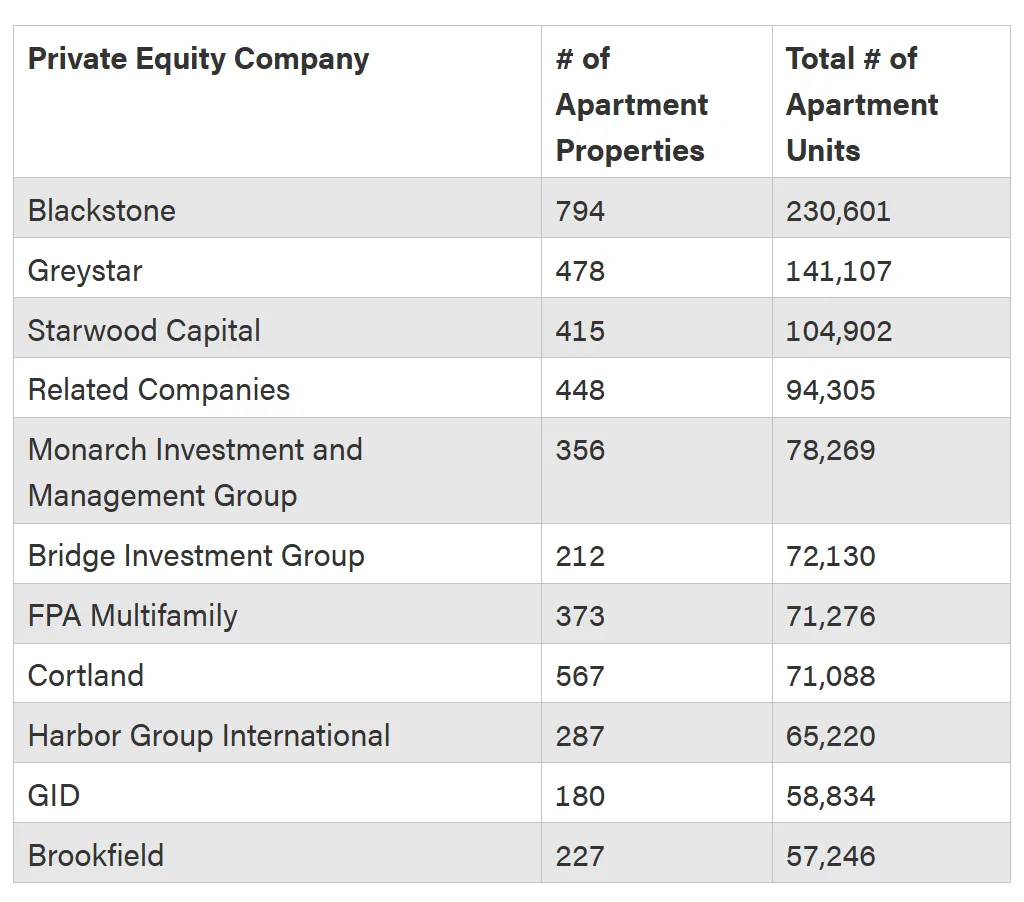
Blackstone remains the country’s largest private equity apartment owner, with more than 230,000 units across 794 properties. Greystar follows with roughly 141,000 units, while Starwood Capital controls more than 104,000 units. The ten largest private equity apartment owners collectively own more than 1M units nationwide, per the report.
The Sunbelt Concentration
The report shows private equity ownership is heavily concentrated in high-growth Sunbelt states and metros. Texas leads the nation with nearly 580,000 private equity-owned apartment units across almost 1,900 properties. Florida, California, Georgia, and North Carolina round out the top five states.
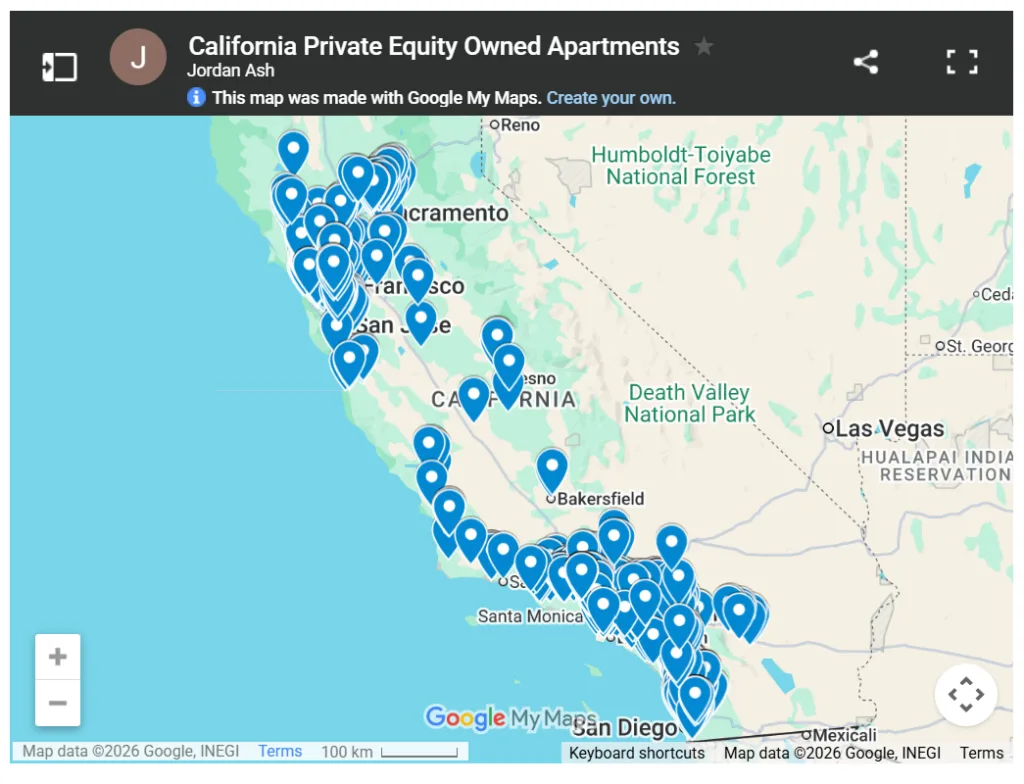
Source: Private Equity Stakeholder Project (PESP)
Georgia has the highest concentration nationally, with private equity firms owning roughly 31% of all apartment units in the state. North Carolina follows at nearly 24%, while Texas, Arizona, and Florida each exceed 20%.
These Sunbelt markets also attract heavy institutional investment in single-family rentals. Corporate landlords already control large shares of rental housing across Atlanta, Jacksonville, and Charlotte.
At the metro level, Dallas-Fort Worth ranks first with more than 252,000 private equity-owned units, followed by Atlanta, Houston, Washington DC, and Denver. Private equity ownership exceeds 30% of apartment inventory in Atlanta, Charlotte, Orlando, Dallas-Fort Worth, and Austin.
Growing Scrutiny Over Tenant Conditions
The report also highlights mounting criticism surrounding private equity ownership practices. Tenants at private equity-owned properties have reported sharp rent increases, mounting fees, deferred maintenance, and aggressive eviction filings, according to PESP.
Several large landlords named in the report have also faced legal scrutiny tied to rent-setting software platform RealPage. The US Department of Justice and multiple state attorneys general previously sued RealPage and several major apartment operators over allegations they coordinated rent pricing using shared market data. RealPage has denied wrongdoing.
PESP cited examples across multiple markets where rents at private equity-owned properties rose faster than surrounding apartment averages. In Phoenix, Blackstone increased rents at the 604-unit San Valiente complex by 36% between 2020 and 2024 before selling the asset to Brookfield for $142M.
Why It Matters
Affordability pressures continue rising across major rental markets. PESP linked many increases to private equity ownership concentrations.
Several metros with heavy private equity ownership also saw sharp increases in cost-burdened renters between 2019 and 2023.
In Tampa-St. Petersburg, renters spending more than 30% of income on housing rose from 53% to 64%. Phoenix, Dallas-Fort Worth, Atlanta, and Charlotte also posted double-digit increases during that period.
The data shows institutional capital continues reshaping the multifamily sector. Fast-growing Sunbelt markets attracted many acquisitions because of population growth, limited housing supply, and weaker tenant protections.
What’s Next
Pressure for additional oversight of institutional apartment ownership is likely to intensify. PESP is calling for rent caps, stronger tenant protections, restrictions on algorithmic rent-setting platforms, and increased transparency around ownership structures.
Meanwhile, private equity firms remain active multifamily buyers despite slower transaction volumes across commercial real estate. With housing affordability remaining a top political issue heading into 2026, institutional apartment ownership is poised to face growing regulatory and public scrutiny.