



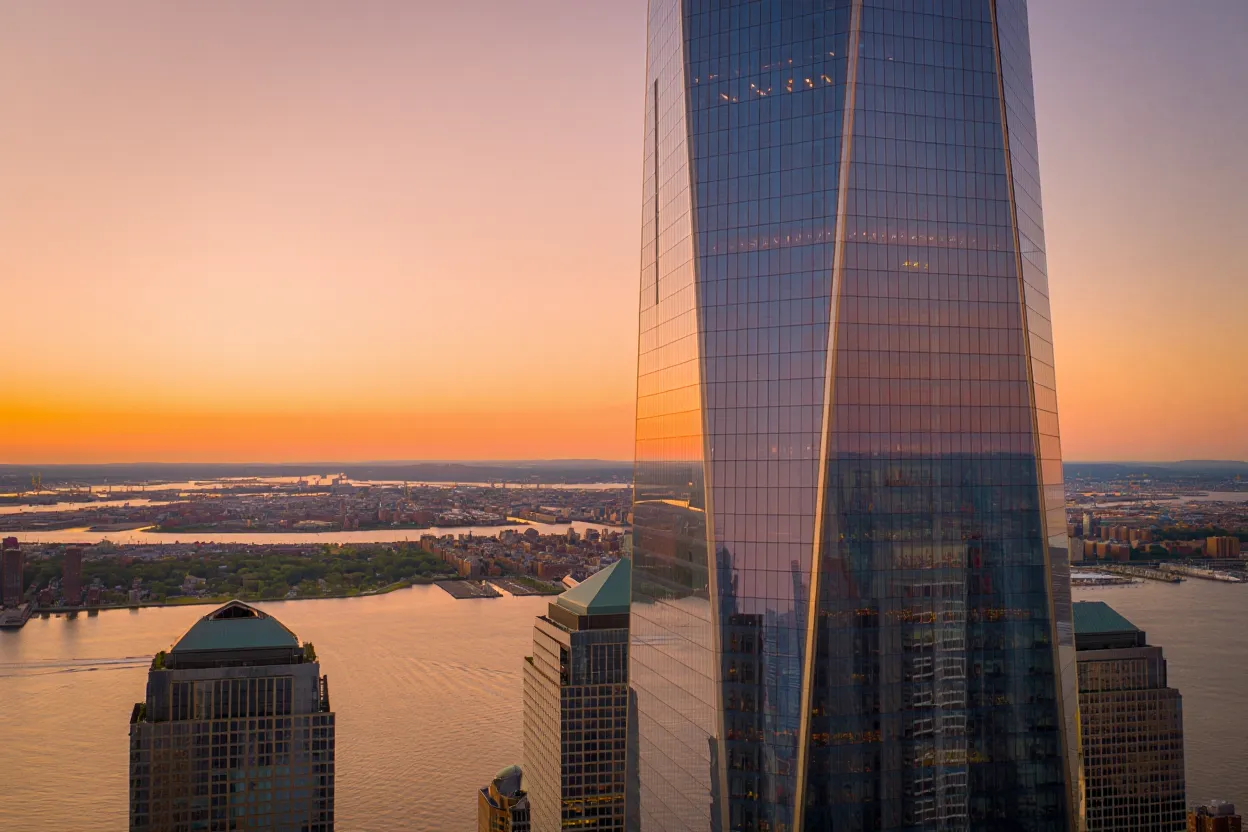
- Artificial intelligence company Mercor leased 25,550 SF at One World Trade Center, marking a significant tech expansion in Lower Manhattan.
- Durst Organization has nearly filled the 104-story tower, with this deal bringing the property close to 100% occupancy, according to Commercial Observer.
- Rents in the deal were reportedly in the high $80s to $90s PSF, signaling continued demand from high-profile tenants despite broader market headwinds.
Tech Tenants Fuel Downtown Resurgence
One World Trade Center has steadily shifted its tenant roster toward innovation sectors. Mercor’s commitment extends a growing run of tech and creative deals.
Per Commercial Observer, Mercor leased 25,550 SF on the 77th floor. The deal highlights West Coast startups expanding into New York. Durst Organization and the Port Authority of New York and New Jersey co-own the 3.1M SF tower. It is approaching full occupancy despite elevated Manhattan office vacancies, according to CBRE’s Q1 2026 report.
Recent additions include W Magazine and Ameriprise Financial. Together, these deals point to broader leasing momentum driven by forward-looking tenants.
Get Smarter About What Matters in New York
Subscribe to our free newsletter covering the biggest commercial real estate stories across the five boroughs — delivered in just 5 minutes.
The Details
Mercor, an AI company that trains algorithms with human experts, signed a five-year lease covering 25,550 SF. The company will occupy the entire 77th floor at One World Trade Center.
Durst did not disclose the exact rent. However, Commercial Observer sources placed asking rents from the high $80s to $90s PSF. That pricing represents a notable premium for Lower Manhattan. Durst handled representation internally alongside a Newmark team. Harry Singer at CBRE represented Mercor.
The San Francisco-based company is establishing a major New York presence. CEO Brendan Foody previously announced a 2026 NYC expansion on LinkedIn. The location also gives Mercor access to major clients and deep talent pools.
Leasing Resilience Amid Market Pressure
The deal highlights a widening divide within Manhattan’s office market. CBRE’s Q1 2026 data places Lower Manhattan vacancy near 19%. Yet trophy properties like One World Trade Center continue outperforming the broader market.
Near-full occupancy remains rare as tenants increasingly favor high-quality space. Asking rents above $80 PSF continue attracting growth companies. The tower has also marketed office space at record-setting heights, reinforcing demand for its premium upper floors. Recent tenants include Ameriprise Financial and Energy Capital Partners.
These expansions continue despite record-high sublease availability across Class A properties. Flagship towers still attract tech, finance, and media tenants. These companies often pay premiums for strong locations, amenities, and infrastructure.
Why It Matters
Mercor’s lease demonstrates the resilience of best-in-class office assets. One World Trade Center continues bucking weaker demand across much of Manhattan.
Savills’ mid-2026 report shows Lower Manhattan’s top-quartile buildings maintaining occupancy above 90%. Meanwhile, commodity properties remain below 80%. For Durst and the Port Authority, Mercor strengthens the tower’s growing innovation-focused tenant base.
The building increasingly attracts emerging companies alongside established corporations. That shift supports the neighborhood’s recovery while reducing Lower Manhattan’s traditional reliance on finance.
The deal also establishes another reference point for premium office rents. High $80s to $90s PSF pricing exceeds broader submarket averages. This suggests meaningful demand remains despite layoffs and downsizing elsewhere.
For trophy landlords, Mercor validates strategies targeting high-growth technology companies. These firms often pay more for infrastructure, visibility, and talent access. The AI company’s arrival also further diversifies Lower Manhattan’s tenant base.
What’s Next
With One World Trade Center nearing full occupancy, attention shifts toward neighboring towers competing for technology and creative tenants. Premium space remains limited, particularly across desirable upper floors.
Durst and its partners can use Mercor’s commitment to support continued trophy leasing. AI, fintech, and media companies could drive the next wave of demand.
Still, broader Manhattan office challenges remain. Commodity space continues facing excess availability and weaker demand. Landlords will need stronger amenities, distinctive branding, and targeted sector strategies to compete.