









- Private real estate offers durable income and long-term value due to strong fundamentals and a valuation reset.
- Shift in private markets drivers requires strategic rebalancing and continued attention to income resilience.
- Private real estate is gaining traction as its income is tied to property fundamentals rather than policy rates.
- Allocating to real assets can position portfolios for recovery as cycle conditions evolve.
Private Markets Move to Center Stage
Hines reports that private markets now play a central role in institutional portfolios. They connect capital with rising demand for housing, infrastructure, and energy. At the same time, public sector funding gaps have widened. As a result, private investment now plays a larger role in scaling and operating essential assets worldwide.
Rethinking Allocation in the Real Asset Cycle
As private market exposures increase, allocators must better differentiate between strategies. Real asset cycle dynamics make private real estate more appealing today, as its cash flows come from operations and long-term demand. This shift comes as many investors reduce overall real estate exposure while reassessing portfolio construction across sectors.
Get Smarter about what matters in CRE
Stay ahead of trends in commercial real estate with CRE Daily – the free newsletter delivering everything you need to start your day in just 5-minutes
Income and Value Gaps Rebalance
Recent performance signals a turning point for private real estate. A significant valuation reset since mid-2022 leaves room for cyclical outperformance, while core real estate indices have now shown six straight quarters of positive total returns. Historically, such resets have enabled subsequent outperformance over debt-heavy portfolios as cycles shift.
Why Private Real Estate Stands Out
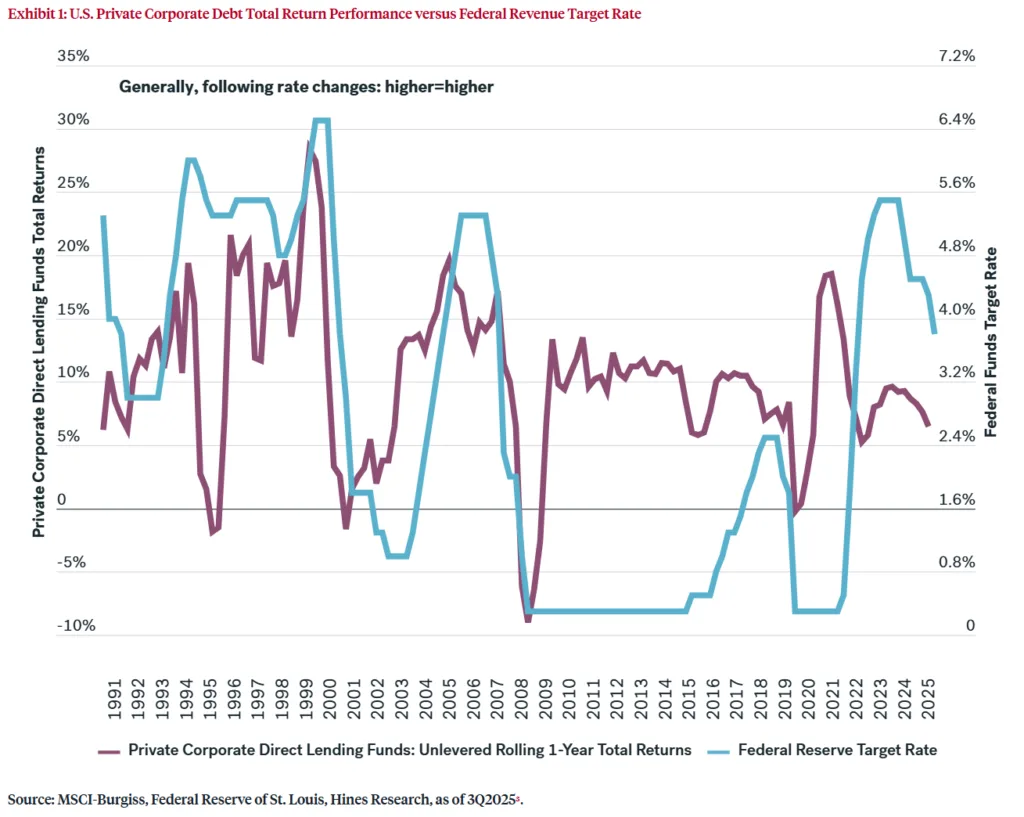
Income generation in private real estate remains strong, with over 80% of long-term core fund returns coming from property-level cash flows. These returns rely on operations, not market swings. Meanwhile, income from private corporate debt has declined as policy rates fall. This shift underscores the need for diversified allocations. Investors should target strategies that capture recovery potential across the real asset cycle.
Positioning for What’s Next
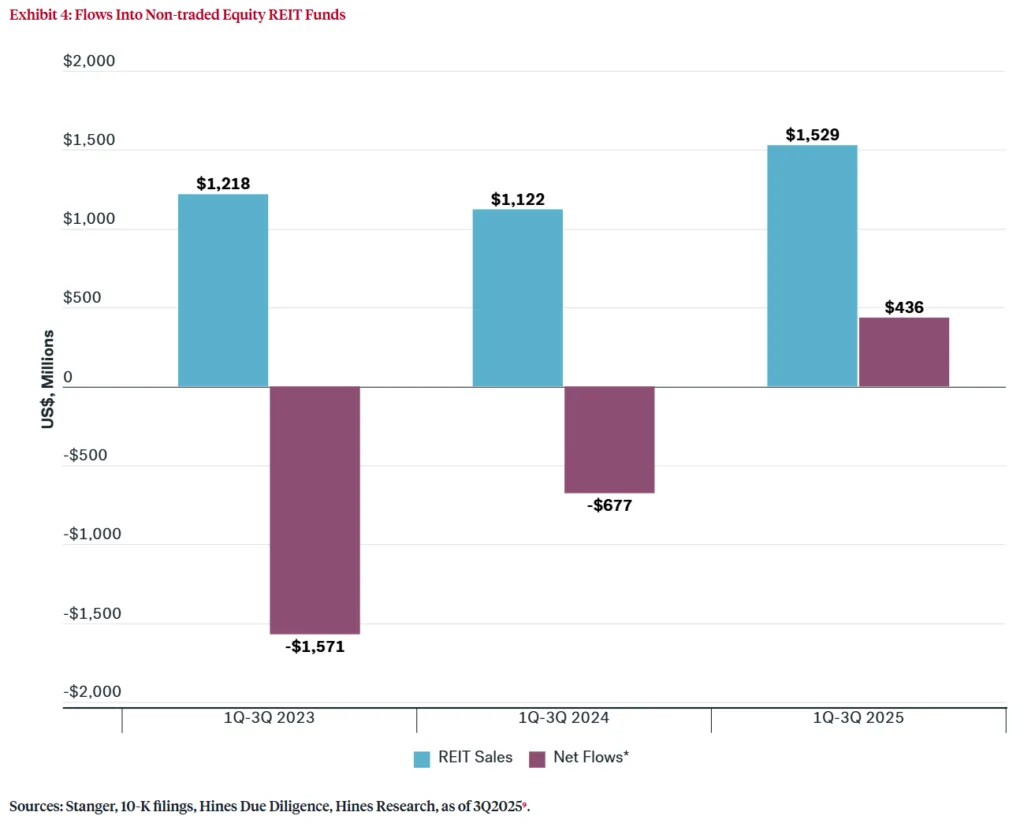
Investor momentum is shifting. Non-traded equity REIT capital raising is up 36% year-over-year in 2025, and net inflows have turned positive. This supports the outlook that allocators are repositioning in anticipation of sustained real asset cycle upside. Successful allocation strategies now require a more balanced approach, pairing persistent income from real estate with exposure to segments emerging from valuation resets. Discipline and strong operational execution at the local level remain essential as capital scarcity creates opportunities for skilled buyers and managers.
Final Thoughts
The real asset cycle demands preparation and flexibility. Allocators who rebalance toward durable, demand-driven strategies like private real estate can capture both immediate income and longer-term growth, positioning portfolios to benefit as the next phase of the market unfolds.