




- Interstate migration hit a 10-year low in 2024, with 2.1% of Americans moving states.
- Texas, Florida, and other traditional Sun Belt leaders saw much slower population gains.
- The Midwest is regaining momentum, with states like Ohio attracting more movers.
- Gen Z is now the most mobile generation, outpacing millennials in interstate moves.
Migration Cools as Affordability Tightens
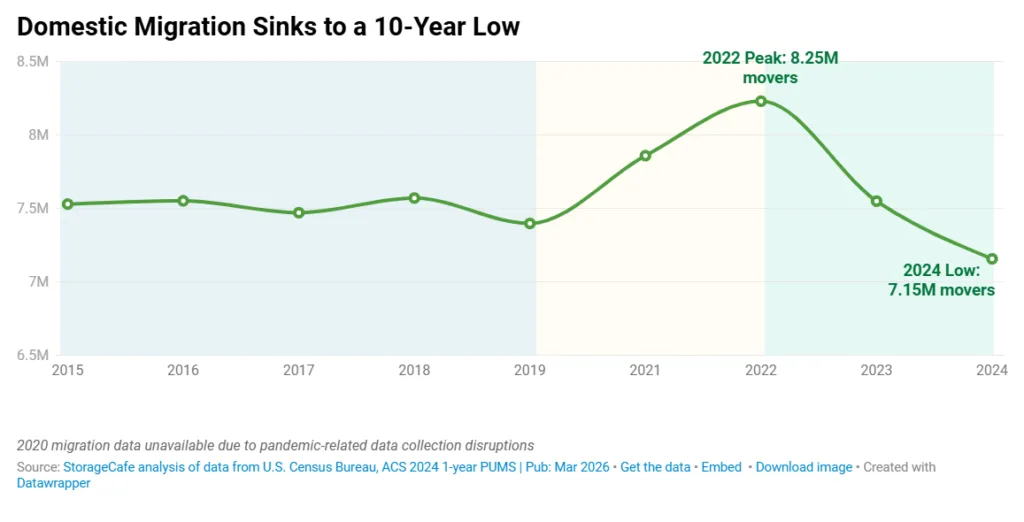
Interstate migration fell sharply in 2024, hitting its lowest level in a decade. Just 2.1% of Americans, or about 7.15M people, moved to a new state. StorageCafe reports this marks a 13% drop from the 2022 peak. Rising housing costs continue to limit mobility across the country.
Meanwhile, Sun Belt states like Texas and Florida still attract the most movers. However, both states saw noticeably slower population gains this year. At the same time, parts of the Midwest are gaining traction. Ohio, in particular, is drawing more interest due to steady job growth and relatively stable housing prices.
Who’s Moving and Where
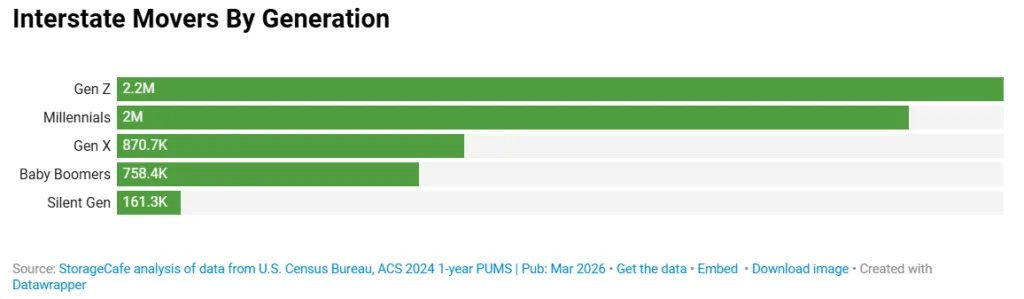
Gen Z emerged as the most mobile cohort, accounting for one-third of all interstate moves in 2024. These young adults, early in their careers and typically less tied down by homeownership, are gravitating towards states with favorable job markets and accessible lifestyle choices.
Top destinations for migration include Texas (76K net gain), Florida (68K), and South Carolina (54K), but each state experienced slower growth than prior years. This cooling momentum in Texas, in particular, reflects shifting migration patterns that are beginning to reshape growth expectations across key Sun Belt markets. The Midwest is now seeing increased inbound interest, with Ohio recording a notable reversal from net losses to a 29K net gain in 2024.
Affordability Realigns Migration Magnets
The motivation to move has shifted. Fewer Americans are chasing cheaper housing, as price gains and high mortgage rates have reduced the affordability edge in once-hot markets. Now, many are relocating to be closer to family, for retirement, or for long-term stability.
States like Vermont and parts of New England stand out on a per-capita basis for their ability to attract educated and younger newcomers, many of whom aim to buy homes upon arrival. New Hampshire and Maine top the list for highest rates of new resident homeownership.
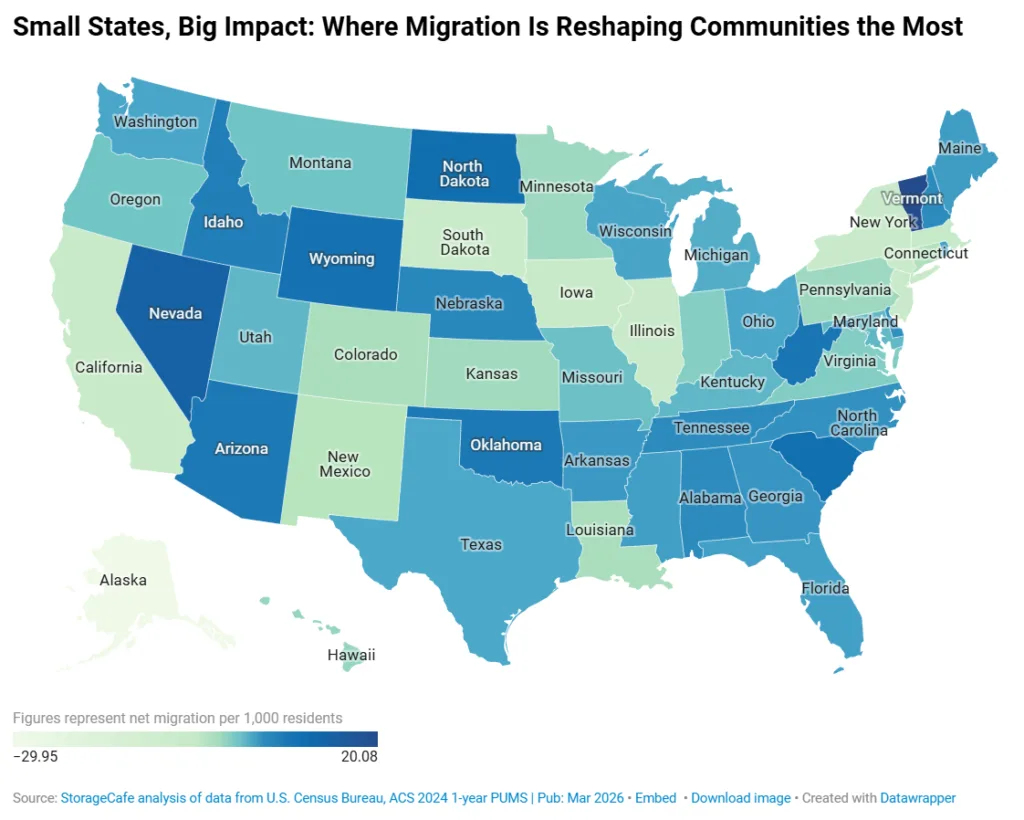
Coastal States Continue to Lose Residents
High-cost areas such as California, New York, Illinois, and New Jersey continued to see significant outflows. California alone lost over 263K people to other states in 2024—a trend ongoing for a decade.
This migration slowdown also impacts real estate sectors sensitive to mobility, particularly self storage. Many Sun Belt states saw self storage rents soften as move-in activity declined, while places like Nevada, where migration accelerated, experienced stable or rising rates despite high supply.
What’s Next
As interstate migration slows, real estate markets must adjust to lower population growth. The strongest markets will pair steady job creation with attainable housing options.
At the same time, current trends point to a market rebalancing. The Midwest is regaining momentum, attracting renewed interest from movers. Meanwhile, younger and educated Americans now prioritize long-term homeownership and overall lifestyle fit when relocating between states.
Get Smarter about what matters in CRE
Stay ahead of trends in commercial real estate with CRE Daily – the free newsletter delivering everything you need to start your day in just 5-minutes