






- A resurgence in US manufacturing is driving optimism in industrial real estate. Companies are reshoring production due to geopolitical uncertainty, supply chain disruptions, and bipartisan incentives.
- Firms like Brazil-based Grupo Vialume are retrofitting US facilities. Major investments from companies like Johnson & Johnson and Lego are adding millions of SF to the US industrial footprint.
- Despite strong momentum, analysts caution that actual output gains remain modest. Political volatility and unpredictable tariffs are dampening investor confidence and slowing project starts.
A Quiet Comeback
According to Bisnow, Brazilian manufacturer Grupo Vialume plans to open a plant in rural Colquitt, Georgia. The company will invest $4.4M to retrofit an existing facility for producing traffic markers and reflective lenses.
CEO João Paulo Moura cited tax incentives and the stable US dollar as key reasons for choosing Georgia. Tariff policies under President Trump’s second term may have also influenced the decision.
Grupo Vialume is one of many manufacturers bringing operations to the US this year. Supply chain shocks and geopolitical instability have pushed companies to reconsider their global manufacturing strategies.
A Trillion-Dollar Opportunity
A recent Hines report estimates that US manufacturing construction will grow by $1 trillion through 2030. This boom could drive demand for 430M SF of logistics and warehouse space.
JLL’s 2025 industrial demand study shows a sharp rise in interest from manufacturers. In 2020, they sought 26M SF of space. By 2024, that number climbed to 124M SF. JLL projects it will exceed 135M SF in 2025.
“Manufacturing now accounts for over 19% of industrial demand,” said JLL Senior Research Manager Kelsey Nastasi. She noted that these new plants are creating jobs and expanding supplier ecosystems.
Bipartisan Push Behind Reshoring
The CHIPS Act, passed under President Biden, kickstarted semiconductor and EV investment. Trump’s current administration expanded on those efforts with tariff threats and new tax incentives under the One Big Beautiful Bill Act.
This year, Johnson & Johnson committed $55B over four years to modernize its US manufacturing. That includes a 500,000 SF biologics plant in North Carolina. In Virginia, Lego broke ground on a 2M SF distribution center to support its planned $1B factory—originally announced in 2022.
JLL Vice Chairman Greg Matter pointed to rare political alignment. “This is a bipartisan effort. Manufacturing seems to be the one thing both parties agree on,” he said.
Get Smarter about what matters in CRE
Stay ahead of trends in commercial real estate with CRE Daily – the free newsletter delivering everything you need to start your day in just 5-minutes
Tempering the Optimism
Despite the enthusiasm, real output has grown slowly. A Kearney reshoring study showed only a 1% year-over-year rise in US manufacturing output in 2024. At the same time, imports from Asia grew by 10%.
The study noted that reshoring and nearshoring activity actually dropped by 311 basis points. Analysts blamed tariffs, space constraints, and economic uncertainty for this setback.
Many CEOs still express interest in returning to the US. Half of those surveyed by Kearney said they’re motivated by political tensions. However, analysts say most haven’t followed through with actual investments.
“This doesn’t mean reshoring is dead,” said Kearney partner Patrick Van den Bossche. “But we need to align expectations with market realities.”
Policy, Pricing, and Project Pauses
Lauren Pittelli, principal at Baker Logistics Consulting Services, said recent tariffs are forcing companies to delay investment decisions. Manufacturers reliant on steel and aluminum are especially cautious.
“I haven’t seen many new onshoring moves outside of CHIPS-related projects,” she said. “Clients are facing unexpected cost increases and constant uncertainty.”
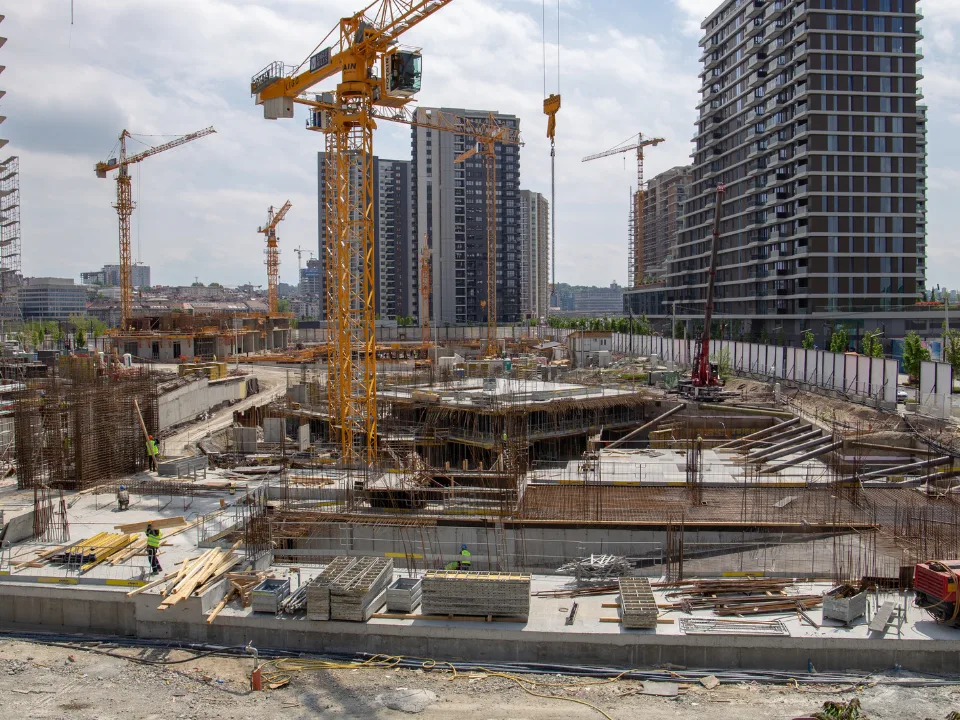
Avison Young reported a slowdown in manufacturing construction. Spending dropped from $240M to $223M in July. Experts attributed this dip to election-season uncertainty, tighter lease terms, and delays in federal policy implementation—trends that are also reshaping how industrial construction unfolds in today’s tariff-driven environment.
What Lies Ahead
The current geopolitical climate may be fueling both hesitation and urgency. Some companies are waiting for clarity. Others see the risks as a reason to build closer to home.
“I don’t see geopolitical issues calming down anytime soon,” said CBRE’s Seth Martindale. “Those risks aren’t going away—and that might keep pushing companies to onshore.”
While challenges remain, industrial real estate could continue benefiting from the long-term shift toward US-based manufacturing.