




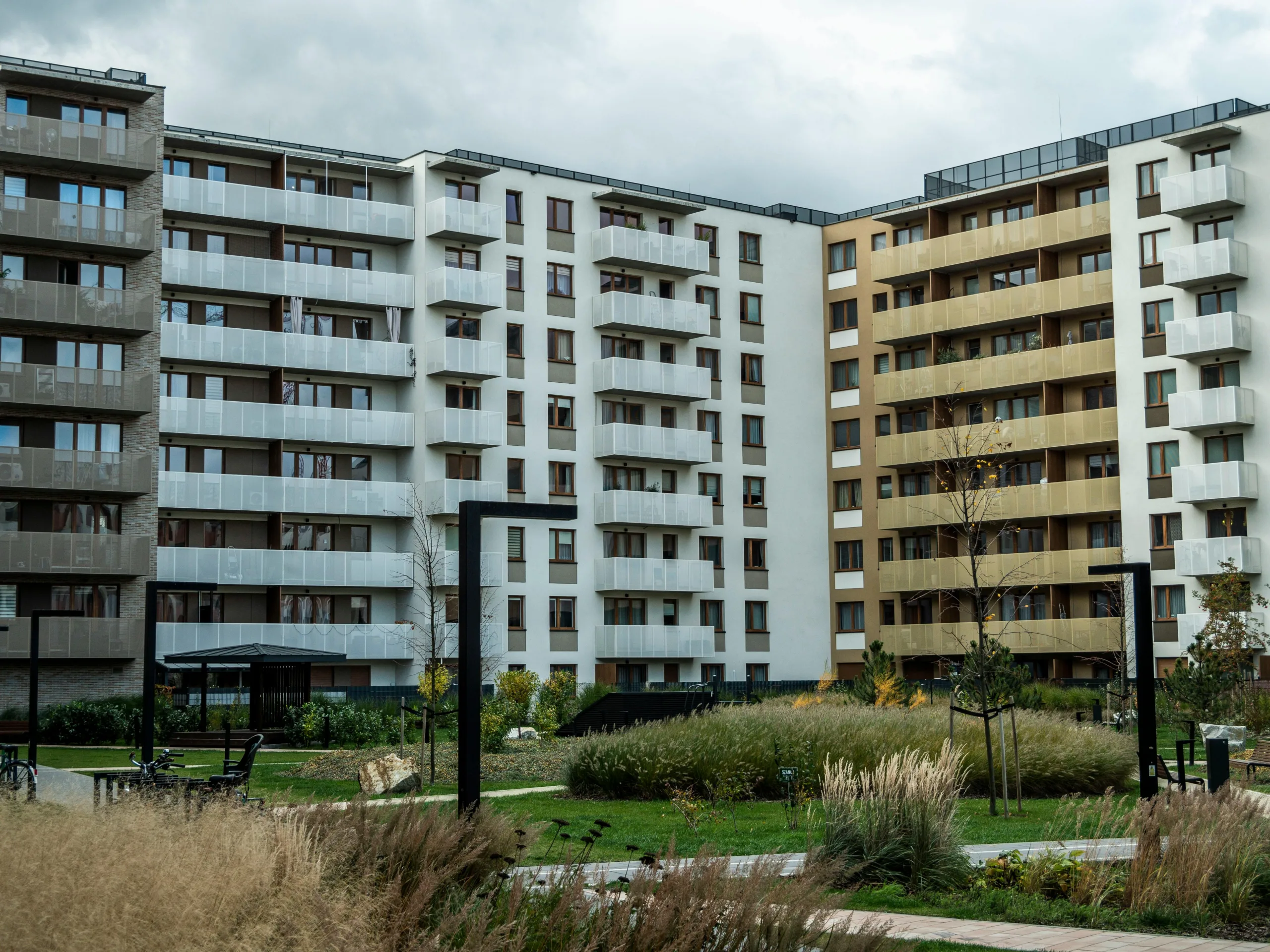
- Multifamily demand remains robust, with over 100K units absorbed for three straight quarters—on pace to make 2025 one of the strongest leasing years since 2000.
- Still, vacancy hovers around 9%, and rent growth is muted, with operators favoring occupancy over pricing amid a wave of supply.rn
- Interest rate cuts are encouraging more renters—especially first-time buyers—to enter the for-sale housing market, softening multifamily demand in some regions.rn
- While construction activity is declining, particularly in the Sun Belt, elevated inventory levels continue to keep pressure on rent growth in the near term.
Multifamily Is Moving—But Rent Isn’t
Even as the apartment market enters the seasonal leasing slowdown, renter demand remains solid, reports Bisnow. According to Cushman & Wakefield, tenants absorbed more than 100K units in each of the last three quarters, positioning 2025 as one of the top absorption years in recent history.
Yet the supply boom continues to loom large. Roughly 600K new units were delivered in 2024—the most since 1986—keeping national vacancy rates stubbornly high at 9%. That imbalance is limiting rent growth, even in a high-demand environment.
“Operators are prioritizing occupancy and retention over rate growth, especially in markets facing heavier supply pressure,” said Greystar’s Jordan Kabbani.
A Slower Market For Rent Growth
Despite prices still sitting well above pre-pandemic levels, rent increases have stalled. Asking rents were up just 1.5% year-over-year in Q3, down from 2.2% earlier this year. Apartment List data even shows effective rents declining 0.8% YoY in September to $1,394.
CBRE had projected 2.6% rent growth and 4.9% vacancy by year-end—but vacancy is running well above that target.
There are bright spots: San Francisco leads the country in rent growth at 7.8%, followed by San Jose (5.2%), Chicago, and New York. But in high-supply sun belt markets, vacancy remains elevated at 11%, with little change from last year.
Get Smarter about what matters in CRE
Stay ahead of trends in commercial real estate with CRE Daily – the free newsletter delivering everything you need to start your day in just 5-minutes
A Shift Toward Buying
Interest rates are beginning to tilt the balance between renting and buying. The 30-year mortgage rate dropped to 6.19%, its lowest level in over a year, according to Freddie Mac. That’s prompting some would-be renters—especially first-time buyers—to enter the for-sale market.
Sales activity is picking up: Home sales rose 4.1% YoY in September, with first-time buyers making up 30% of the total—up from 26% the year prior.
“The lack of affordability in the for-sale housing market had been driving renter demand,” said Lee Everett of Cortland. “But now, interest rate cuts are opening the door to ownership.”
Supply Shift Could Tighten Market
Developers are pulling back. Third-quarter deliveries fell 27% YoY to 109K units, and construction starts are down sharply—50% below peak levels, according to Cushman.
The construction cooldown may finally give the market breathing room. Kabbani expects new supply to become a tailwind by 2026–2027, setting up lower vacancy and firmer rent growth.
Projections suggest national rent growth could average 3% in 2026, potentially exceeding 4% if demand holds and vacancy drops below long-term norms.
Outlook
With leasing momentum strong and construction tapering off, landlords could regain pricing power—but not overnight. For now, occupancy remains the priority.
As Sam Tenenbaum of Cushman & Wakefield put it: “We’re not filling the funnel up as quickly as we’re emptying out the funnel.”