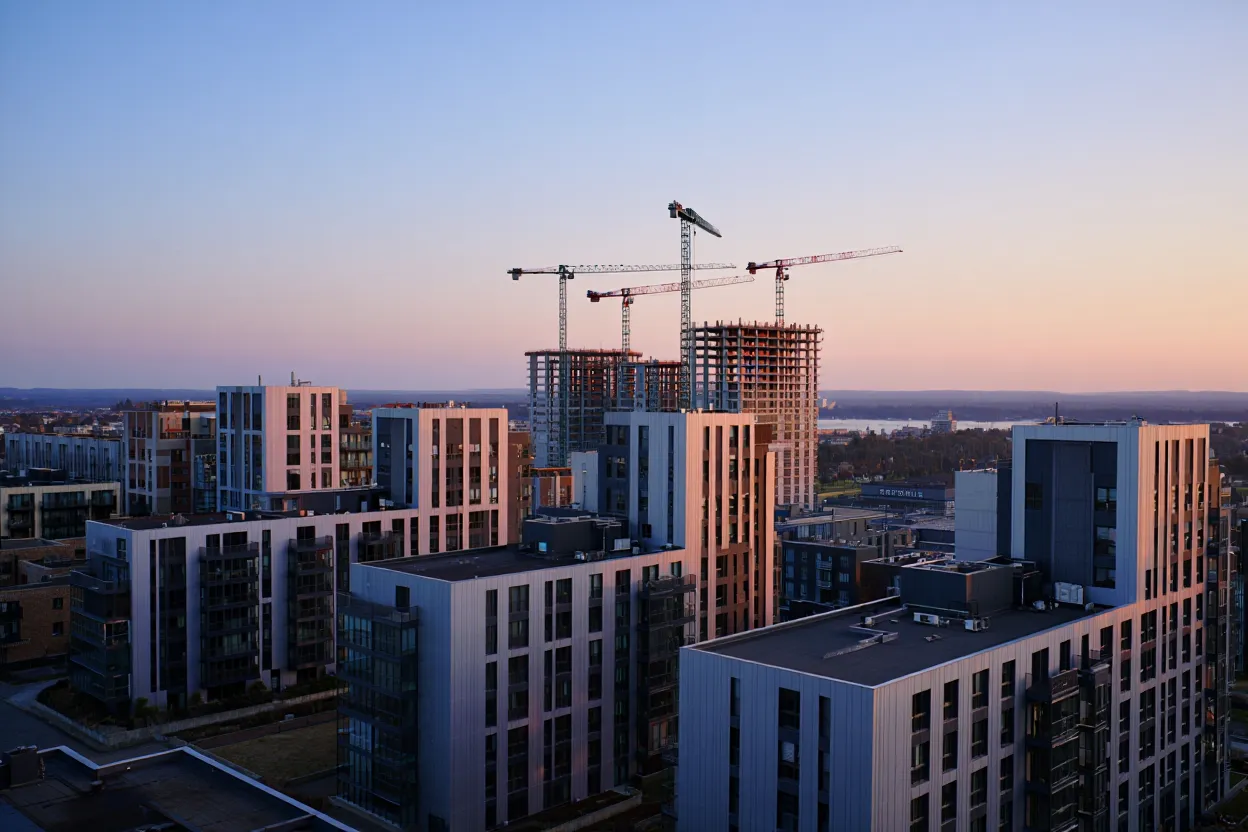



Class B Apartments Emerge as the Market’s Quiet Winner
As Class A faces oversupply and Class C renters feel the squeeze, Class B assets are quietly delivering the most stability.

Nina Dale
April 21, 2026
Together with

Good morning. Today’s rental market is splitting, and the middle is winning. Class B apartments are benefiting from strong renewals, limited competition, and renters staying put.
Today’s issue is sponsored by RealBerry—invest directly with the developer behind landmark projects like Denver Union Station.

🎙️ This Week on No Cap: Brixmor CEO Brian Finnegan shares how Brixmor built a 60M+ SF retail platform around everyday demand, and why that strategy is paying off.
Listen & subscribe: Apple Podcasts | Spotify | YouTube
CRE Trivia 🧠
When Rockefeller Center was developed in the 1930s, John D. Rockefeller Jr. had to personally absorb the cost after his anchor tenant backed out. Who was that tenant?
(Answer at the bottom of the newsletter)
Market Snapshot
|
|
||||
|
|
*Data as of 4/20/2026 market close.
Core Stability
Class B Apartments Emerge as the Market’s Quiet Winner
In a “muddling through” multifamily market, the middle tier is proving to be the most resilient.
Pressure at the top and bottom: Class A and Class C properties face different—but equally real—challenges. Luxury assets are absorbing a wave of new supply, driving concessions and slower lease-ups, while Class C renters are squeezed by rising costs, worsening affordability, and higher delinquencies. The result: stress at both ends of the spectrum.
Class B sits in a sweet spot: Renters are strained but not overextended, and the segment faces less competition from new supply. A long-term undersupply of workforce housing continues to support rent growth, with demand remaining relatively stable.
Leasing dynamics are shifting: New-lease rent growth is weak or negative in many markets, but renewals remain strong as renters stay put. This “stickiness” mirrors a self-storage effect—tenants pay more over time because moving is costly. Class B benefits most, with renters who are stable but have limited paths to homeownership.
Structural tailwinds: Homeownership remains out of reach for many due to high mortgage rates, insurance, and down payment hurdles, often requiring family help. At the same time, delayed family formation and long-term renting are reinforcing demand for mid-tier housing.
Underwriting reality check: Expenses—especially insurance, labor, and utilities—have surged, compressing margins. While growth is slowing, operators still need tight cost control. Investments in resilience (like better roofing) can help curb insurance costs, especially in high-risk areas.
Don’t over-upgrade: There’s risk in pushing Class B renovations too far upscale. Overcapitalizing units can price out the very renters who sustain the segment, especially as Class A properties compete with concessions and affordable housing options expand.
➥ THE TAKEAWAY
Strategy shift for investors: Rather than chasing aggressive rent growth, owners are better off focusing on renewal pricing, occupancy stability and submarket fundamentals. In today’s environment, Class B is less about outsized returns and more about dependable income and downside protection.
TOGETHER WITH REALBERRY
Scale Your Real Estate Exposure

Invest directly with the developer of landmark projects like Denver Union Station with Realberry.
With 35 years of proven investment, development, and management expertise, Realberry provides accredited investors access to institutional-quality real estate opportunities across multifamily, BTR, mixed-use, and hospitality – historically reserved for a select few.
We focus on disciplined underwriting and long-term value creation across market cycles. Our track record highlights this discipline:
-
$1.36B equity raised since inception
-
5x average investments per investor
-
$3.6B AUM
-
13M SF owned/developed
*This is a paid advertisement. Please see the full disclosure at the bottom of the newsletter.
✍️ Editor’s Picks
-
Deliver the data: AppFolio research shows 73% of investors want AI-enabled insights. Stop manually merging spreadsheets and deliver the performance analytics your capital partners now demand. (sponsored)
-
Split momentum: The Fed’s Beige Book shows a bifurcated CRE market, with strength in industrial, data centers, and Class A office, while weaker segments face cost pressures and uneven demand.
-
Human backstop: AI is speeding up CRE underwriting and expanding data-driven insights, but human judgment remains essential as dealmakers balance efficiency gains with accountability and risk in an uncertain market.
-
Hidden drag: Your on-site managers cost too much to be doing admin work. Relay's Remote APMs own the back office — experienced, full-time, Yardi-certified, 75% below U.S. rates. (sponsored)
-
Affordability exodus: Florida’s growth model is faltering as rising housing and living costs push out middle-income residents and slow migration, threatening demand for housing, labor force growth, and broader economic momentum.
-
Healthcare bet: Blue Owl is acquiring Sila Realty Trust for $2.4B, doubling down on net-leased healthcare assets as investors favor stable, income-generating properties with long-term growth potential.
-
Builder squeeze: US homebuilders face another “lost” year as geopolitical tensions drive up costs, weaken buyer demand, and force margin-cutting incentives amid rising rates and economic uncertainty.
🏘️ MULTIFAMILY
-
Supply stall: The apartment market is treading water as slowing construction and normalized demand keep vacancies stable, while a widening divide emerges between stronger Class A assets and softer workforce housing.
-
Global branding: The Trump Organization is expanding its international strategy with a planned 70-story luxury tower in Tbilisi, underscoring a renewed push for overseas, brand-driven development deals.
-
Rent cooldown: Single-family rent growth has slowed to its weakest pace since 2010, as affordability pressures and higher capital costs dampen gains and curb investment activity.
🏭 Industrial
-
Demand-driven boom: U.S. manufacturing is quietly expanding as AI and aerospace demand lift output despite declining jobs, underscoring that growth is being fueled more by market demand than tariffs.
-
Midwest expansion: Diamond Properties is scaling its Ohio industrial footprint to 3.66M SF, betting on strong Midwest logistics demand and stable, income-producing assets in tight vacancy corridors.
-
Leasing surge: Boston’s industrial market saw demand jump 83% in Q1, driven by large tenant deals absorbing excess supply, though vacancy remains flat amid lingering speculative space.
-
Tampa bet: GTIS is developing a 382K SF logistics project in Tampa, betting on infill demand and Opportunity Zone upside despite rising vacancy and recent supply pressures.
🏬 RETAIL
-
K-shaped retail: Grocery-anchored retail continues to attract steady, smaller-scale investment across diverse markets, highlighting a bifurcated retail landscape split between necessity-driven assets and large luxury deals.
-
Retail refresh: Walmart is investing heavily in Florida with 58 store remodels, betting on upgraded, experience-driven formats to drive traffic and modernize its physical footprint.
-
Mall revival: Stockdale Capital is betting on a comeback for well-located suburban malls, repositioning underperforming assets with experiential upgrades and diversified tenants to drive renewed foot traffic and value.
🏢 OFFICE
-
Gateway rewritten: Dallas is emerging as a top-tier global office market, rivaling traditional coastal gateways as capital follows corporate relocations and population growth into the Sun Belt.
-
HQ shuffle: Raven Capital is relocating and expanding its HQ to Douglas Emmett’s 100 Wilshire, highlighting steady leasing in a stabilizing LA office market.
-
Refi revival: Rubenstein and Vision secured an $80M refinance for their Parsippany office campus after boosting occupancy above 90%, underscoring demand for upgraded suburban office assets.
🏨 HOSPITALITY
-
Experience economy: Hotels are investing in niche, experience-driven concepts—from glamping and wellness retreats to sports and gaming themes—to capture growing demand and boost revenue.
-
Split demand: U.S. hotel performance was flat overall as weak weekday business travel post-Easter was offset by a strong weekend rebound driven by spring-break leisure demand.
-
Luxury pivot: Primestar is launching its June Lux brand to enter the upscale hotel segment, targeting underserved markets with tech-enabled, more affordable five-star offerings.
📈 CHART OF THE DAY

Courtesy of Colliers
Rising gas prices from the Iran war have already cost Americans $21.3B, temporarily offset by $47.1B in tax refunds, but as relief fades and broader price increases loom, the financial strain on consumers is expected to worsen.
CRE Trivia (Answer)🧠
The Metropolitan Opera, which withdrew during the Great Depression, leaving Rockefeller to develop the entire 12-building complex himself.
More from CRE Daily
-
📬 Newsletters: Stay ahead of the market with local insights from CRE Daily Texas and CRE Daily New York.
-
🎙️Podcast: No Cap by CRE Daily delivers an unfiltered look at the biggest trends—and the money game behind them.
-
🗓️ CRE Events Calendar: The largest searchable calendar of commercial real estate events—filter by city or sector.
-
📊 Market Reports: A centralized hub for brokerage research and market intelligence, all in one place.
-
📈 Fear & Greed Index: A fully interactive sentiment tracker on the pulse of CRE built in partnership with John Burns Research & Consulting.

You currently have 0 referrals, only 1 away from receiving Multifamily Stress Test Model.
What did you think of today's newsletter? |