








- US employers added just 57,000 jobs in June, the weakest monthly gain since December and well below consensus forecasts, while prior months were revised lower by 74,000 jobs.
- The report reduced expectations for a July Fed rate hike, but the labor mix matters for apartments too, especially after leisure and hospitality lost 61,000 jobs in a key summer hiring month.
- For rental housing owners, the setup is mixed: softer Treasury yields could help financing, but weaker renter employment in lower-wage sectors could pressure collections in workforce housing.
US job growth slowed sharply in June, and the miss landed at an awkward moment for apartment owners, per Chandan Economics. According to the Bureau of Labor Statistics, employers added 57,000 jobs last month, well below the roughly 115,000 economists expected. The June 2026 jobs report also included 74,000 downward revisions to April and May, reinforcing the view that labor market momentum has cooled.
That matters beyond the Fed. Softer labor data can reduce rate pressure and help debt markets, but it can also weaken renter finances, especially in lower-wage sectors that support workforce housing demand.
Get Smarter about what matters in CRE
Stay ahead of trends in commercial real estate with CRE Daily – the free newsletter delivering everything you need to start your day in just 5-minutes
A Slower Labor Market Emerges
The June report looked soft beyond the headline payroll gain. The unemployment rate dipped to 4.2%, but that decline came with a drop in labor force participation to 61.5%, not stronger hiring. After the latest revisions, the 12-month average monthly job gain now sits at just 36,000.
Job growth was also narrow. Professional and business services added 36,000 jobs, while social assistance and health care added 25,000 and 22,000, respectively. Most other major sectors, including construction, retail, manufacturing, transportation, and government, were effectively flat.
The Details
The biggest warning sign for rental housing came from leisure and hospitality, which lost 61,000 jobs in June. The BLS tied the drop to weaker-than-normal seasonal hiring, but the timing matters. June is usually a key summer hiring month, and the sector has shown essentially no net growth through the first half of 2026.
Wages held up better. Average hourly earnings rose 0.3% month over month and 3.5% year over year. Still, the broader picture points to a labor market losing momentum rather than stabilizing.
Fed Relief, But Only to a Point
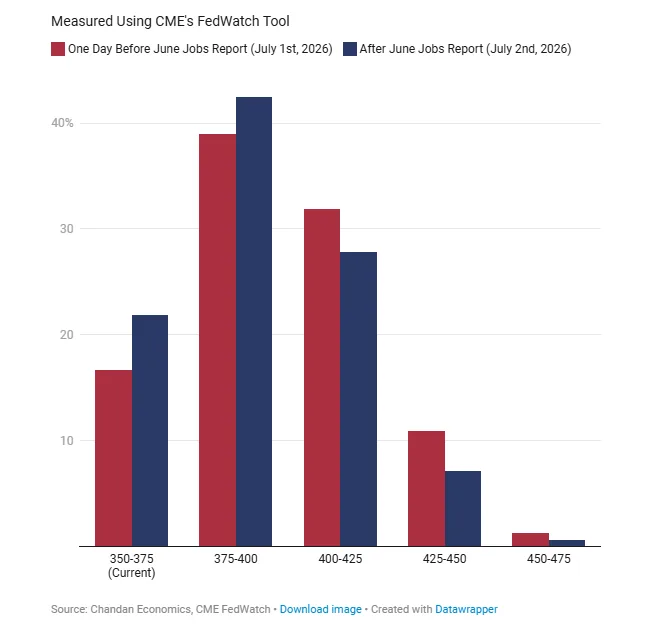
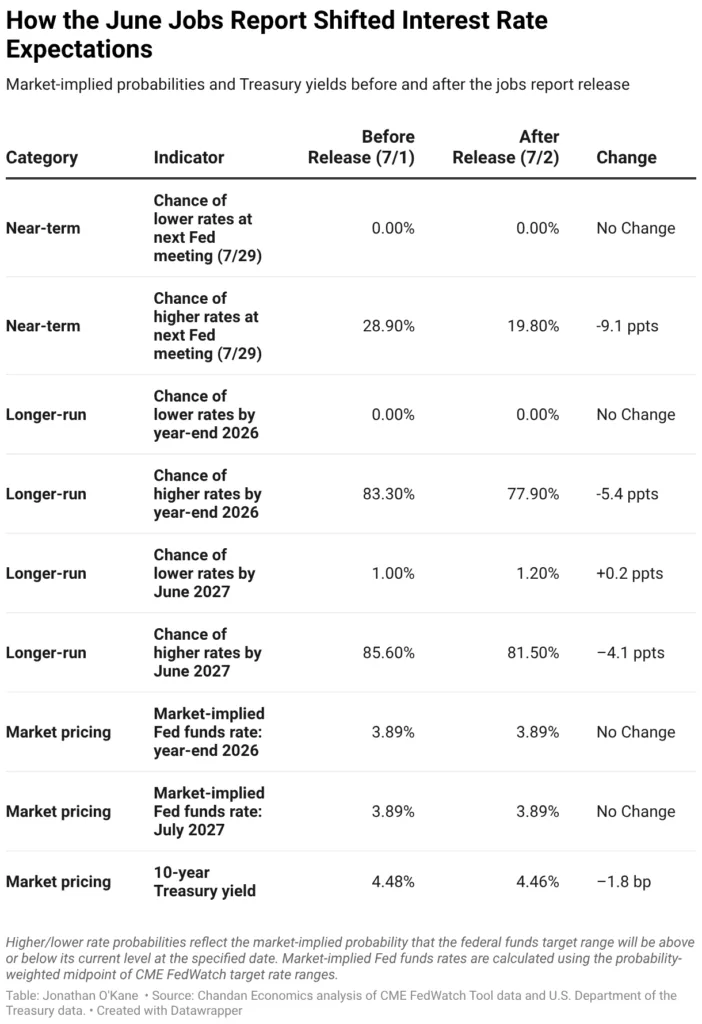
The report immediately eased some pressure on rates. Treasury yields fell after the release, and futures markets reduced the odds of a July rate hike. Before the report, markets priced a 28.9% chance of a 25-basis-point increase at the Fed’s July meeting. After the release, that fell to 19.8%.
Still, the Fed’s June projections remained hawkish. Policymakers held rates at 3.50% to 3.75%, raised their median year-end 2026 fed funds forecast to 3.8%, and signaled that at least one more hike remains on the table. That limits how much financing relief apartment owners can expect from one soft jobs report.
Why It Matters
For rental housing, the mix of job growth matters as much as the total. Professional services and health care tend to support higher-income renters. Leisure and hospitality, by contrast, employ a large share of renters in the $900 to $1,500 monthly rent range, according to Chandan Economics.
That makes the sector’s June job losses more important for workforce housing owners. Chandan also reported that on-time rent payments in independently operated apartment units slipped to 83.8% in June after improving earlier in the year. Collections are still better than a year ago, but another weak month in renter-heavy industries could pressure that recovery.
What’s Next
The next few labor reports will be key for both the Fed and apartment owners. If hiring rebounds, rate pressure could return quickly. If weakness spreads, debt costs may ease, but renter stress could become the bigger story. For landlords, especially in workforce housing, leisure payrolls and rent collections are now two of the clearest signals to watch.