




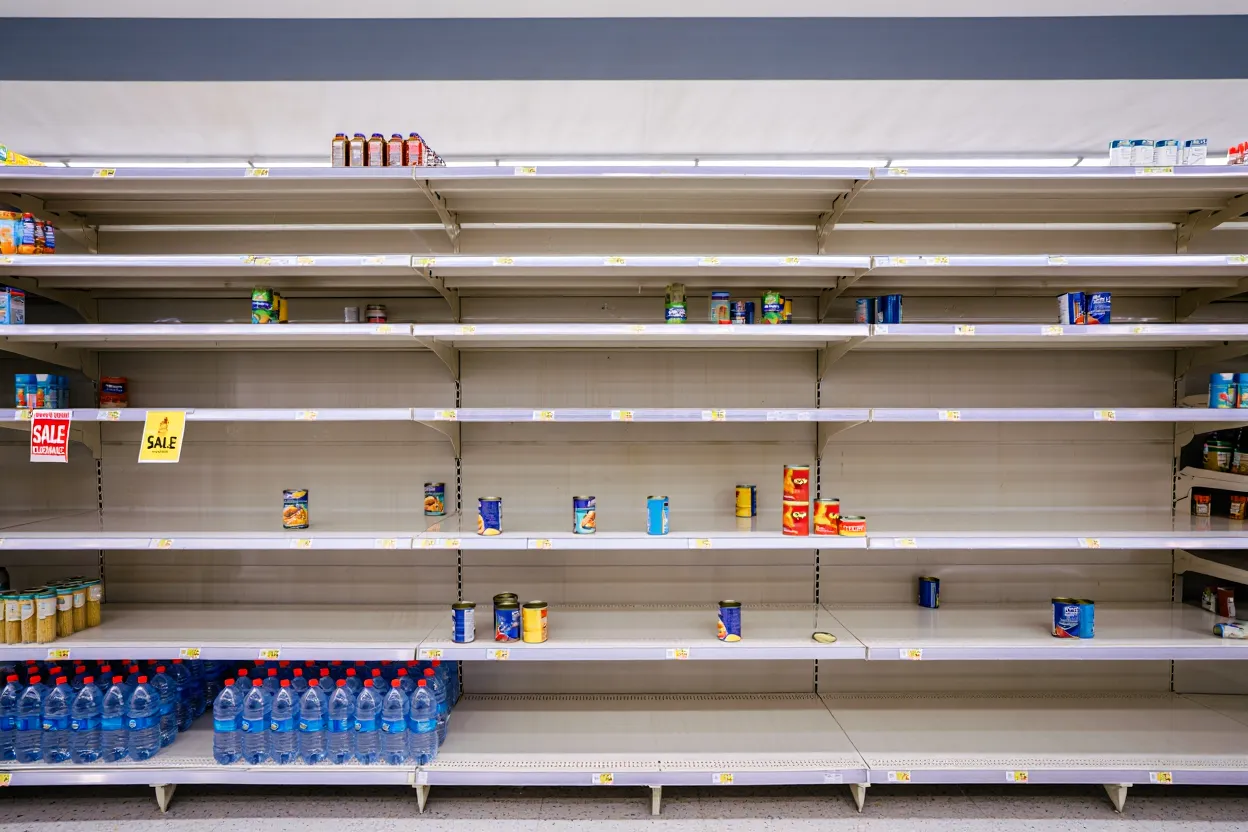
- Grocery sales in the US are now dropping as unit sales decline, according to NielsenIQ data.
- Middle- and lower-income shoppers are buying less due to inflation, SNAP cuts, and higher gas prices.
- Value-driven grocers and discounters are gaining share, but total volumes remain under pressure across the industry.
Sliding Grocery Volume Replaces Price-Led Illusions
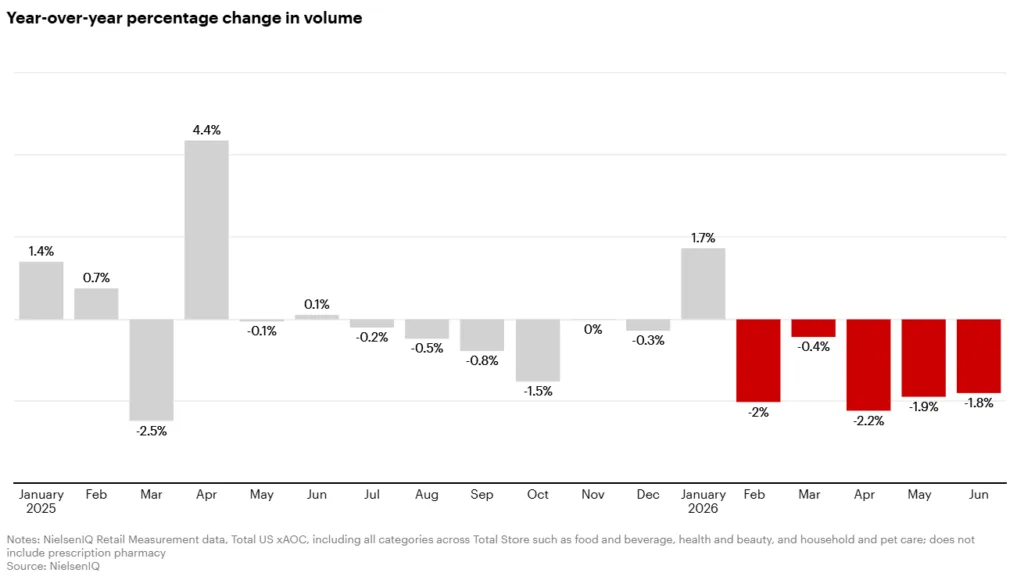
Grocery operators across the US are facing a new reality, as reported by Bain & Company’s analysis of NielsenIQ data. Since February 2026, rising grocery prices—long a buffer—can no longer hide shrinking basket sizes. For most months since February, per the data, grocery unit sales have fallen about 2% year over year, even as prices continue to rise 2–3%.
The pivot marks a new phase for the sector after pandemic-era demand and inflation fueled expansion—instead of settling, the volume contraction is now pulling top-line sales down at a national scale.
Get Smarter about what matters in CRE
Stay ahead of trends in commercial real estate with CRE Daily – the free newsletter delivering everything you need to start your day in just 5-minutes
The Details
The slowdown is driven by a combination of macroeconomic pressures. Key contributors include a substantial decrease in Supplemental Nutrition Assistance Program (SNAP) participation after benefit cuts in late 2025 and tighter eligibility in early 2026. Meanwhile, consumers absorbed a 20% spike in gas prices in March 2026, compounding pain from a cumulative 33% increase in grocery prices since 2019.
Bain’s Consumer Health Index indicates that lower- and middle-income households, in particular, show restrained intent to spend, barely returning to neutral after almost a year of erosion. While robust tax refunds—about $50B more than the prior year—and leftover pandemic-era savings provided a residual tailwind, they are being steadily eroded by persistent inflation.
Consumers Trade Down as Value War Escalates
Bain’s latest Consumer Lab data shows that 80% of US households continue to look for ways to save, with more than a quarter actively targeting grocery bills for cutbacks. Among those consumers, 56% are downgrading to cheaper brands, 49% are simply purchasing fewer items, and 44% are using more coupons or deals.
Separately, growing use of GLP-1 diabetes and weight-loss drugs is shrinking total grocery demand further. June year-over-year unit comparisons illustrate the shift: unit growth was almost flat (+0.1%) in June 2025, but negative (-1.8%) for June 2026, a near-2-point swing in a single year.
Why It Matters
The negative turn in unit growth is forcing the sector to adapt, fundamentally changing what it takes to compete. Similar pressures are emerging across real estate, where prolonged multifamily weakness is testing operators facing softer demand and tighter margins. Bain’s analysis of NielsenIQ’s Homescan panel reveals that discount, club, and mass retailers are claiming more traffic as shoppers hunt for better value. In fact, 22% of shoppers are now visiting more retailers than before, according to NielsenIQ 2026 survey results.
But even winners in this value-oriented race still face shrinking baskets and tighter margins, as the total pie is contracting. The inflationary period provided a revenue illusion: price was up, but not because people bought more groceries. Now, as the pricing tailwind fades, operators must find top-line growth by wrestling share from competitors—a much tougher, margin-pressured task. The market has effectively shifted from focus on topline expansion to a dogged share game, and not all grocers are well positioned.
Retailers that successfully defend (or gain) share will need more than just the lowest price. Bain’s research underscores how effective value strategies mix competitive pricing on key items, targeted promotions, brand loyalty, and the precise use of private labels. Not every grocer can (or should) be the cheapest, but all must be relentless about protecting perceived value where shoppers notice most. With most data points—unit demand, consumer intent, and economic pressure—pointing downward or flat, this environment will likely squeeze weaker operators and open opportunities for savvy players with strong operational discipline.
What’s Next
Barring a meaningful rise in household income or major drop in inflation, analysts expect the soft patch in grocery volumes to persist through the end of 2026. Continued income constraints, tighter program eligibility, and high gas prices will keep consumers looking for deals and pushing value-oriented players to innovate further.
The competitive landscape will remain fierce as operators focus on loyalty programs, strategic pricing, and operational efficiency to defend market share. Sustained recovery for the sector likely hinges on broader improvements in disposable income and food affordability, which remain uncertain for now.