





- Super-regional banks increased commercial real estate balances in Q2 2026, driven by multifamily and industrial lending, per bank earnings data.
- Much of the CRE growth came from extensions, modifications, and acquisitions—not purely new originations—while legacy 2021–2022 loans remain in workout.
- Texas multifamily portfolios are showing elevated watchlist rates, suggesting early-stage stress could emerge as a risk to discipline-minded lenders.
Banks Navigate Growth and Legacy Risk
According to Trepp, eight of the 11 largest super-regional banks increased commercial real estate balances during Q2 2026 earnings. Multifamily and industrial drove most new lending activity. However, balance growth reflected more than fresh originations. Extensions, modifications, and acquisitions also lifted loan totals.
Legacy portfolios from 2021 and 2022 continue moving through distressed loan categories. M&T reflects the industry’s “two books” strategy. The bank grows stronger new CRE loans while managing older credit issues. Lenders continue expanding selective lending while addressing unresolved legacy risks.
Get Smarter about what matters in CRE
Stay ahead of trends in commercial real estate with CRE Daily – the free newsletter delivering everything you need to start your day in just 5-minutes
The Details
Q2 CRE balance growth does not fully reflect new lending. Second-quarter reports show extensions and modifications inflated balances. Banks extended many 2021 and 2022 loans instead of allowing paydowns or charge-offs. Acquisitions also increased balances at Fifth Third, Huntington, and PNC. Higher credit line usage added further growth.
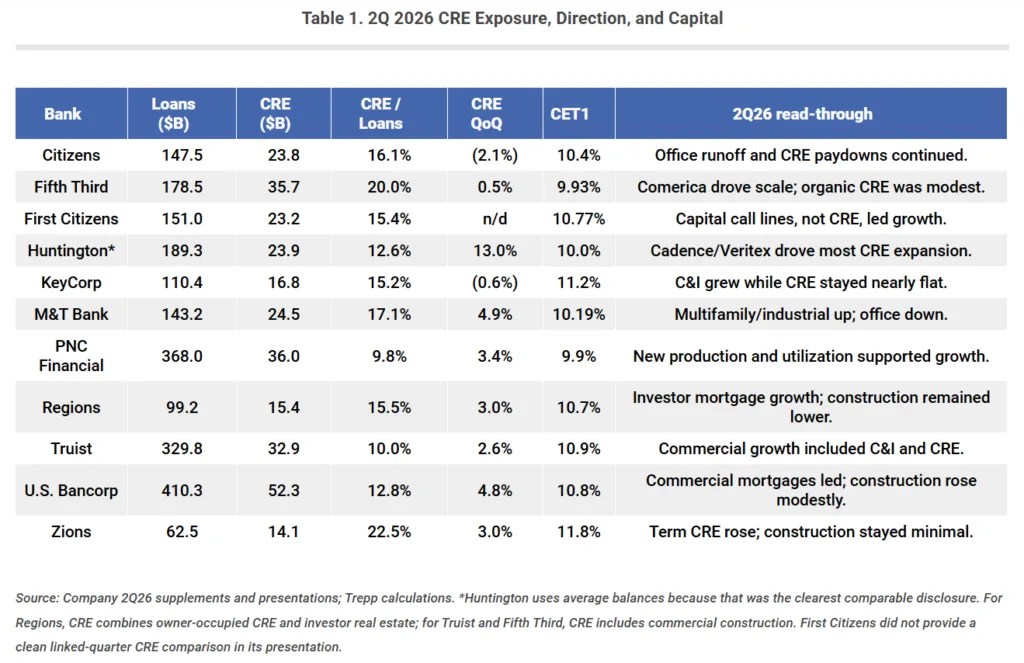
New originations increased but trailed headline balance gains. Meanwhile, risk managers focused on distressed legacy assets. Floating-rate, higher-leverage loans from before rate hikes remain the primary concern.
Texas Multifamily Sets Off Early Alarms
Multifamily and industrial continue leading new CRE activity. However, Texas multifamily is showing early warning signs. Trepp data shows Austin’s multifamily watchlist rate reached 17.3%. Its special servicing rate remains just 1%. Watchlist status often signals emerging issues before payment problems appear.
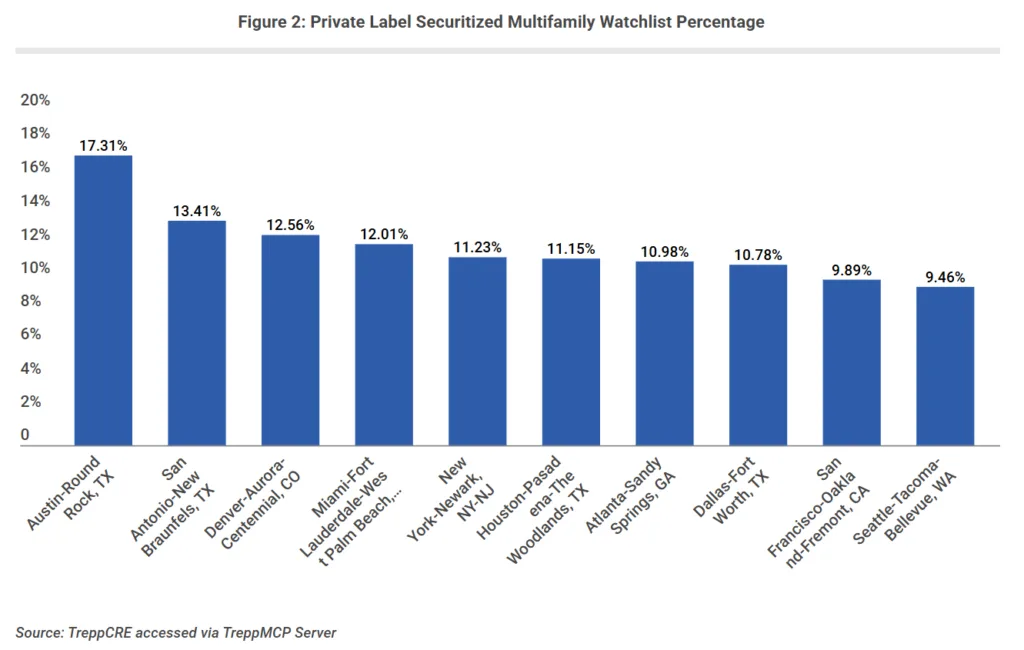
Regions Financial also flagged weakness in some Texas multifamily markets during its Q2 earnings call. However, executives stopped short of calling conditions alarming. Strong origination and early stress signals now overlap. That combination could test underwriting discipline as the credit cycle evolves.
Why It Matters
Major US banks have resumed CRE lending after two years of retrenchment. Q2 2026 earnings show lenders favor low-leverage, well-sponsored multifamily and industrial deals. This approach remains far more conservative than 2021 and 2022 lending practices.
Pricing remains competitive, while credit standards remain disciplined. Trepp and bank disclosures suggest peak-vintage underwriting deserves close attention. Recent earnings also showed the largest US banks reducing CRE delinquencies, while several regional lenders reported gradual credit deterioration. Texas stands out because banks continue expanding despite early warning signals.
Signs of stress now appear through migration metrics instead of defaults or charge-offs. Huntington, KeyCorp, Fifth Third, Truist, and U.S. Bancorp all reported higher nonperforming or criticized assets. These trends often precede future losses. Charge-off data alone may understate credit risk.
Office also received less attention during earnings calls. Banks continue shrinking office exposure while focusing on multifamily and industrial. Texas remains one of the key markets to watch.
What’s Next
Super-regional banks will continue monitoring localized weakness, especially across Texas multifamily markets. The industry’s success depends on resolving legacy risks from aggressive 2021 and 2022 underwriting. Watchlist rates and nonperforming loan migration will remain critical indicators.
These metrics will shape lending policy, pricing, and capital allocation. If underwriting discipline holds, banks could avoid major losses. However, deeper weakness in Texas multifamily could quickly spread across bank balance sheets.