






- San Jose leads Western US metros with unmatched tech job density, salaries, and patent output, but secondary markets are surging.
- Rising stars such as Boulder, Reno, and Bend post rapid tech job and wage growth, reflecting a shift away from traditional coastal hubs.
- The Mountain West corridor now draws both talent and investment, hinting at a broader decentralization trend in the tech industry.
Tech Growth Spreads Far Beyond the Coast
The Western US has long been synonymous with tech powerhouses like Silicon Valley and Seattle, but new data from CommercialCafe confirms that the region’s innovation ecosystem is spreading inland. According to the June 2026 study, smaller and mid-size metros—think Boulder, Provo, and Reno—now count among the fastest-expanding tech markets nationwide.
Factors such as lower costs, strong academic pipelines, and concerted local recruitment campaigns have enabled these cities to lure both companies and talent away from legacy coastal epicenters. The new ranking assessed over 70 Western metros above 200,000 in population and scored them on tech job growth, establishment density, wages, patent output, and life-quality indices.
This expansion marks a notable shift: while the Bay Area remains supreme, four Colorado metros, two Nevada metros, and key entries from Utah and Idaho now challenge the region’s historic dominance by Los Angeles and San Francisco. It’s a dynamic that signals growing opportunity along the Mountain West corridor and compelling valuation shifts for CRE investors looking beyond the usual suspects.
Get Smarter about what matters in CRE
Stay ahead of trends in commercial real estate with CRE Daily – the free newsletter delivering everything you need to start your day in just 5-minutes
The End of the Old Tech Monopoly
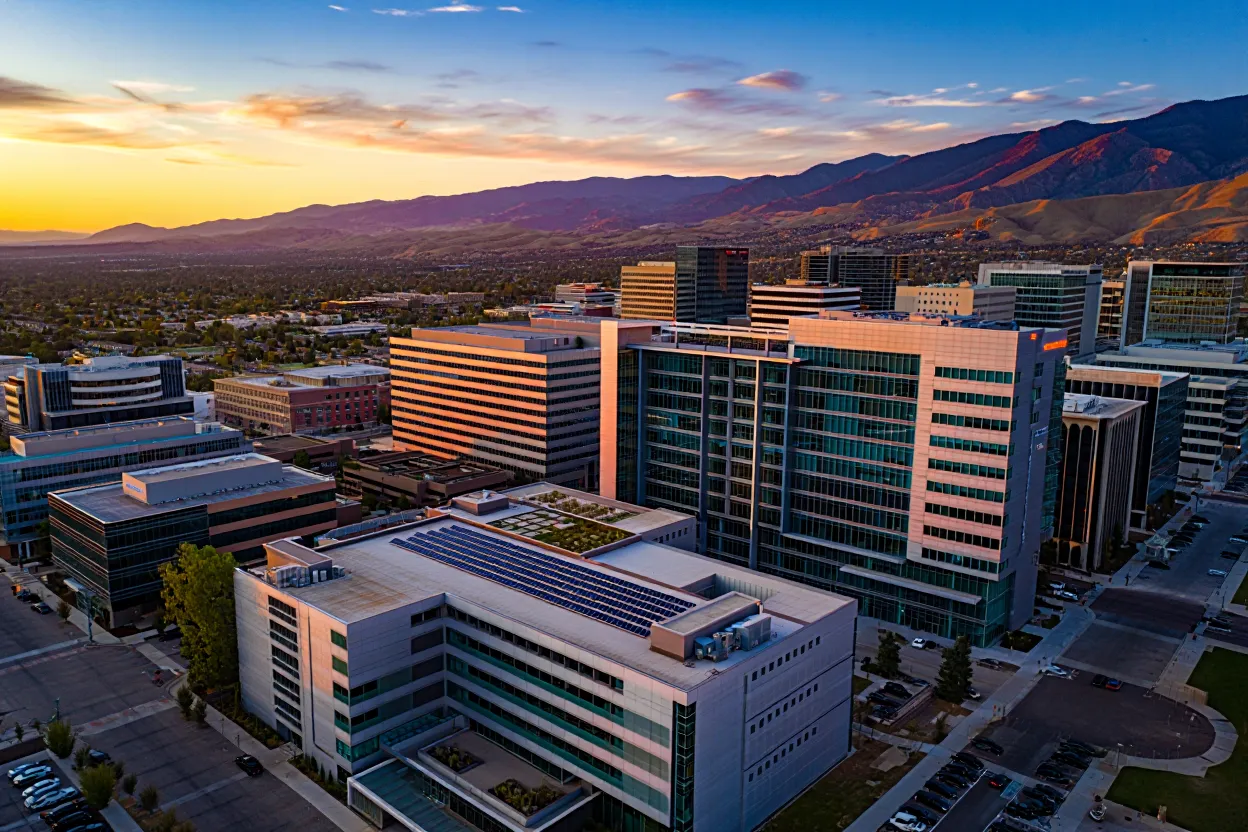
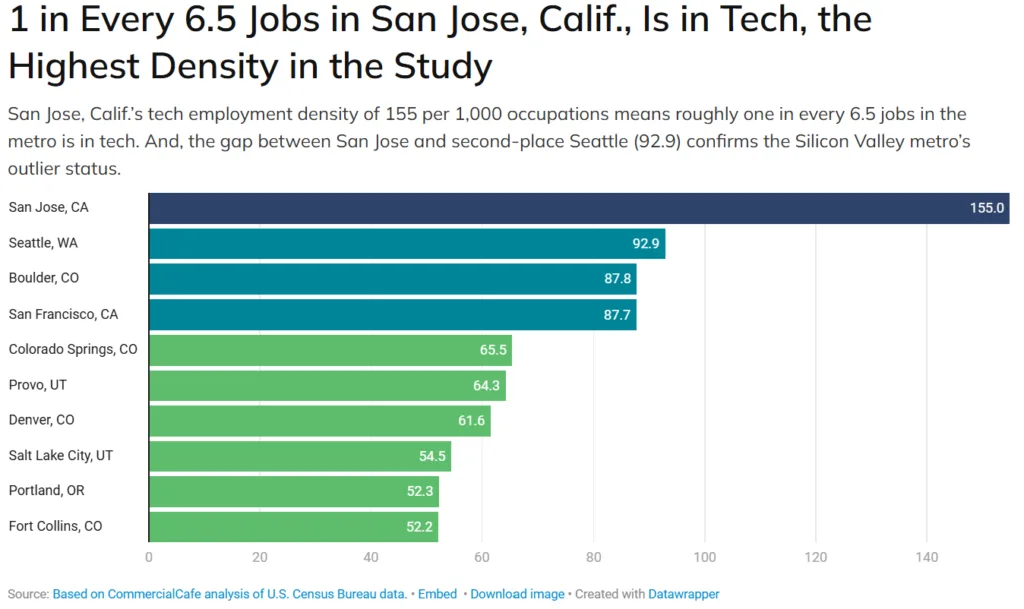
California and the Pacific Northwest once controlled tech innovation and labor. San Jose still leads, with 15% of its workforce in tech. Its median tech salary tops $196,000. The metro also secured nearly 67,000 patents between 2020 and 2024.
Yet Boulder now claims the West’s highest education level. About 66.5% of adults hold a bachelor’s degree or higher. It also posts top life-quality scores. Seattle follows closely in patent output and tech pay. However, Denver and nearby metros are driving the new story.
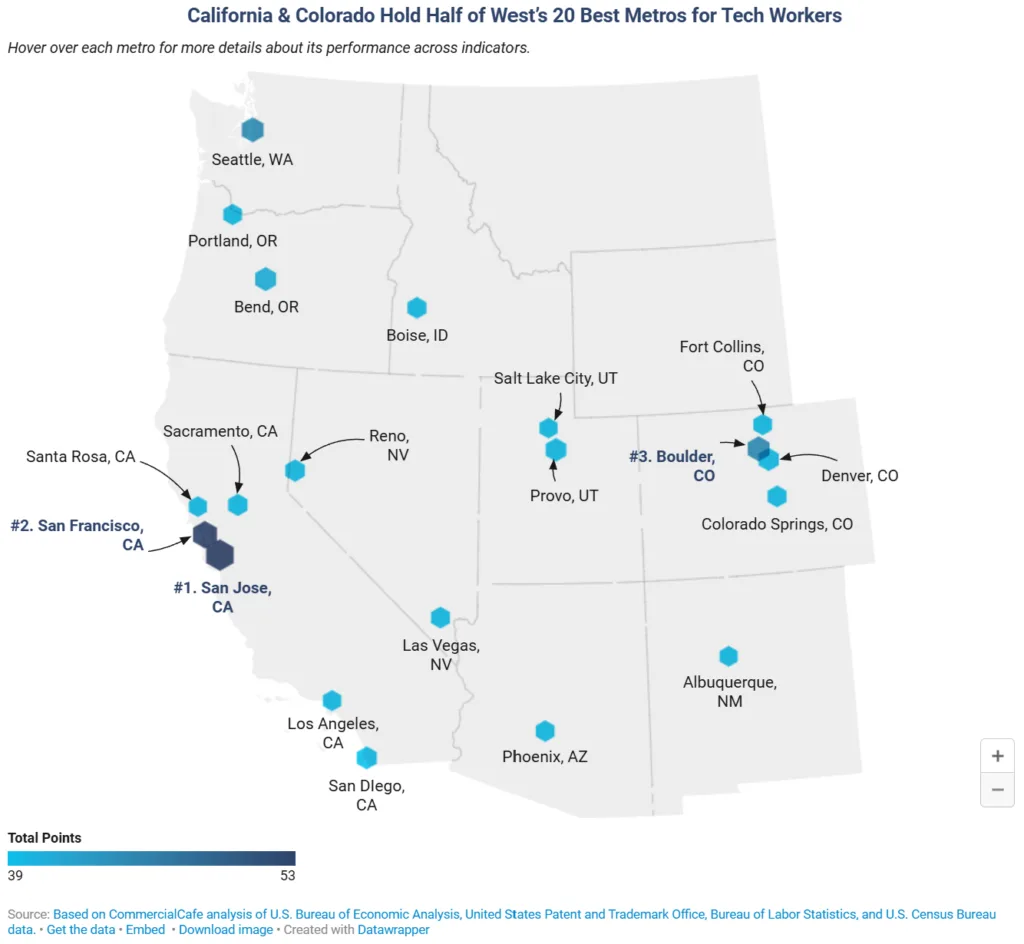
Four Colorado metros made the top 20. They offer strong life quality, moderate costs, and aggressive recruitment. Together, they keep attracting employers and workers.
The Details
San Jose scored 73 out of 100 points. It outpaced second-place San Francisco by nearly 20 points. Its tech firm density reached 76.6 per 1,000 businesses. That sits well above Boulder’s 59.9 and San Francisco’s 53.6.
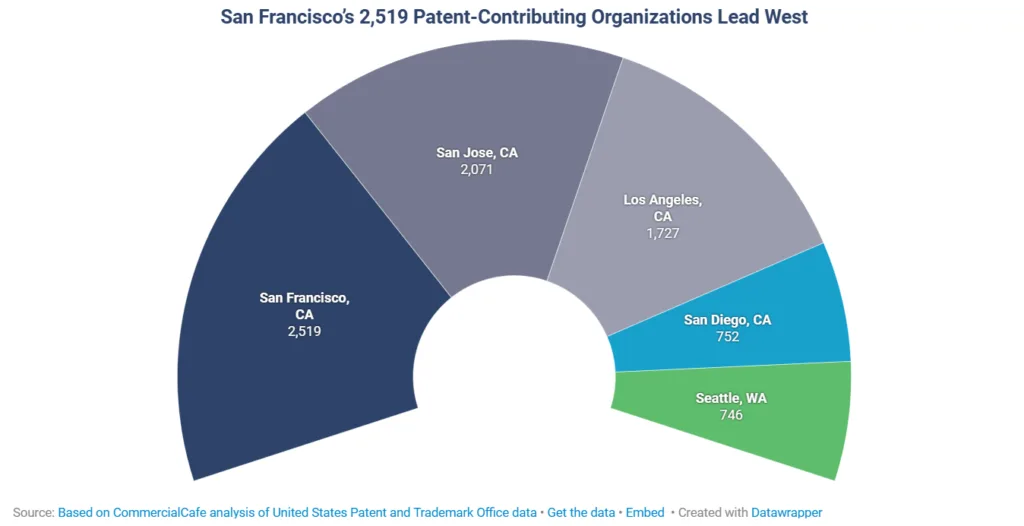
Patent performance followed the same pattern. San Jose’s 67,000 patents nearly doubled San Francisco’s total. San Francisco’s 2,500-plus organizations produced 35,000 patents across a broader industry mix.
Meanwhile, Boulder excelled on life quality, supported by its university base. Bend, Ore., stood out for rapid growth. Tech establishments rose 22% there. Median tech earnings jumped 90% in five years.
Reno’s tech workforce grew by nearly 65%. Los Angeles added the most new tech workers since 2019, with 39,400. Phoenix led firm creation, adding 266 new tech establishments.
Mountain West Momentum Accelerates
The Mountain West’s gains are structural. Colorado’s I-25 corridor includes Boulder, Denver, Colorado Springs, and Fort Collins. All four sit within 100 miles of one another.
These metros share key strengths. Unemployment sits at or below 4.6%. Education levels remain high. Business-friendly environments also make them more competitive.
Utah’s Provo grew its tech workforce by 46%. That stands out among fast risers like Bend, Sacramento, and Portland. Reno and Las Vegas posted the highest workforce growth rates. Their tech workforces grew 64.6% and 60.7%, respectively.
Proactive economic development campaigns helped drive that growth. Sector diversification also played a major role. Even smaller tech ecosystems are gaining traction.
Boise and Albuquerque show rapid salary growth and strong life-quality scores. These markets broaden the base of Western tech innovation. According to CommercialCafe, tech salaries in Bend, Boise, and Albuquerque outpaced coastal growth. That closes the pay gap and fuels migration.
Why It Matters
The broader tech map matters for labor and CRE. San Jose and San Francisco still command premium valuations. However, tight housing, high costs, and corporate downsizing are pushing workers outward. Even so, coastal hubs continue leading emerging technologies like AI, while smaller Western metros expand their broader tech ecosystems.
In contrast, Mountain West metros combine wage growth, lower costs, and strong talent pipelines. That trio lowers expansion risk for firms and landlords. According to CommercialCafe, metros with strong education and low unemployment now win major leases and capital.
Boulder and Fort Collins show this shift clearly. In Reno, EDAWN’s campaign helped grow the tech workforce by 65% in five years. Bend’s planned Innovation District at OSU Cascades points to further growth.
Venture capital interest also reflects these shifts. Public incentives and university-led incubators keep supporting new clusters.
For CRE investors and developers, new tech hotspots support a refreshed location thesis. Decentralization reduces reliance on Bay Area and Pacific Northwest assignments. It also increases demand for flexible office, R&D, and mixed-use space.
Smaller metros may also see stronger secondary and tertiary valuations. These markets can better absorb shocks hitting single-industry coastal hubs. As communities invest in placemaking, transit, and talent pipelines, coastal giants lose some advantage.
That opens the door to distributed innovation. It also creates broader leasing opportunities and more diversified risk across Western CRE portfolios.
What’s Next
The tech-cluster pipeline remains strong across the Western US Infrastructure is rising to support more migration and investment. Bend plans to break ground on its 24-acre Innovation District at OSU Cascades by 2028.
Meanwhile, Phoenix and Reno already have major manufacturing and SaaS expansions underway. Colorado’s corridor remains a magnet for relocations and new-to-market tenants.
Regional talent supply keeps outpacing national averages. Institutional capital also continues searching for yield beyond core markets. As a result, Mountain West metros may do more than compete. They could set new benchmarks for tech-driven real estate growth.