



- The Apartments.com RentPulse Index shows the first quarter since 2021 where lease-ups outpace new apartment supply, with vacancy rates stabilizing and rent growth cooling.
- Deepest rent concessions are appearing in oversupplied Sun Belt and Western cities such as Fort Myers, Sarasota, and Denver, while affordability remains a challenge in areas like New York and Boston.
- Policy shifts, such as Denver’s Expanding Housing Affordability law and Illinois’ HB 3564 tenant protections, signal more regulation and developer headwinds ahead.
Market Shift Favors Renters
Apartments.com reports a major shift in the US multifamily market during Q2 2026. Lease-ups outpaced new deliveries for the first time since fall 2021.
Construction starts continue to decline, while vacancies stabilize and rent growth stays moderate. Renters now hold stronger negotiating power across several metros. CoStar Group’s June 2026 data shows vacancies rising and concessions spreading, especially in oversupplied markets. These trends have shifted leverage toward renters after years of landlord dominance. The Sun Belt’s construction boom and policy changes in cities like Denver accelerated the shift.
Meanwhile, operators and investors are watching inventory absorption closely. They also continue tracking new regulations that could reshape multifamily fundamentals through the rest of 2026.
Get Smarter about what matters in CRE
Stay ahead of trends in commercial real estate with CRE Daily – the free newsletter delivering everything you need to start your day in just 5-minutes
Regional Dynamics Drive Contrasting Stories
The San Francisco Bay Area continues to outperform because of AI hiring. Apartments.com reported rents rising 11.4% year over year to $3,530 in San Francisco. San Jose climbed 6.4% to $2,838, while Santa Clara gained 7.1% to $3,448.
Meanwhile, Chicago rents increased 4.4% year over year as limited supply supported demand. Downtown apartments now command a 40% premium over the citywide average. Conversely, Denver and Southwest Florida favor renters. Denver’s oversupply has pushed half of multifamily communities to offer concessions averaging 8.2%, according to CoStar. Southwest Florida also faces elevated vacancies as construction continues despite weak demand. Fort Myers now posts average concessions of 11.2%.
The Details
Nationally, renters pay 3.7% below advertised rents. That figure sits 0.4 percentage points above last year as landlords compete to fill units before winter. The RentPulse Index shows the deepest concessions across the Sun Belt. Fort Myers leads at 11.2%, followed by Sarasota at 9.2% and Austin at 9.1%.
Affordability also varies sharply by market. New York’s rent-to-income ratio reached 70.6%, forcing median earners to spend over two-thirds of their income on rent. Meanwhile, Colorado Springs and Austin remain below the 30% affordability threshold.
Denver’s Expanding Housing Affordability policy has also taken effect. The rule requires new developments to reserve 8% to 15% of units for affordable housing. Developers rushed permits before the deadline, creating a large pipeline that is now reaching the market. Meanwhile, Illinois enacted House Bill 3564 on July 1, 2026. The law caps application fees at $50 and limits charges for renewals, maintenance, and eviction procedures.
Searches Reveal Which Cities Draw and Lose Renter Attention
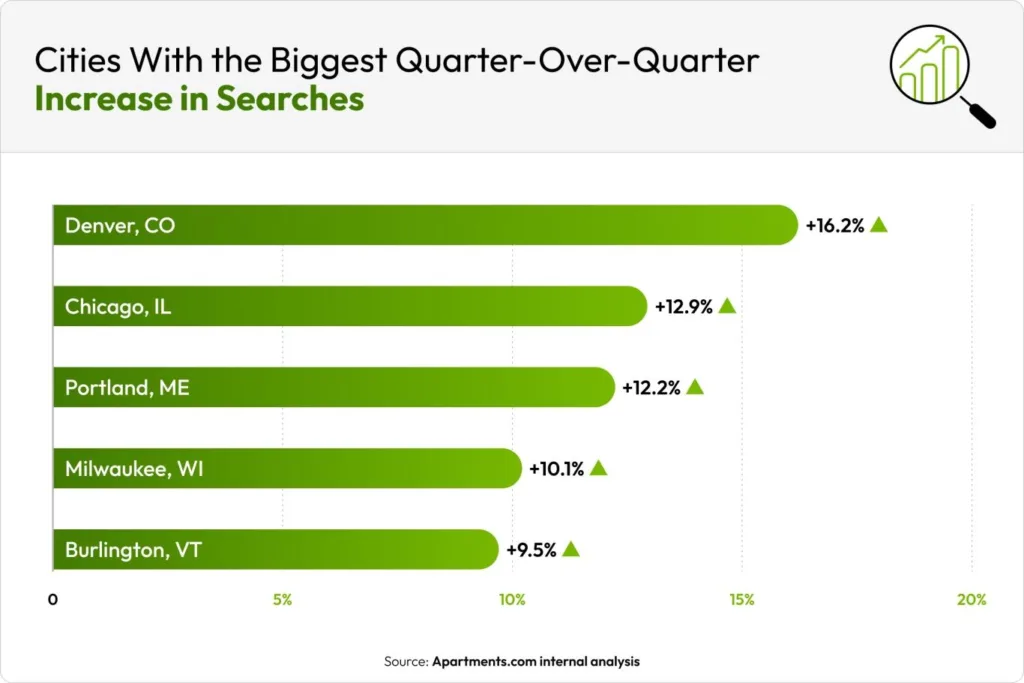
Apartments.com search data highlights shifting renter demand. Denver led with a 16.2% increase in Q2 searches. Chicago followed at 12.9%, while Portland, Maine, rose 12.2%. Milwaukee gained 10.1%, and Burlington, Vermont, increased 9.5%.
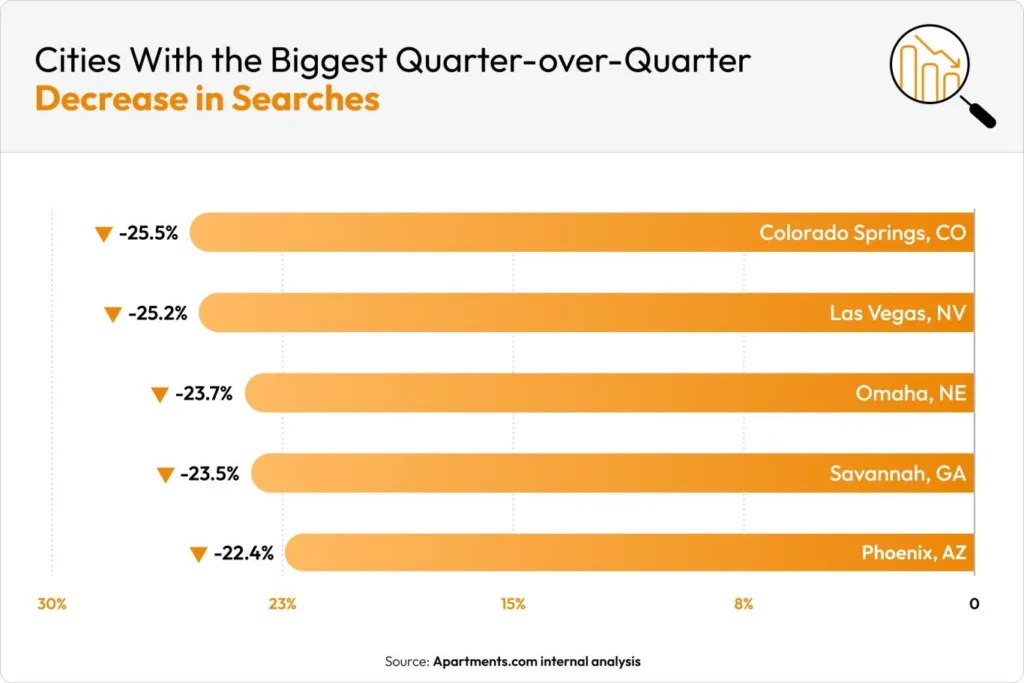
Meanwhile, Colorado Springs posted the steepest decline at 25.5%. Las Vegas fell 25.2%, Omaha dropped 23.7%, Savannah declined 23.5%, and Phoenix slipped 22.4%. Despite weaker search activity, Sun Belt metros still attract many relocating renters, even as abundant new supply gives them greater negotiating power. Phoenix continues adding new supply while vacancies reached 11.5%. Landlords now offer average concessions of 8%. In Los Angeles, rising vacancies and flat rents have shifted demand toward mid-priced apartments as luxury supply outpaces absorption.
Less-searched markets tell a different story. Santa Barbara is seeing stronger demand from healthcare and aerospace expansion. Umbra’s new 50,000 SF Goleta facility supports that growth and contrasts with the broader Sun Belt oversupply trend.
Why It Matters
The apartment market’s rebalancing will shape rents, concessions, and investment activity over the next 12 to 18 months. CoStar Group reports a national median rent-to-income ratio of 23.5%, comfortably below the 30% affordability threshold. However, local conditions vary dramatically. New York stands at 70.6%, while Austin and Colorado Springs remain below 21%.
These affordability gaps influence pricing strategies, lease renewals, and local housing policies. They also shape investment decisions across different markets.
For investors and developers, this marks a clear shift from the rent surge that followed the pandemic. Oversupplied markets continue offering discounts that could pressure yields. At the same time, insurance, labor, and utility costs keep rising. EIA data shows oil prices remain 7% below the five-year average, but operating expenses continue climbing.
Policy changes add another challenge. Denver’s affordability rule could increase development costs and slow future construction. Analysts increasingly compare the policy to Portland’s inclusionary zoning program, which struggled to encourage enough private development after launching in 2017.
The supply glut may finally be reaching its peak. However, absorption will take time. Until inventories tighten, rent growth will likely stay modest, investors will remain cautious, and renters will continue negotiating stronger concessions through year-end.
What’s Next
Construction pipelines continue shrinking, shifting attention toward inventory absorption. Denver, Southwest Florida, and Phoenix remain key markets to watch. CoStar’s Jeannie Tobin expects Denver to become a very different market as development slows under the new affordability rules while steady demand reduces excess supply.
Future Federal Reserve rate cuts could improve buyer sentiment. However, lower rates will likely take time to influence new development because regulation, construction costs, and weak rent growth continue weighing on projects. Meanwhile, Sun Belt landlords will likely keep offering concessions as they compete for renters, making this one of the strongest leasing seasons for tenants in years.