






- Office vacancy rates in the US are expected to hold at 14% through 2026, per CoStar’s new forecast.
- Demand outlook has improved, with Q1 2026 leasing activity hitting a post-2018 high.
- Net absorption for 2026 is forecasted to be 10M SF higher than previously anticipated.
- Modest rent growth is expected, with risks tied to job growth and broader economic factors.
CoStar Expects Stable Vacancy
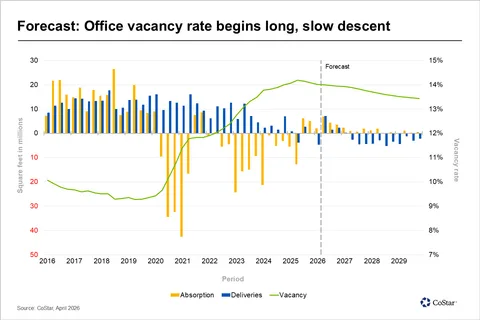
US office vacancy is projected to remain steady near 14% throughout 2026, according to an updated outlook from CoStar Group reported by BusinessWire. The new forecast reflects stronger near-term leasing demand, drawing on a record uptick in activity during Q1 2026. Vacancy rates dipped by 20 basis points from their recent peak, with little change anticipated until a slow decline begins post-2026.
Leasing Activity Surges
Q1 2026 saw new office leasing activity reach its highest level since 2018. CoStar attributes this to heightened demand for prime office space, forecasting net absorption to beat prior projections by roughly 10M SF in 2026. The supply side also supports the outlook, given historically low construction starts and elevated demolitions tightening available inventory.
Get Smarter about what matters in CRE
Stay ahead of trends in commercial real estate with CRE Daily – the free newsletter delivering everything you need to start your day in just 5-minutes
Rent Growth & Market Risks
Office sector rent growth is projected to stay above 1% through 2026, with further gains expected as availability remains limited. However, risks remain. A slower macroeconomic environment could temper these gains. Sluggish job creation or rising energy prices may weigh on demand. At the same time, broader housing trends suggest capital flows and financing conditions will continue to influence real estate stability across sectors. CoStar notes that technological changes reducing hiring needs could also limit future office demand.
What’s Next
After 2026, CoStar anticipates a gradual decline in office vacancy as supply contracts. The updated office vacancy outlook suggests a stabilization period before longer-term improvements emerge, highlighting the importance of monitoring both economic and workplace trends for office investors and operators.