





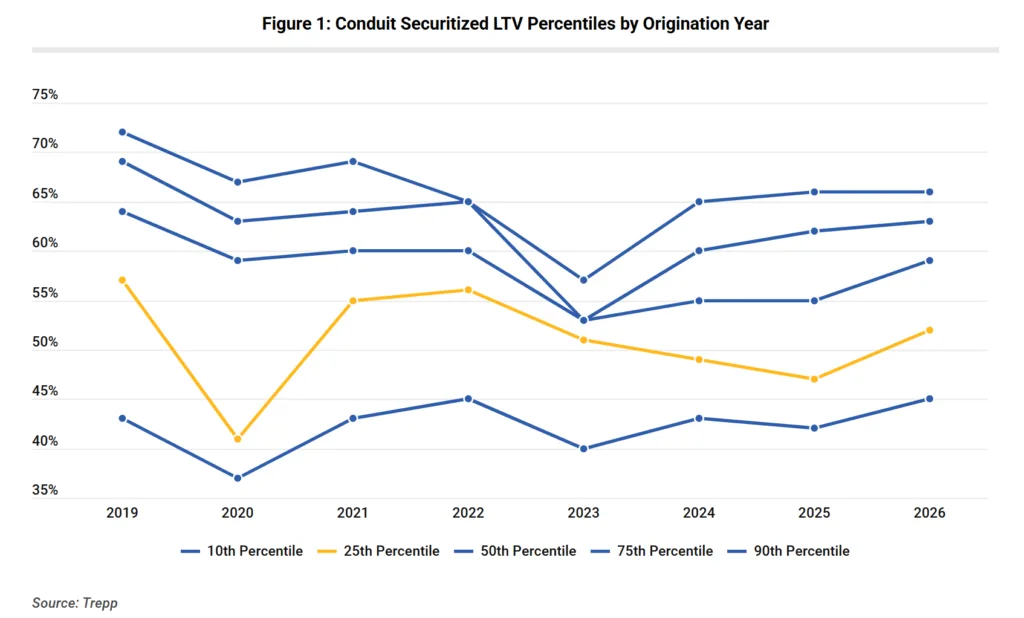
- US conduit office loan LTVs climbed to a median 59.1% through July 2026, up from 52.7% in 2023.
- Loan origination volume is on pace for $5B in 2026, but remains far below the $17.56B seen in 2019.
- Gradual increases in leverage and deal count show some recovery, but lender risk appetite is still measured versus pre-COVID levels.
Credit Conditions Ease After Three Years of Contraction
Office lending stalled after the pandemic as lenders tightened standards. Weaker demand, lower values, and remote work concerns drove caution. According to Trepp, that approach is now easing. Median loan-to-value (LTV) ratios for conduit office loans reached 59.1% in 2026. They rose from a 52.7% low in 2023. However, lenders remain below 2019 levels, when median LTV reached 64.1%.
Origination activity is also improving despite office challenges. Lenders now support more deals with moderate risk. Still, they avoid the aggressive strategies common before the pandemic.
Get Smarter about what matters in CRE
Stay ahead of trends in commercial real estate with CRE Daily – the free newsletter delivering everything you need to start your day in just 5-minutes
The Details
Through July 2026, conduit office CMBS originations reached $2.88B. The market could finish the year near $5B. That exceeds 2023 levels but trails 2019’s $17.56B. Median LTV ratios continue rising, but remain below previous highs.
The riskiest loans also show more restraint. The 90th percentile LTV reached 65.6% in 2026. That compares with 71.7% in 2019. Meanwhile, conservative loans maintained LTVs between 40% and 45%. This shows lenders still limit exposure on weaker assets.
Gradual Recovery, Not a Full Rebound
Lenders show cautious optimism through slightly looser underwriting. However, volumes and leverage remain below 2019 peaks. Lenders still choose office properties carefully. Higher LTVs suggest confidence is improving, but activity remains limited.
Remote work and lower valuations continue pressuring the sector. These factors keep lenders and borrowers cautious, according to CRE Direct. The market shows stabilization, but recovery remains uneven.
Why It Matters
Rising office loan LTVs suggest lenders see less downside risk. CRE Direct’s analysis shows improving LTVs and origination volumes. Credit conditions are also improving as lenders focus more on pricing and risk spreads than rate movements alone. This shift could help brokers and developers seeking new debt. It also matters as older loans approach refinancing deadlines.
However, office lending remains selective. Legacy loans still face elevated distress. Lenders now favor strong properties with better fundamentals. This approach signals stabilization, but not a full recovery.
What’s Next
Office originations are improving as more properties meet stricter standards. Lenders are slowly increasing their risk appetite. Yet, remote work and valuations will shape future lending conditions.
CRE professionals should expect selective financing ahead. Class A and well-leased properties will likely secure the best terms. Broader recovery depends on stronger market stability.