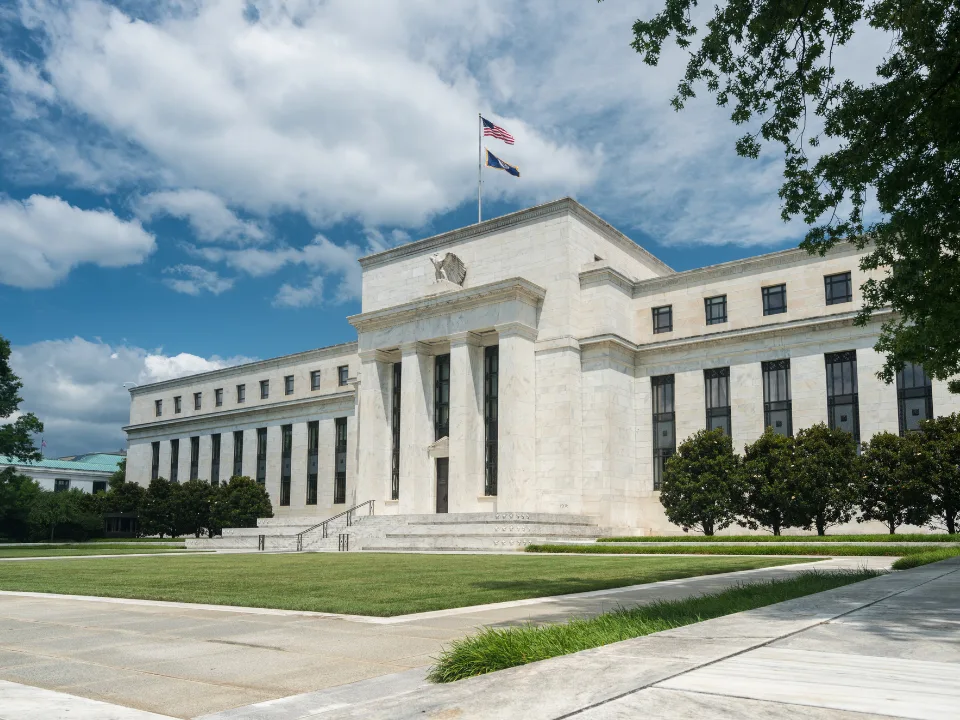








- NYSE Texas held its grand opening at Dallas’s Old Parkland campus, with Gov. Greg Abbott and NYSE and Intercontinental Exchange leadership marking the exchange’s official launch.
- NYSE Texas, a fully electronic equities exchange under Intercontinental Exchange, began operations in 2025 and is now headquartered at the historic Old Parkland office campus.
- The exchange’s Dallas presence reinforces Texas’s bid to rival New York for capital markets activity and the real estate demand that follows it.
Texas Gov. Greg Abbott rang the closing bell to mark the grand opening of NYSE Texas’s headquarters in Dallas, according to the governor’s office. The ceremony took place at the historic Old Parkland campus, where NYSE Texas, a fully electronic equities exchange operated by Intercontinental Exchange, has set up its base. Abbott was joined by state legislators and NYSE and ICE leadership for the event, which the governor’s office framed as a milestone in Texas’s push to become a genuine center of American finance.
Get Smarter About What Matters in Texas
Subscribe to our free newsletter covering the biggest commercial real estate stories across Texas — delivered in just 5 minutes.
Building on a 2025 Launch
NYSE Texas began operations in 2025 as Intercontinental Exchange’s answer to growing interest in relocating capital markets infrastructure outside New York. Housing the exchange at Old Parkland puts it inside one of Dallas’s most concentrated clusters of family offices and private investment firms, giving NYSE Texas an address that signals ambition as much as function. The campus’s reputation as a magnet for influential investors made it a natural fit for an exchange trying to establish institutional credibility from day one.
The Details
NYSE President Lynn Martin, NYSE Texas President Bryan Daniel, and Intercontinental Exchange Chairman and CEO Jeff Sprecher joined Abbott at the event, alongside state Sens. Bryan Hughes and Tan Parker and state Reps. Angie Chen Button and Morgan Meyer. “Texas has now been home to the most capital of any state in the United States of America, and it just makes sense that Texas is now home to capital markets right here in Dallas,” Abbott said. Texas has the world’s eighth-largest economy and has led the nation in job creation, credentials state officials have leaned on to court financial-sector relocations and, by extension, the office demand that follows them.
Zooming Out
NYSE Texas’s move follows a broader pattern of Dallas positioning itself as a genuine alternative to Wall Street. Local boosters have pointed to the Texas Stock Exchange, a separate rival exchange also based in Dallas, as evidence the city is becoming a two-exchange market, an unusual concentration outside New York. Both efforts lean on Texas’s no-state-income-tax pitch and steady inflow of corporate relocations to argue the state can support the kind of high-touch financial infrastructure once assumed to require a New York address, and both have chosen prestige addresses within the same metro rather than spreading out. That two exchanges would pick Dallas specifically, rather than Houston or Austin, points to the city’s existing base of banks, law firms, and family offices as the deciding factor.
Why It Matters
For CRE professionals, exchange headquarters and the executives, lawyers, and service firms that cluster around them are a demand driver for premium office space. Old Parkland’s planned expansion in Dallas suggests the campus is positioning for exactly that kind of growth. A financial-sector anchor tenant also raises the profile of the surrounding submarket, a pattern investors have tracked closely as more asset managers and exchanges consider footprints outside the coasts and look for campuses with an established roster of institutional neighbors. Landlords elsewhere in Dallas will be watching to see whether NYSE Texas’s presence pulls other financial firms toward Old Parkland specifically, or simply lifts demand for trophy office space across the metro more broadly.
What’s Next
Watch whether NYSE Texas’s Dallas presence draws additional financial-sector tenants to Old Parkland or nearby office product, and whether the Texas Stock Exchange’s own buildout accelerates in response to the added competition. If Dallas’s dual-exchange bet pays off, expect other secondary markets to pitch similar infrastructure plays to diversify away from New York, and watch for whether either exchange’s presence shows up in leasing activity across Dallas’s broader office market over the next several quarters.