




- New York City is seeing a record number of orders to vacate in 2026, with over 600 properties and roughly 2,000 units impacted so far.
- Nearly half of all vacate orders since 2012 remain unresolved, leaving residents displaced for months or years due to slow repairs and complex legal hurdles.
- This surge highlights mounting risks in aging and rent-stabilized buildings, as regulatory changes and disinvestment fuel prolonged vacancies and tenant hardship.
Mounting Risk in Aging Housing Stock
Bisnow reports a dramatic increase in New York City building vacate orders as several pressures converge. Aging infrastructure, regulatory pressure, and chronic disinvestment are driving the surge. By early August 2026, officials had issued full or partial vacate orders for more than 600 buildings. Those properties account for approximately 2,000 units and already exceed the annual average, according to Bisnow’s city data analysis.
The problem is especially severe in rent-stabilized housing, where years of deferred maintenance have increased safety risks. Common problems include fires, illegal occupancies, and serious habitability violations. Legal Aid Society attorneys say the surge is overwhelming their ability to assist affected residents. Enforcement actions often cause long-term displacement rather than quick repairs.
City records show that roughly 9,000 buildings have received vacate orders since 2012. However, nearly half of those cases remain unresolved. Older buildings, often regulated and financially strained under current laws, face the greatest abandonment risk after emergencies. This pattern could worsen when the city-wide rent freeze takes effect in October 2026. The freeze could further weaken landlord incentives to reinvest in aging properties.
Get Smarter about what matters in CRE
Stay ahead of trends in commercial real estate with CRE Daily – the free newsletter delivering everything you need to start your day in just 5-minutes
The Details
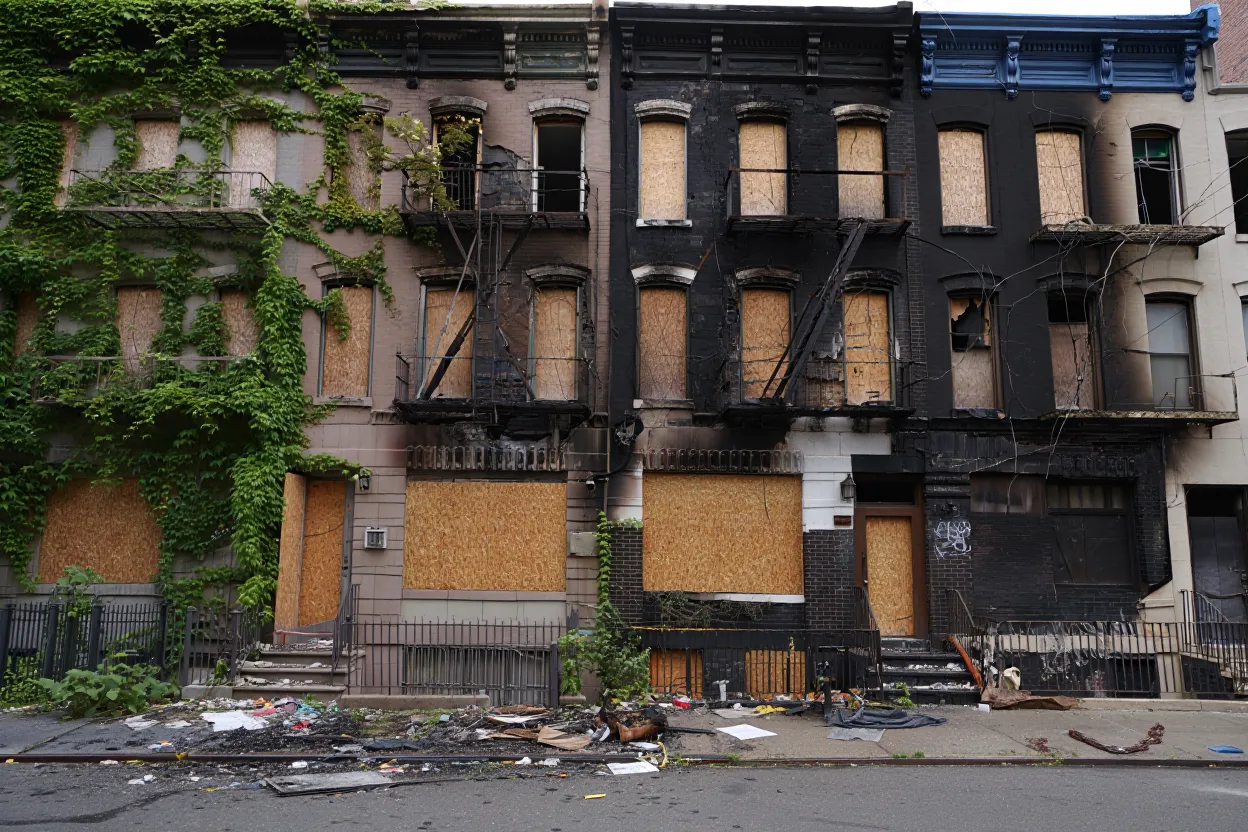
City officials typically issue vacate orders after fires, structural failures, or serious code violations make residences unsafe. Bisnow reports that fire damage caused about 400 of this year’s roughly 600 orders. Illegal occupancy and broader habitability problems accounted for smaller shares. Once officials issue an order, tenants may have fewer than 24 hours to leave. Many cannot retrieve their possessions before leaving.
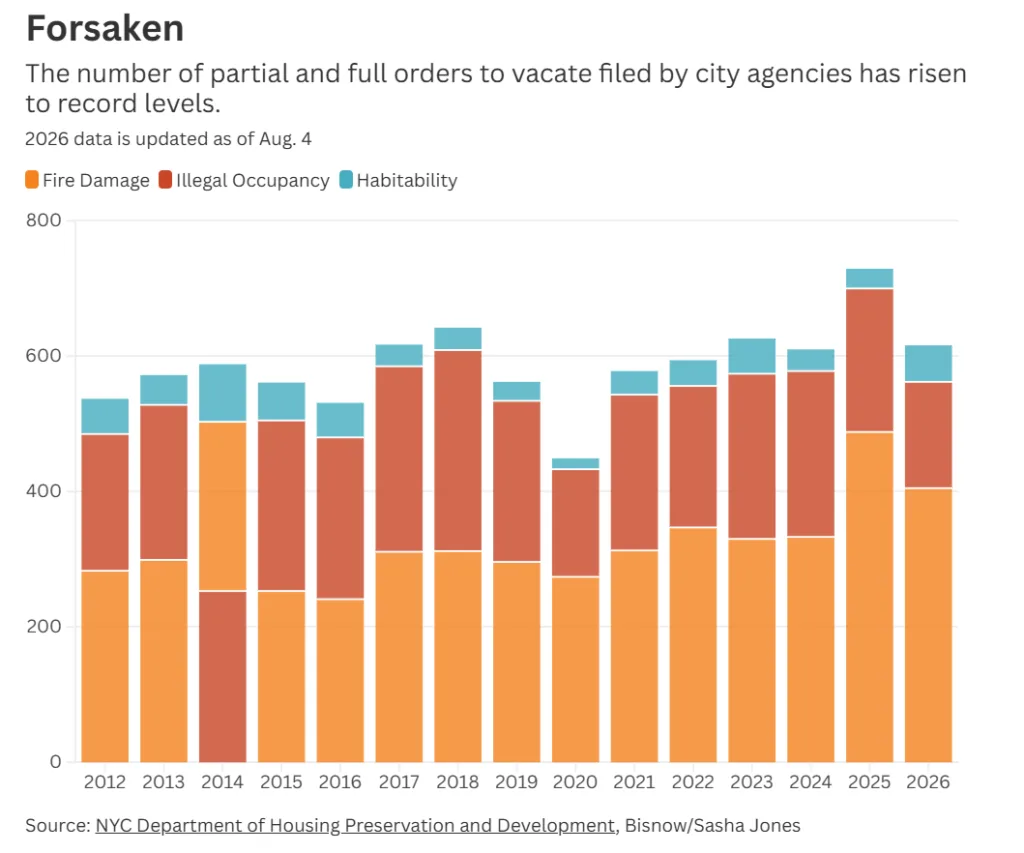
Displaced residents often rely on the Red Cross, city agencies, or local nonprofits for temporary shelter. Officials have issued 8,813 vacate orders since 2012. City data shows that buildings take an average of 18 months to return to service. In many cases, owners never complete the required work.
Some properties illustrate how complicated these cases can become. A 2012 fire destroyed more than 100 apartments at 655 New York Ave. in Brooklyn. Residents still have not returned, while a buyer only acquired the troubled property last year. Elsewhere, fire forced residents from a 133-unit Jackson Heights complex in 2021. That case produced lawsuits and years of disputes over repairs, ownership obligations, and tenant rights.
Regulatory Shifts Add Complexity
Vacate orders increasingly intersect with changes in rent regulation and landlord economics. New York’s 2019 Housing Stability and Tenant Protection Act restricted rent increases for vacated or renovated regulated units. However, substantial rehabilitation remains one major exception. Owners can pursue deregulation after replacing at least 75% of a building’s systems. A returning tenant must also forgo their right for the exemption to apply.
Critics argue this framework can create incentives for owners to delay repairs or discourage tenants from returning. Some owners may instead pursue redevelopment opportunities at market rates. Legal aid advocates have reported cases involving deliberate neglect, prolonged vacancies, and alleged intentional property damage. These advocates include Magda Rosa-Rios of Legal Aid and Rakhil Tilyayeva of Legal Services NYC.
Meanwhile, city officials have tightened inspections amid growing concerns about building safety. Those efforts have also contributed to rising vacate orders. Older regulated buildings can then enter cycles of disrepair, extended vacancy, and litigation over demolition or rehabilitation. A 2024 CBRE court analysis of 655 New York Ave. highlighted the economic challenge. CBRE concluded that redevelopment yields would be “drastically insufficient,” further complicating potential reinvestment.
Why It Matters
The record pace of vacate orders exposes structural problems across New York City’s aging rental housing stock. Rent-stabilized apartments face particularly significant risks. Nearly 9,000 properties have received orders over 14 years, while almost half remain unresolved. The backlog reveals weaknesses in both tenant protections and enforcement systems.
For displaced residents, the timeline for returning home often remains unclear. Delays lasting a year or longer are common. Nearly 50% of vacate orders never reach resolution. Some owners abandon expensive repairs, while others face years of litigation. These delays can leave tenants displaced while buildings remain vacant and deteriorate further.
Owners of rent-stabilized properties also face growing financial pressure. Stricter regulations, rent freezes, and rising rehabilitation costs can weaken incentives for major investment. Some properties remain vacant until distressed sales bring in new ownership. Transactions involving 426 Chauncey St. and 655 New York Ave. illustrate that pattern. Market stakeholders warn that stricter safety rules could accelerate disinvestment without adequate financial incentives. CBRE’s 2024 analysis found major rehabilitation returns often fall below viable investment thresholds.
Public Response and Preservation Challenges
City agencies have launched efforts such as the Back Home Unit to support displaced tenants. The initiative aims to provide residents with a single point of contact during the recovery process. The mayor’s office has also signaled interest in longer-term solutions. Potential measures could include new financial incentives or broader regulatory reforms.
Still, the central challenge remains unresolved. New York needs preservation strategies that encourage responsible rehabilitation while protecting displaced residents. Without them, vacate orders could leave thousands of tenants displaced and aging properties empty. Private capital alone may struggle to address the growing backlog of unsafe housing.
What’s Next
Vacate orders continue to outpace previous records as more rent-stabilized buildings deteriorate. Attention will now turn toward initiatives such as the Back Home Unit. Stakeholders will also watch the city-wide rent freeze scheduled for October 2026.
Rent freezes remain contentious after Los Angeles recently abandoned a similar policy following its wildfires. Advocacy groups want greater transparency, clearer deadlines, and stronger financial support for affected tenants and landlords.
Market forces could also reshape outcomes for distressed properties. Well-capitalized buyers may acquire troubled assets and fund repairs or repositioning. Public-private incentive programs could provide another path toward preserving aging buildings. Until meaningful reforms emerge, thousands of residents may remain in limbo. More properties could also enter the distressed pipeline as repair costs and regulatory pressures increase.