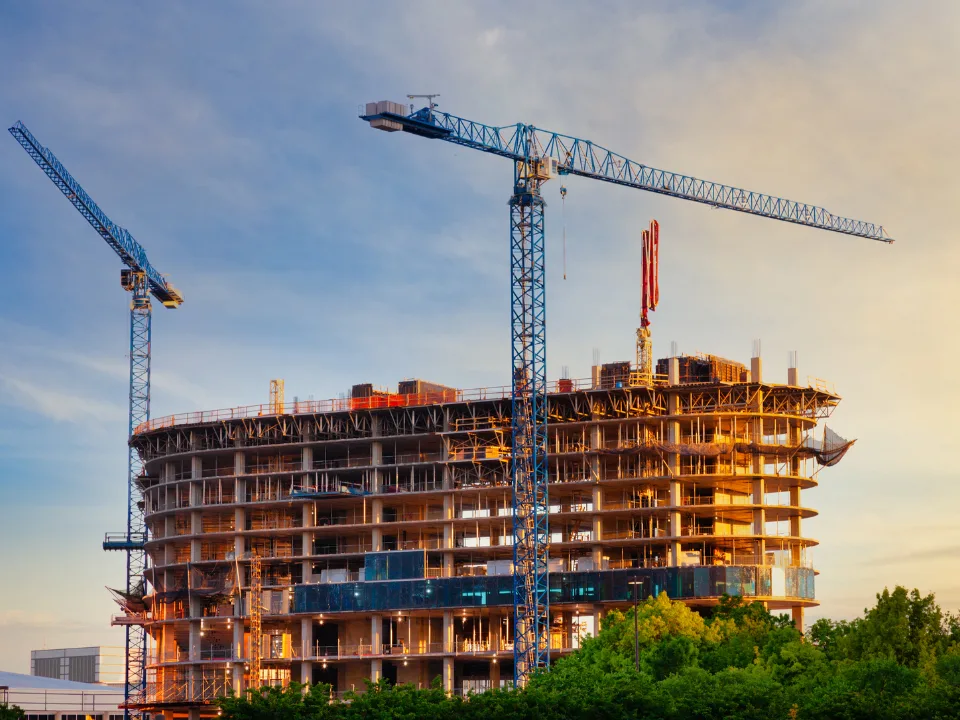




- Public records show what’s left of Nate Paul’s once $1.2 billion Austin real estate empire: a map of 26 properties worth $130,000 to $32 million.
- Paul’s downfall included a 2019 FBI raid, a 2023 arrest for falsifying loan information, and a 2025 sentence of a $1 million fine and home confinement.
- Even as his highest-value Austin properties sell off or head to foreclosure, Paul-affiliated shell companies keep shuffling ownership of others, delaying some sales for years.
Public records reviewed by The Real Deal show what remains of Nate Paul’s once $1.2 billion Austin real estate portfolio: a map of 26 properties, appraised between $130,000 and $32 million, still tied to his firm World Class Holdings. The review comes years after federal fraud charges and a wave of foreclosures unraveled a real estate business Paul built from scratch starting at age 20.
Get Smarter About What Matters in Texas
Subscribe to our free newsletter covering the biggest commercial real estate stories across Texas — delivered in just 5 minutes.
From Forbes 30 Under 30 to FBI Raid
Paul founded World Class Holdings in 2007. By 2017, he had built a 120-property portfolio across 17 states. The portfolio had an estimated value of $1.2 billion. The year before, Forbes named Paul to its 30 Under 30 list.
The empire began unraveling in 2019. That year, the FBI raided Paul’s home and office. Reports said he had defaulted on hundreds of millions of dollars in loans.
Paul then sought help from Texas Attorney General Ken Paxton. Paxton allegedly intervened on Paul’s behalf. That intervention later led to Paxton’s impeachment in the Texas House. The Texas Senate acquitted him after a two-week trial.
The Details
Paul was arrested in June 2023. Prosecutors accused him of falsifying information to secure $172 million in loans.
An 18-month investigation followed. In April 2025, Paul received a $1 million fine. He also received four months of home confinement and five years of supervised release.
Paul avoided prison time. His business, however, did not survive intact.
Since then, Paul has fought to preserve what’s left. He has used lawsuits to challenge efforts against his remaining assets. According to the review, he also tried to organize protests aimed at disrupting a foreclosure sale.
What’s Left on the Map
The properties still tied to Paul show a slow unwind.
His highest-value asset was an 18,000-square-foot office building in the Rainey Street District. The property sits on an acre and carried a $32.1 million appraisal. After multiple bankruptcies, WM Capital Partners bought the property in 2025.
A longtime downtown IHOP site had a $26.8 million appraisal. A trio of buyers acquired it for less than half that value at a May foreclosure auction. The group included JLM Financial Investments’ Jimmy Nassour.
A North Austin retail cluster carries a $12.8 million valuation. Its foreclosure auction has been postponed several times since November 2025.
A Southeast Austin office building also changed hands between affiliated entities. Rising Tide Investments and Met Center Portfolio each held the property within a span of months.
A fifth East Austin property also sold in 2025. The 36,000-square-foot office and retail building carried a $7.1 million valuation. WM Capital Partners acquired it as part of the same wave of sales that included the Rainey Street property.
The pattern echoes what CRE Daily has tracked in the broader Texas foreclosure surge hitting overleveraged owners statewide.
Why It Matters
Paul’s collapse shows how quickly a fast-built portfolio can unravel. The process can accelerate once lenders and prosecutors start pulling at the threads.
At its peak, World Class Holdings controlled 120 properties across 17 states. That scale rivaled many institutional buyers.
Paul built much of the portfolio with debt that he allegedly misrepresented to keep flowing. His Austin office also involved a web of shell companies. Several of those entities quietly traded properties among themselves.
That structure can make ownership harder to trace. It can also complicate lenders’ efforts to track collateral after a borrower defaults.
The case comes amid a broader reckoning for real estate investors accused of loan fraud. It includes a similar loan fraud case against a California investor.
For lenders, the case highlights the need to verify borrower disclosures. That process matters most with fast-growing portfolios. Lenders should verify the information before putting loans on their books.
What’s Next
Several of Paul’s remaining properties face foreclosure proceedings. The North Austin retail cluster remains tied to a postponed auction.
The Southeast Austin office building also remains with one of Paul’s affiliated entities. Its foreclosure proceedings remain pending.
Those cases could reach resolution in the coming months. Whether Paul keeps any part of his Austin footprint will depend largely on how the cases play out in court.