






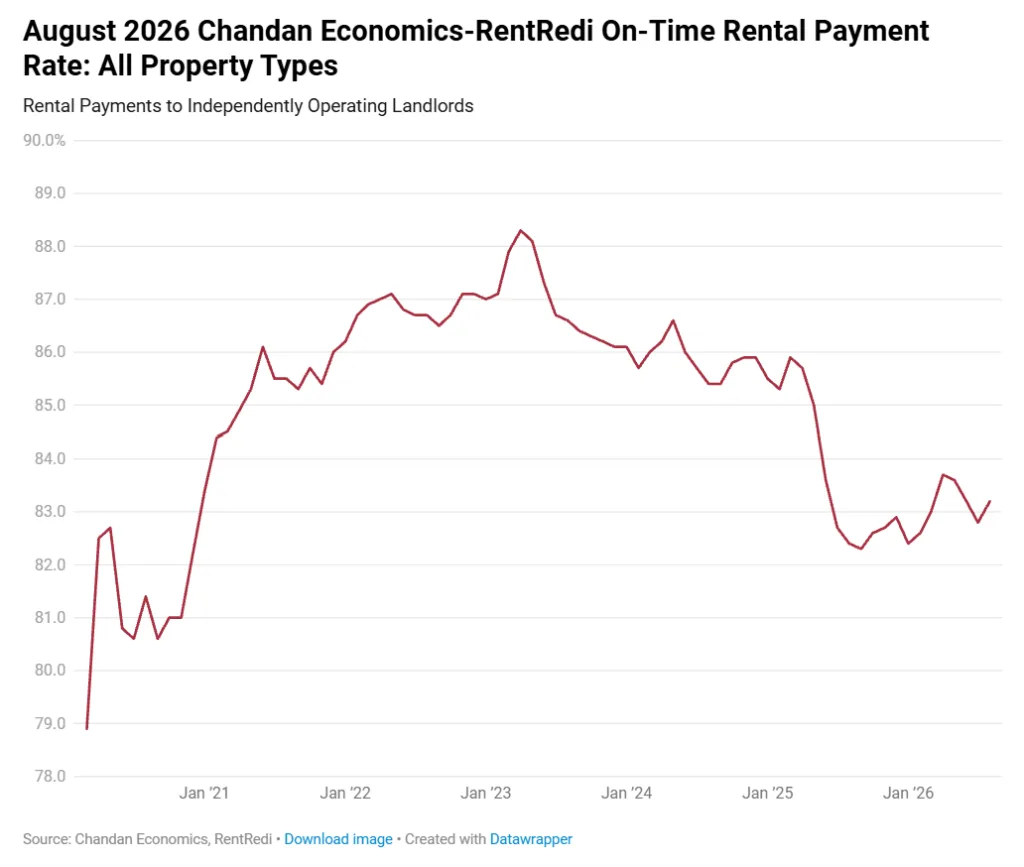
- On-time rent payments for independently owned rental units rose to 83.2% in August 2026, reversing summer softness.
- Year-over-year, on-time collections improved by 85 basis points, the largest annual gain since May 2023.
- The full-payment forecast reached 95.7% as multifamily led the rebound, while late payments remained elevated but steady.
Stabilization Follows Prolonged Volatility
August data from Chandan Economics and RentRedi show on-time payments for mom-and-pop landlords recovering from midyear lows. After months of sluggish collections, the on-time payment rate rose to 83.2%. Chandan tracks more than 59,000 independently operated rental units nationwide. The rebound follows elevated late payments and continued credit pressure among US renters.
On-time collections improved 85 basis points from August 2025, marking the strongest annual gain in over three years. Rates still trail pre-2025 levels, but renter finances appear to have largely stabilized. That shift offers relief to landlords after sustained softness throughout 2024 and early 2025.
Get Smarter about what matters in CRE
Stay ahead of trends in commercial real estate with CRE Daily – the free newsletter delivering everything you need to start your day in just 5-minutes
The Details
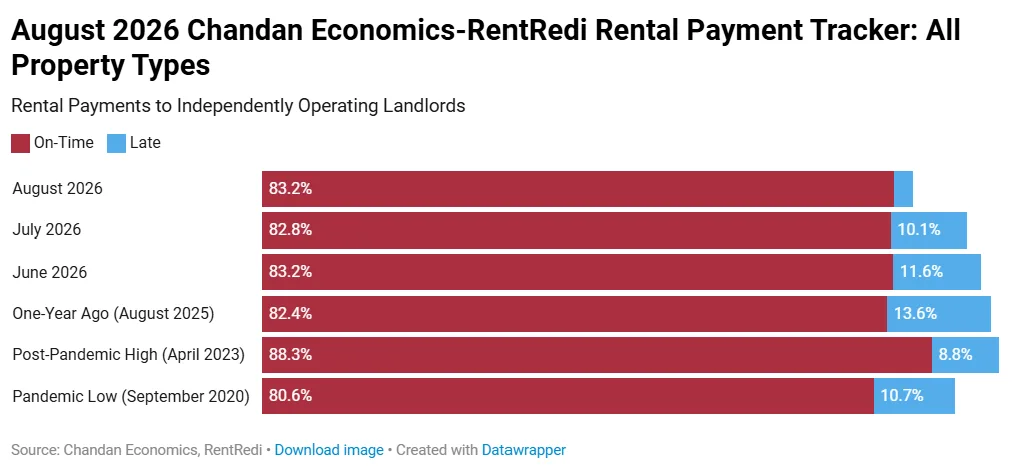
The August 2026 collection rate reached 83.2% on a three-month moving average. That increased from July’s downwardly revised 82.8%. Multifamily drove most of the improvement, with on-time collections rising from 81.4% to 82.5%.
Single-family rentals improved from 82.9% to 83.2%, while 2–4 family units held steady at 83.3%. Late payments plateaued at 12.1% in June, matching seasonal patterns but remaining elevated historically. Meanwhile, projected full payment resolution rose 50 basis points from July to 95.7%. Landlords now see more consistent income than during the prior two years.
Western States Outperform, South Lags
Chandan Economics data show persistent regional differences in rental payment performance. Wyoming led the nation with a 95.2% on-time rate. Utah followed at 92.8%, Alaska at 91.2%, New Hampshire at 90.9%, and Washington at 90.1%.
At the other end, Delaware posted the lowest rate at 69.2%, followed by Mississippi at 72.0%. West Virginia reached 77.0%, Illinois 77.9%, and Tennessee 78.7%. State results can fluctuate monthly, but the broader geographic divide remains. Western regions face less payment disruption, while Southern and selected eastern states continue struggling with chronic delinquencies.
Why It Matters
Independent landlords operate more than 17M US rental units, according to 2023 Census Bureau figures. The latest Chandan-RentRedi data signal greater income stability after years of financial pressure. Earlier in 2026, collections had already begun improving, establishing the recovery that August’s results now reinforce. Improving on-time and full-payment rates reduce acute cash-flow stress.
Still, the 12.1% late-payment rate signals lingering risk. Late payments remain well above the 8.4% cycle low recorded in May 2024. They also exceed rates across most pre-2025 periods. That pressure challenges smaller landlords with less balance-sheet flexibility than institutional operators. Seasonal trends suggest progress could stall, making prudent cash management essential.
The narrowing performance gap across rental formats also signals an incremental return toward normal conditions. Multifamily, single-family, duplex, and four-unit properties now show broader improvement. Western and Mountain market resilience could also influence investors evaluating regional portfolio allocations.
What’s Next
Independent landlords will likely remain defensive as rental collections stabilize. Many will prioritize occupancy and reliable income over aggressive rent increases. Chandan’s data suggest further gains will depend on stronger household credit metrics and employment conditions.
The coming months will reveal whether this rebound develops into a sustained return toward pre-2025 payment reliability. Investors will closely watch late-payment rates for signs of household financial strain. Those trends will become especially important during the fall and winter leasing seasons.