






- McKinney ranked first for a second straight year, ahead of Huntsville, Austin, Wilmington and Atlanta.
- RentCafe studied 150 cities across 20 housing, economic and quality-of-life metrics using June 2026 data.
- Southern cities captured 37 top-50 spots, highlighting the region’s combination of affordability, rental supply and economic growth.
McKinney, TX, again ranks as America’s best city for renters, according to RentCafe’s 2026 analysis. The Dallas suburb claimed first place for the second consecutive year. Huntsville ranked second, followed by Austin, Wilmington and Atlanta.
The ranking shows how strongly Southern markets appeal to renters. These cities often combine lower costs, growing rental inventories and expanding economies.
Get Smarter about what matters in CRE
Stay ahead of trends in commercial real estate with CRE Daily – the free newsletter delivering everything you need to start your day in just 5-minutes
The South’s Renter Advantage
Southern cities claimed 37 of RentCafe’s top 50 positions. Texas, Florida and North Carolina ranked among the most represented states. The West had the second-largest presence among top markets.
RentCafe evaluated 150 cities across 20 metrics. Those metrics covered housing costs, local economies and quality of life. The analysis used June 2026 data from Yardi Matrix and several government sources.
The Details
McKinney ranked third nationally for cost of living and housing. It also placed ninth for quality of life. Renter household incomes increased 35.9% from 2019, according to RentCafe’s 2026 analysis. New apartments represented 33.4% of local inventory, while high-end rentals accounted for 84.5%.
Huntsville climbed three positions and reached second place overall. The city ranked second for housing costs and sixth for its economy. Renter household incomes grew 60.4% from 2019, according to RentCafe. Aerospace, defense and advanced manufacturing also support its economy.
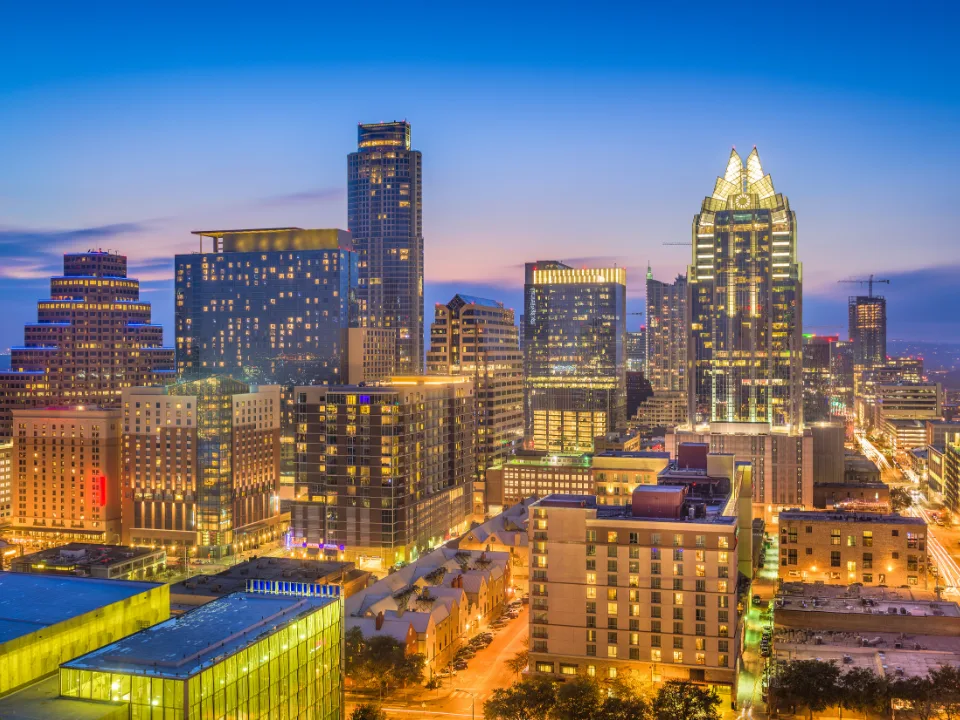
Austin moved up one position to third overall. It ranked fourth for its economy and eighth for housing costs. Wilmington finished fourth, while Atlanta completed the top five. Atlanta also recorded the study’s second-best local economy ranking.
Best Cities for Renters Keep Tilting South
Raleigh ranked sixth, followed by Scottsdale, Round Rock, Sarasota and Greenville. Seven of the top 10 cities sit in the South. Scottsdale became the highest-ranked Western market. Meanwhile, Sioux Falls led the Midwest, while Albany led the Northeast.
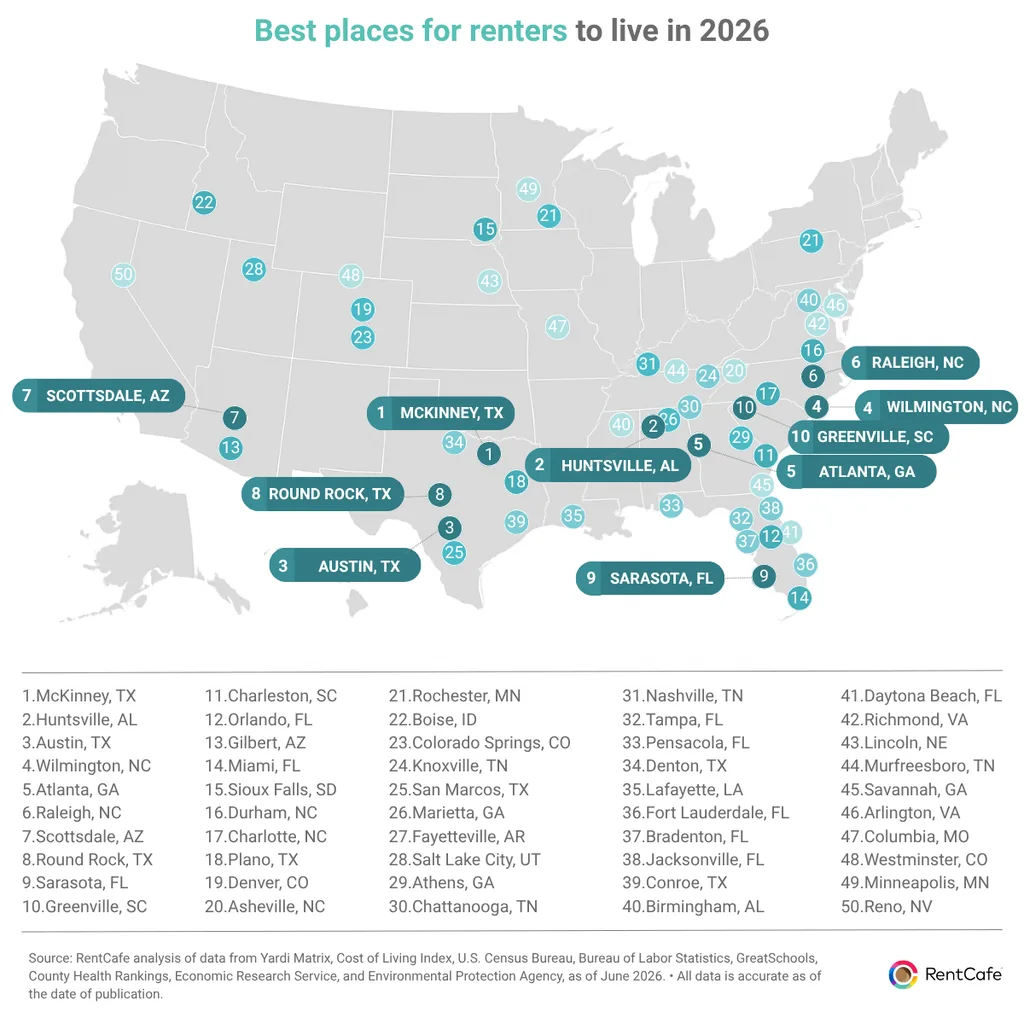
Individual categories revealed different market strengths. San Marcos led housing and cost of living, with costs 13.8% below RentCafe’s benchmark. Apartments there averaged 988 SF. Miami led the local economy category, while Washington, D.C., topped quality of life.
Movers and Fallers
Several markets posted sizable gains in the 2026 ranking. Birmingham climbed 28 positions and returned to the top 50. Savannah jumped 21 places to No. 45, marking its first top-50 appearance. Westminster rose 24 positions, while Bradenton gained 15 spots.
Other cities moved sharply downward. Gainesville dropped 27 places to No. 61, according to RentCafe’s 2026 study. Fort Worth also fell 27 positions and reached No. 65. San Antonio declined 19 places and finished at No. 63.
Why It Matters
The rankings highlight an important pattern for multifamily owners, developers and investors. Renter appeal increasingly overlaps with high-growth Sun Belt markets.
Southern cities also lead projected US population growth, reinforcing long-term housing demand across many of these markets. McKinney, Huntsville and Austin combine newer inventory with rising renter incomes. Those fundamentals can support demand, although abundant supply increases competition among operators.
Still, affordability does not determine every outcome. Miami ranked only 90th for housing and cost of living. Yet the city reached No. 14 overall because it led the economic category. Strong income trends and business activity can offset higher housing expenses.
What’s Next
Southern markets must preserve their affordability advantage as population and employment expand. Rising housing costs could eventually weaken that competitive position. Apartment-heavy markets also need household formation and income growth to absorb new inventory.
Otherwise, owners could face greater pressure on rents and occupancy. For now, RentCafe’s 2026 findings still favor the South. The region continues combining housing value, economic opportunity and livability at scale.