



- NYC’s retail and hospitality sectors saw a surge in spending this summer, driven by the Knicks’ NBA championship run, FIFA World Cup matches, and July 4th semiquincentennial events.
- The Knicks’ first three playoff rounds generated $202 million in economic activity, while five World Cup group-stage matches produced $1.2 billion in direct visitor spending across the NY-NJ region.
- The events show how major sporting and civic occasions can serve as short-term but powerful demand drivers for retail landlords, restaurants, and hospitality operators citywide.
New York City just wrapped a summer of spectacle for retail, capping a blockbuster NYC retail summer fueled by the Knicks’ championship run, FIFA World Cup matches, and July 4th festivities, according to a Colliers analysis.
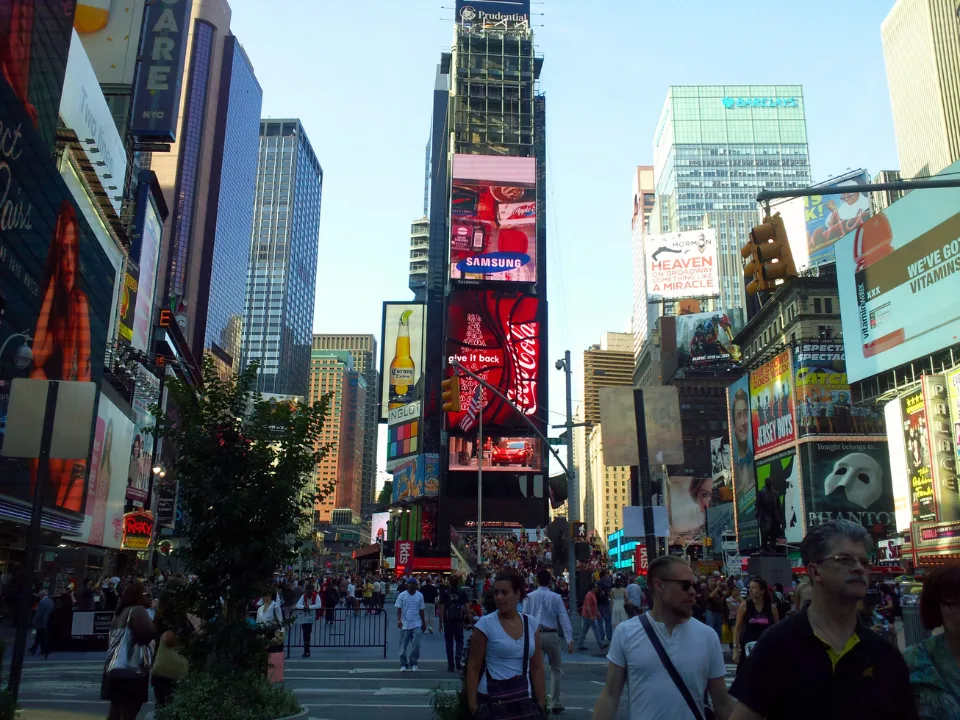
Foot traffic on Fifth Avenue and in Times Square more than doubled during peak moments, as restaurants, retailers, and hospitality operators citywide cashed in on the rare alignment of marquee events.
Get Smarter About What Matters in New York
Subscribe to our free newsletter covering the biggest commercial real estate stories across the five boroughs — delivered in just 5 minutes.
A Blockbuster Retail Summer
The Knicks’ playoff run alone generated $202 million in economic activity from seven home games at Madison Square Garden, according to data from the New York City Economic Development Corporation cited in the Colliers report. Each NBA Finals game produced roughly $90 million on its own.
Visits to the two- to three-block radius around MSG more than doubled during the Finals compared with the same stretch in 2025, per Placer.ai foot-traffic data. Restaurants and bars citywide earned more than $1,000 in incremental revenue per venue on average during Knicks games, based on payment data from the Sunday App.
Retailers with sports partnerships capitalized further. Nordstrom’s flagship NYC store partnered with Adidas on dedicated championship displays, while Macy’s built cross-promotions around both the Knicks’ title and the city’s July 4th festivities, giving shoppers repeat reasons to visit stores they might otherwise skip during summer’s usual seasonal lull.
The Details
Championship mania extended well beyond the arena. Knicks merchandise became Fanatics’ top-selling champion gear across all sports in the 24 hours after the title-clinching win, with the retailer processing more than 8,000 orders per minute. An estimated 2 million fans turned out for the ticker-tape parade, and shoppers lined up as early as 5:30 a.m. outside the NBA Store on Fifth Avenue.
The Fourth of July added its own retail bump. The Battery saw visitation climb 33.7% over the prior year’s holiday weekend as tourists and locals turned out for the U.S. semiquincentennial, while Macy’s marked the occasion — and its fireworks show’s 50th anniversary — with a record 85,000 shells fired over the Hudson.
Zooming Out
NYC’s summer boom wasn’t a one-off. Five World Cup group-stage matches held across the river at MetLife Stadium generated $1.2 billion in direct visitor spending and an estimated $2.1 billion in total economic impact for the New York-New Jersey region, according to NY/NJ Host Committee CEO Alex Lasry. Nearly half of businesses surveyed by the NYC Hospitality Alliance reported a significant sales bump when screening matches — evidence that the tournament’s economic reach extended well beyond match days at MetLife Stadium and into everyday commercial corridors across the city.
Fifth Avenue foot traffic between 50th and 59th Streets more than doubled during the tournament’s opening weekend, and Seventh Avenue near Times Square logged a nearly 40% increase, according to Placer.ai data cited by Colliers — gains comparable to the surges recorded around the Knicks’ title run just weeks earlier.
Why It Matters
For landlords and retailers, the summer is a reminder that major civic and sporting events can move the needle on same-store sales in ways that outstrip typical seasonal patterns. Retail brokers now have hard data to cite when marketing storefronts along event-adjacent corridors, and BID leaders can point to these figures when courting sponsorships or public funding for streetscape improvements.
The events also gave restaurant and bar owners a rare chance to offset the typically slower summer months with concentrated, short-term demand spikes — the kind of data operators can use to negotiate percentage-rent clauses or justify premium locations near arenas and civic gathering points.
What’s Next
With New York set to host additional FIFA World Cup matches and other marquee events through the rest of 2026, expect retail brokers and BID leaders to lean on this summer’s data when courting flagship tenants chasing short bursts of outsized demand.
The city’s retail vacancy rate remains near historic lows, meaning landlords enter the next event cycle with even less room to accommodate pop-up activations or short-term leasing plays — a scarcity that could push more retailers toward permanent, event-adjacent locations rather than one-off promotions.