





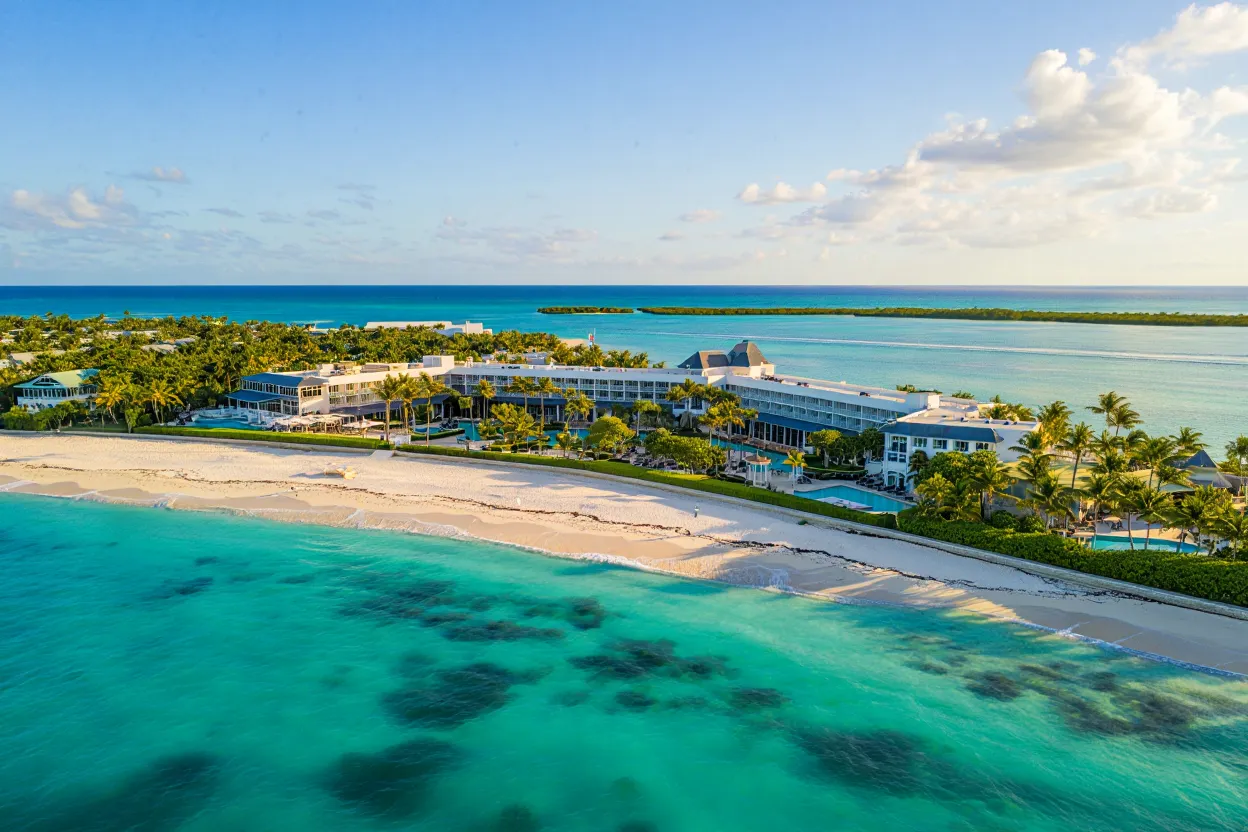
- Over $500M in Florida Keys hotel sales closed in the past two months, signaling renewed investor interest.
- Record-high revenue per available room and tight supply are driving competition for existing assets.
- Development is heavily restricted, so acquisitions remain the main entry point for investors seeking exposure to the market.
Pent-Up Demand Drives Renewed Interest
Hotels across the Florida Keys became a refuge during the pandemic, buoyed by demand as other tropical locations stayed closed. Bisnow reports that as global borders reopened, the region took a hit, with both occupancy and RevPAR declining—a reversal from its heady pandemic peak.
But conditions have shifted again. The Keys now lead Florida in hotel revenue per available room, outpacing rivals like Naples and West Palm Beach, according to CoStar’s Chantal Wu. That leadership is reigniting investor appetite for the market’s highly constrained inventory, which is extremely tough to replicate elsewhere in the state.
Get Smarter about what matters in CRE
Stay ahead of trends in commercial real estate with CRE Daily – the free newsletter delivering everything you need to start your day in just 5-minutes
The Details
Three major hotel transactions have closed in the last two months, totaling over $500M. Bass Pro Shops made headlines with its $300M-plus purchase of Cheeca Lodge & Spa, a 254-room Islamorada resort, at a price exceeding $1M per key. Braemar Hotels & Resorts sold the Pier House Resort & Spa in Key West to a Sixth Street affiliate for $190M, following $12M of renovations.
Meanwhile, Mast Capital and Koch Real Estate paid $38M for the Islands of Islamorada Resort, marking Mast’s first Keys acquisition since 2022. This latest activity follows years of sluggish deal flow and represents a notable spike in investment volume for the region.
Supply Constraints Keep Competition Fierce
The Florida Keys’ supply is exceptionally tight due to environmental controls and state-imposed development limits. The number of hotels across the islands has actually shrunk, from 209 in March 2020 to 206 this summer, per CoStar. Only 110 new hotel rooms have entered the pipeline since June 2025—a rounding error compared to the 20,000 rooms coming to Miami-Dade County.
With new development virtually impossible, investors and private equity firms are zeroing in on existing assets, as off-market deals and rare ownership transitions set new pricing benchmarks for the region’s few sizable resorts.
Why It Matters
This uptick in deal activity underscores how investor strategy is evolving in response to the Keys’ unique fundamentals. The Keys’ strength stands out as US hotel RevPAR faces broader pressure, highlighting the market’s unusual resilience. Revenue per available room averaged $409 in the first half of 2026, rivaling rates in major global cities—including New York during marquee events. Yet, more telling is the resilience: after a 17% drop in RevPAR in 2023, growth returned in 2025, and hotel demand climbed 4% at the start of 2026, per Tourism Economics.
Projections show total hotel revenue will surpass $1B this year—the highest since 2023. That’s all in a submarket where inventory can hardly grow, meaning pricing power for operators and sellers alike. For capital looking to bet on Florida tourism but wary of new supply eroding returns, the Keys offer an almost irreplaceable moat, with every fractional gain in performance magnified by scarcity.
For the broader hotel sector, this is a case study in how limited supply—combined with rebounding demand and record leisure spending—can create outsized investment opportunities, even as other US resort markets grapple with overbuilding or shifting patterns of travel. Institutional and family office buyers, once cautious, are chasing deals hard, and each comp seems to draw new sellers to test historic pricing.
What’s Next
All signs point to continued scarcity-driven competition in the Florida Keys hotel market. With environmental regulations keeping new development to a trickle and tourism spending expected to grow, investor pressure on existing hotel owners will remain intense.
Many anticipate that any new listing will attract a deep bench of buyers, often bidding well above replacement cost. Unless something changes on the regulatory front—a scenario insiders don’t foresee—acquisition opportunities will stay rare and expensive. For investors, that means windows to enter may open only occasionally, with each sale helping to reset local benchmarks for pricing and expectations for asset performance.