




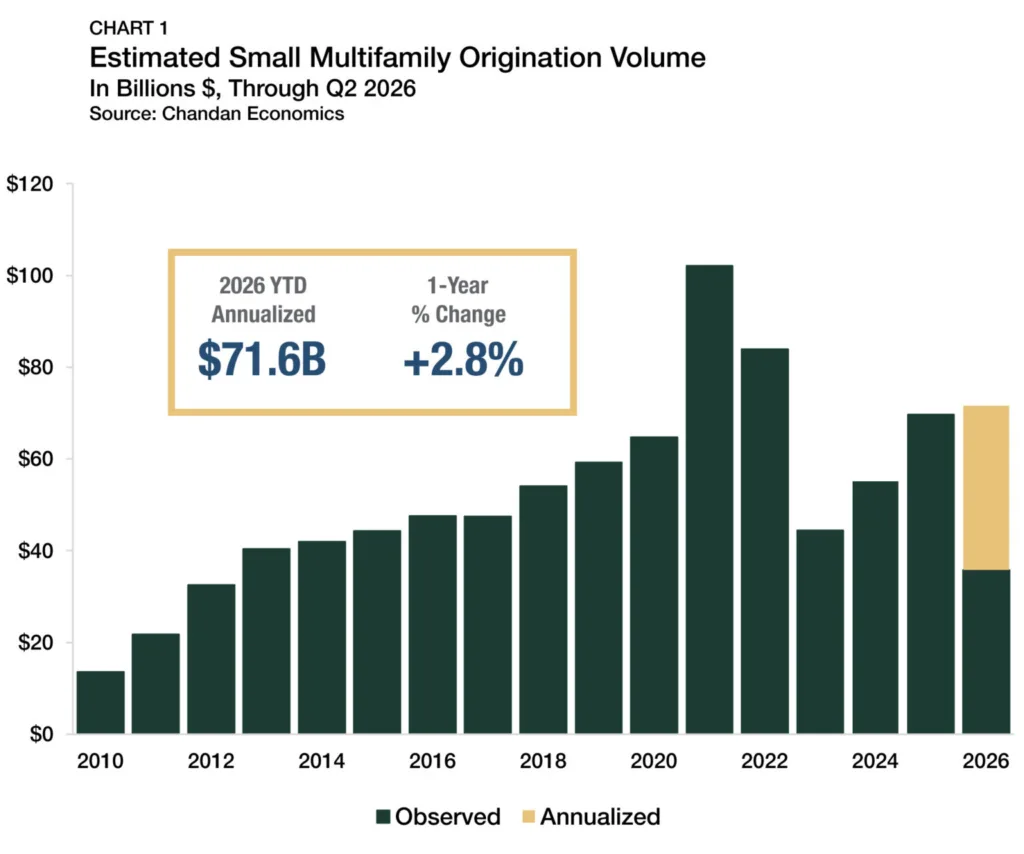
- Small multifamily originations in the first half of 2026 reached $71.6B, putting the year on track to surpass 2025 activity, per Chandan Economics.
- Valuations and cap rate spreads remain historically tight, keeping property values range-bound despite robust lending.
- Lenders continue to tighten credit modestly, with rising debt yields and slightly lower LTVs requiring more income protection for new loans.
Sustained Stability Defines the Market
Small multifamily assets retained their reputation for stability in the third quarter of 2026. Capital market selectivity and property-level performance showed only minor shifts. Chandan Economics and Arbor report healthy lending volume, while valuations remain steady amid interest rate volatility. The National Multifamily Housing Council’s July 2026 survey supports this trend. Tighter rental markets and modest rent growth offset declines in sales and capital availability.
Despite higher debt costs, small multifamily continues to avoid dramatic swings. The sector entered Q3 2026 on a stable, gradual growth path. Fundamental renter demand supports healthy origination activity and prevents significant price declines.
Get Smarter about what matters in CRE
Stay ahead of trends in commercial real estate with CRE Daily – the free newsletter delivering everything you need to start your day in just 5-minutes
The Details
Small multifamily lending volume reached an annualized $71.6B through the first half of 2026. This includes loans with balances between $1M and $9M. The annualized pace tops 2025’s full-year $69.6B total by 2.8%. Refinancing remains the primary driver, accounting for 65% of Q2 2026 originations. Meanwhile, the Arbor Small Multifamily Price Index fell 0.8% quarter-over-quarter and 0.3% year-over-year. These modest declines show limited movement in valuations.
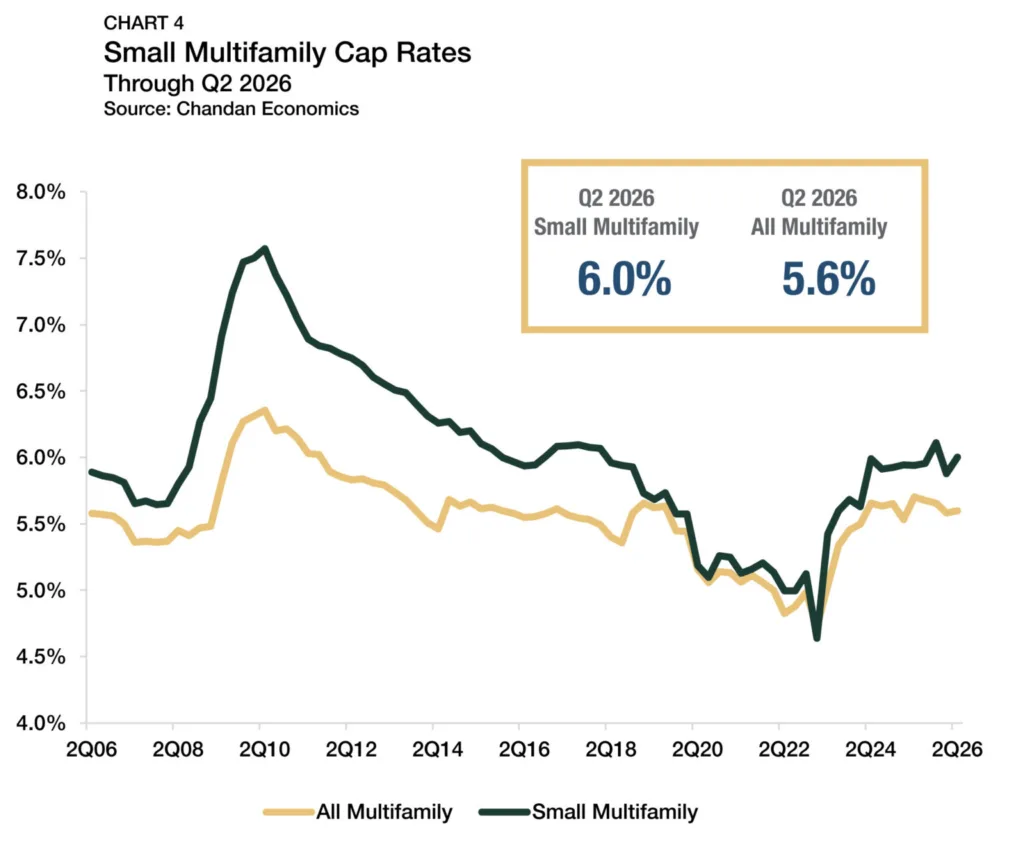
Cap rates averaged 6.0% in Q2 2026, up slightly from 5.8% during the previous quarter. However, rates remain within the narrow range established in early 2024. The risk premium over the 10-year Treasury held steady at 158 bps. Meanwhile, the cap rate spread against broader multifamily widened to 40 bps.
Rising Yields, Tight Spreads Guide the Market
Cap rate spreads over Treasurys remain compressed, limiting potential valuation appreciation. In late 2025, loan composition drove much of the cap rate fluctuation. More recently, acquisitions and refinancings have contributed evenly to the increase. Lenders also became more cautious as market volatility persisted. Debt yields increased to 9.6% in Q2 2026, while average loan-to-value ratios declined to 63.4%.
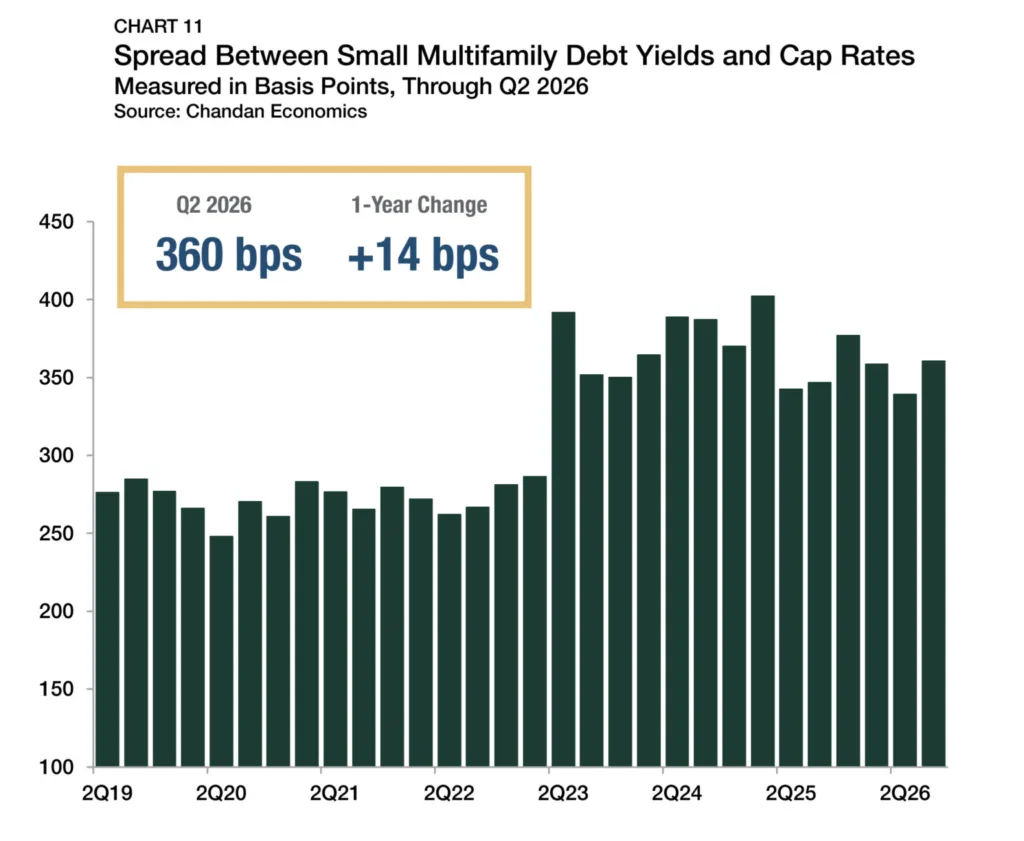
These shifts reflect modest underwriting tightening as lenders demand stronger income cushions. Debt per dollar of NOI also declined, showing that lenders provide less leverage against property income. Expense ratios eased slightly to 42.1% but remain nearly one percentage point higher year-over-year. However, small multifamily occupancy held steady at 96.3%. That rate remains well above the 92.7% national rental average.
Why It Matters
For investors, small multifamily remains among the most stable CRE sectors. Broader apartment sales and capital availability weakened, yet small multifamily originations remain on track for a strong year. Refinancing continues to drive lending as owners navigate upcoming maturities. Meanwhile, tighter CMBS spreads are helping revive lending activity across the broader CRE market. Some owners also delay decisions while waiting for improved borrowing conditions. That strategy supports lending volume but increases exposure to future rate volatility.
Valuation and underwriting trends show no signs of severe stress. The Arbor index declined only 0.8% quarterly, while the cap rate spread held at 158 bps. Together, these metrics point toward a range-bound market rather than widespread distress. Still, higher debt yields, lower LTVs, and elevated expenses encourage lenders to maintain larger risk buffers. Occupancy above 96% and stabilizing expenses continue to support healthy property-level fundamentals.
Market-wide, historically tight cap rate spreads leave limited room for meaningful asset price gains. That dynamic also restricts potential investor upside. Stable performance may frustrate buyers seeking value dislocation or significant repricing opportunities. Still, many investors value range-bound performance during periods of macroeconomic volatility.
What’s Next
Small multifamily should maintain its stable growth through the remainder of 2026. However, financing accessibility and rental fundamentals will remain critical. Refinancings should continue driving originations as owners manage approaching maturities. Interest rate movements could delay some transactions as borrowers wait for more favorable financing conditions.
Strong operating performance should continue supporting property values. Meanwhile, tight cap rate spreads and cautious underwriting will likely shape the investment landscape. Most analysts expect incremental changes rather than dramatic shifts. Major rate shocks or sharp changes in capital appetite could alter that outlook.