




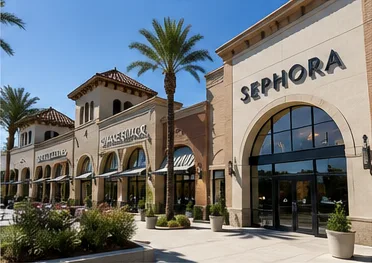



- Greater LA retail vacancy remained stable at 6.2% in Q2 2026, according to Colliers.
- Limited construction and scarce high-quality space continue to support demand from local and international brands seeking expansion opportunities.
- A vacant West Hollywood retail building sold for $12.96M in under 48 hours, underscoring demand for well-located assets.
Greater LA retail fundamentals remain resilient as limited availability supports demand for established properties. According to Globe St, Colliers reported regional vacancy of 6.2% in Q2 2026. Local and international brands continue seeking space, while a constrained development pipeline limits new supply.
Get Smarter about what matters in CRE
Stay ahead of trends in commercial real estate with CRE Daily – the free newsletter delivering everything you need to start your day in just 5-minutes
Greater LA Retail Supply Stays Tight
Colliers Vice President Gabe Kadosh said the market has an extremely limited supply of high-quality retail properties. He pointed to strong locations, proven tenancy, and long-term growth potential as key attributes. Demand is coming from brands seeking to establish or expand their presence in the region.
Limited construction is also reducing the amount of new competing space entering the market. Kadosh expects retailer demand to remain strong because supply constraints have not eased. That environment continues to favor established retail corridors and assets that can offer immediate occupancy or flexible repositioning options.
The Details
The sale of 145 N. Robertson Blvd. in West Hollywood illustrates the competition for prime retail real estate. The 13,100 SF, two-story building sold for $12.96M in less than 48 hours. It was delivered vacant and remains vacant.
The property sits in the Design District along the Robertson Boulevard retail corridor. Built in 1951, it has floor-to-ceiling glass storefronts and a flexible layout for retail, showroom, office, or owner-user uses. The property previously sold for $26.6M in 2013 and $18.2M in 2023.
Limited Retail Availability Supports Deals
Kadosh said rapid transactions still depend on preparation, relationships, and confidence in both the asset and counterparties. Brokers need key diligence items addressed before closing to reduce escrow surprises.
Limited retail availability can intensify competition when a well-located property reaches the market. The Robertson Boulevard sale shows that vacancy does not necessarily eliminate investor interest when the location and physical asset remain compelling. Buyers may also value the ability to occupy, redevelop, or hold a flexible property for longer-term use.
Why It Matters
The market’s strongest opportunities are not limited to its most famous shopping streets. Kadosh also identified parts of Glendale, Sherman Oaks, West LA, and Melrose as active submarkets. He said these areas benefit from strong demographics, consumer spending, and retailer demand.
For investors, the combination of stable vacancy and limited construction can support established retail assets even when individual properties are vacant. For brands, the same supply constraint can make desirable space harder to secure when expansion plans require proven locations.
What’s Next
Colliers expects demand from local and international brands to remain strong while high-quality supply stays limited. That keeps attention on existing corridors and smaller submarkets where retailer activity remains healthy.
Future performance will depend on whether the constrained development pipeline persists and whether brands continue expanding. In the near term, established assets with flexible layouts and strong locations appear positioned to attract both occupiers and investors.