




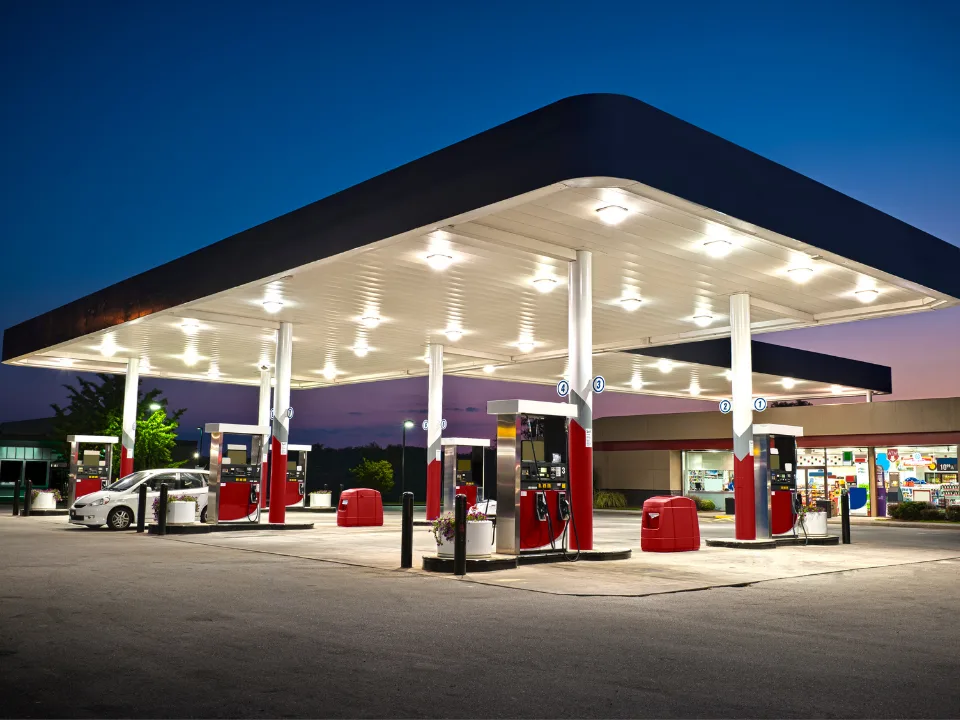
- Investors are still chasing gas stations and convenience stores despite elevated fuel prices, with c-store cap rates of 5.63% in Q2 2026 the tightest of 17 net lease sectors.
- Getty Realty’s $260.9M sale-leaseback of 41 Refuel stores was the year’s largest deal, while average closed sales run about $4.6M, or roughly $1,400 per SF.
- Buyers are betting on nonfuel income, bonus depreciation and national operators’ all-cash acquisitions, while smaller mom-and-pop owners increasingly choose to sell.
Investors are still piling into gas station real estate even as elevated, volatile fuel prices squeeze drivers, according to Bisnow. Convenience store cap rates averaged 5.63% in Q2 2026, the tightest of 17 net lease sectors tracked by B&E.
That compares with 5.57% a year earlier and 5.66% for grocery and supermarket properties.
Get Smarter about what matters in CRE
Stay ahead of trends in commercial real estate with CRE Daily – the free newsletter delivering everything you need to start your day in just 5-minutes
Fuel Prices vs. Investor Appetite
Supply disruption tied to the war in Iran has pushed gas prices up, and oil executives warn of a fuel crisis. Buyers are leaning on diversified in-store revenue instead of fuel margins.
MMGC Invest’s Michal Mohelsky said cap rates sit about 50 basis points above the 10-year Treasury, and top credit leases price at or below it.
Getty’s Sale-Leaseback Leads Deals
Northmarq data shows the average closed sale at about $4.6M, or roughly $1,400 per SF. CBRE’s Sai Thakor said Houston sites that sold for $1.5M to $2M when he started now trade for $4M to $5M.
Getty Realty’s $260.9M sale-leaseback of 41 Refuel stores in the Carolinas, Texas and Mississippi at the end of September was the largest deal of the year.
Net Lease Cap Rates Stay Tight
Pharmacy, discount store and early learning properties all averaged cap rates above 7% in Q2. National chains are expanding, and Thakor said many pay all cash.
The 100% bonus depreciation law passed in July 2025 is also boosting returns, which tracks with record c-store net lease activity.
Why It Matters
Scale favors bigger operators.
Over 116,000 convenience stores sell fuel in the U.S., and about 61% are single-store operators, per Northmarq. Northmarq’s Sage Chaffin said more mom-and-pop owners want to sell because they cannot keep up with costs.
Mohelsky said gas stations now make up about 60% of his firm’s production, up from the usual 10% to 15%.
What’s Next
Lenders need to be careful modeling new acquisitions because margins are floating, Mohelsky said. Inventory carried at closing has also risen to $200K to $250K from $100K to $150K.
Mohelsky sees owners who sell at today’s elevated prices as the likely winners.