



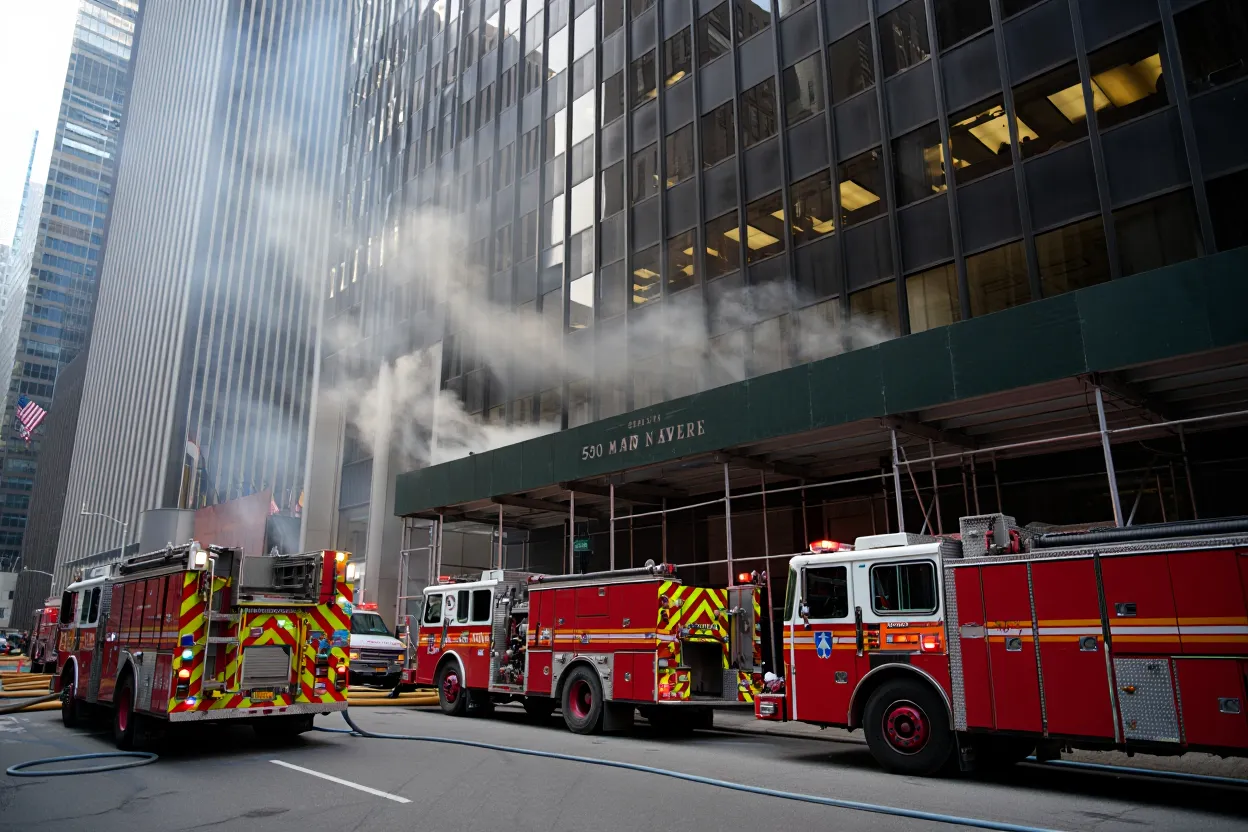
- A gas-fueled fire at Papillon restaurant led to the evacuation of Jefferies Financial Group’s headquarters at 520 Madison Ave., Manhattan.
- Over 200 people were evacuated and five civilians suffered minor injuries, per the New York City Fire Department.
- The incident highlights operational and safety risks for high-rise properties with street-level restaurants in dense urban environments.
Building Safety in Midtown Manhattan
Jefferies Financial Group’s headquarters at 520 Madison Ave. was evacuated Friday morning after a fire broke out at Papillon, a ground-level restaurant adjacent to the property, according to Bloomberg. The New York City Fire Department responded to reports of a gas-fed blaze, prompting a full evacuation of the office tower.
The incident forced Jefferies to shut its offices for the day and disrupt operations in Midtown’s busy business district. Tishman Speyer, the building owner, expects the tower to reopen over the weekend. This event underscores the complex safety logistics in mixed-use commercial properties throughout Manhattan, especially buildings incorporating independent F&B tenants at street level.
Get Smarter About What Matters in New York
Subscribe to our free newsletter covering the biggest commercial real estate stories across the five boroughs — delivered in just 5 minutes.
The Details
The fire started at Papillon but never reached the main office tower. However, officials evacuated more than 200 occupants as a precaution. FDNY Deputy Assistant Chief John Corcoran confirmed the evacuation.
Five civilians suffered minor injuries, and one went to the hospital. Sources familiar with the incident said no Jefferies employees were hurt. Firefighters controlled the fire by 9:30 a.m.
Even so, emergency crews disrupted Madison Avenue and East 53rd Street throughout the day. Papillon occupies a separate structure within the property’s larger commercial footprint. That layout increased the emergency response and public attention.
Risks of Street-Level Restaurant Tenants
The fire highlights the recurring risks of combining office towers with ground-floor restaurants, especially those using gas hookups. Similar incidents in Toronto and Chicago have pushed property managers to review fire safety and evacuation plans.
A 2025 National Fire Protection Association report found restaurants caused about 20% of nonresidential building fires nationwide. In dense districts like Midtown, these fires create larger operational, reputational, and financial risks for landlords and tenants.
As a result, owners continue improving shared building systems and refining tenant screening. Many also seek insurance premium adjustments after similar incidents.
Why It Matters
The evacuation at Jefferies’ 520 Madison shows how one street-level tenant can disrupt an entire commercial property. Although the office tower avoided physical damage, the evacuation stopped business across the building. A recent Midtown evacuation over structural concerns also showed how unrelated building issues can quickly disrupt tenant operations without causing major physical damage. The incident showed how quickly a single emergency can affect a high-rise asset.
FDNY records show more than 1,700 nonresidential fires occur annually in Manhattan. Many start in ground-floor retail spaces. While this fire caused only minor injuries, it exposed the operational risks facing landlords and tenants.
As investor demand for amenities and mixed-use properties grows, asset managers must balance retail income with physical risk and insurance costs. Tishman Speyer’s quick communication and planned weekend reopening helped limit disruption. Still, the incident will likely renew discussions about shared building systems and emergency preparedness.
What’s Next
Tishman Speyer expects to reopen 520 Madison Ave. over the weekend after final inspections. Authorities continue investigating the fire’s cause. Their findings could shape future rules for Midtown restaurant gas hookups.
Meanwhile, New York property managers will likely review emergency response plans. Some insurers may also reassess underwriting for buildings with ground-floor restaurants. For CRE professionals, the incident highlights the trade-off between activating retail space and managing safety risks in mixed-use properties.