




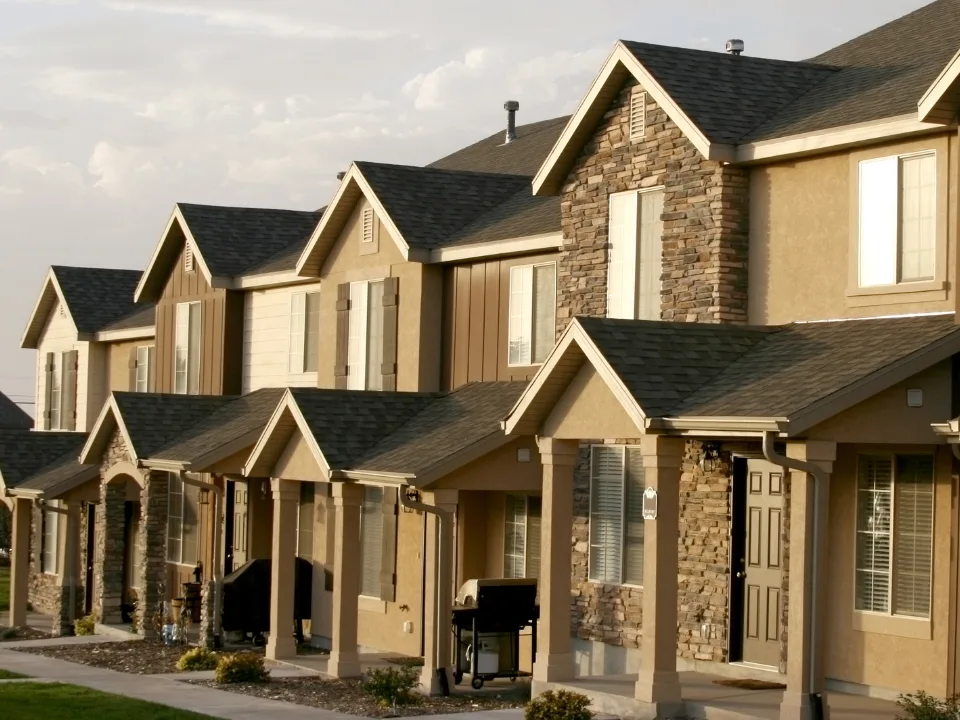



- HUD made build-to-rent communities of single-family homes, duplexes and triplexes eligible for FHA-insured loans under the 221(d)(4) and 223(f) programs, effective immediately.
- FHA previously insured only buildings with four or more units, citing Fair Housing Act accessibility and valuation concerns about single-family design and subdivision-style layouts.
- The change follows the July law removing the chassis requirement for manufactured housing and gives BTR developers a path to long-term federally insured debt.
HUD has opened two FHA multifamily insurance programs to build-to-rent communities, Multifamily Dive reported. FHA-insured financing is now available for them, effective immediately.
Rental communities of detached homes, duplexes or triplexes, site-built or manufactured, will be underwritten on the same terms as conventional apartment developments.
Get Smarter about what matters in CRE
Stay ahead of trends in commercial real estate with CRE Daily – the free newsletter delivering everything you need to start your day in just 5-minutes
Two Programs Open Up
HUD’s change affects two programs, per a mortgagee letter cited by Multifamily Dive. Section 221(d)(4) covers ground-up construction. Meanwhile, Section 223(f) supports purchases or refinancing of recently completed communities.
HUD said the policy reflects the growth of professionally managed BTR and rising demand for these homes, Multifamily Dive reported.
Why BTR Was Shut Out
Previously, the Office of Multifamily Housing insured only developments with four or more units per building. According to the letter, BTR projects fell outside those rules. Their detached homes and neighborhood-style layouts raised Fair Housing Act accessibility questions. They also created valuation and underwriting challenges, per Multifamily Dive.
Now, HUD aims to speed up rental financing and increase housing supply. The agency also sees potential in advances in manufactured housing design, Multifamily Dive reported.
Eligibility Rules
A qualifying BTR project must sit on one continuous site and operate as a single property. The letter reviewed by Multifamily Dive compares this setup to other multifamily assets. Projects that combine BTR homes with traditional apartment buildings can also qualify.
HUD allows manufactured and modular construction. However, these methods complicate the agency’s usual process for insuring advances on on-site work. Developers must resolve those issues during the concept meeting, per Multifamily Dive.
Why It Matters
Federally insured debt typically offers long-term financing. As a result, the change could give BTR sponsors more options in a tighter credit market.
Joe Gormley oversees FHA and the Office of Housing. He said adding rental supply is central to affordability, Multifamily Dive reported.
The move also builds on a broader push for manufactured housing. Earlier this month, CRE Daily covered the HUD chassis plan. In addition, Multifamily Dive reported that the July ROAD to Housing Act removed the chassis rule. That rule had raised unit costs by as much as $10,000.
What’s Next
Watch how quickly lenders and developers bring BTR projects into these programs. Also, track HUD’s next steps on fast-build manufactured designs, per Multifamily Dive. Markets where BTR supply builds may see early activity.