



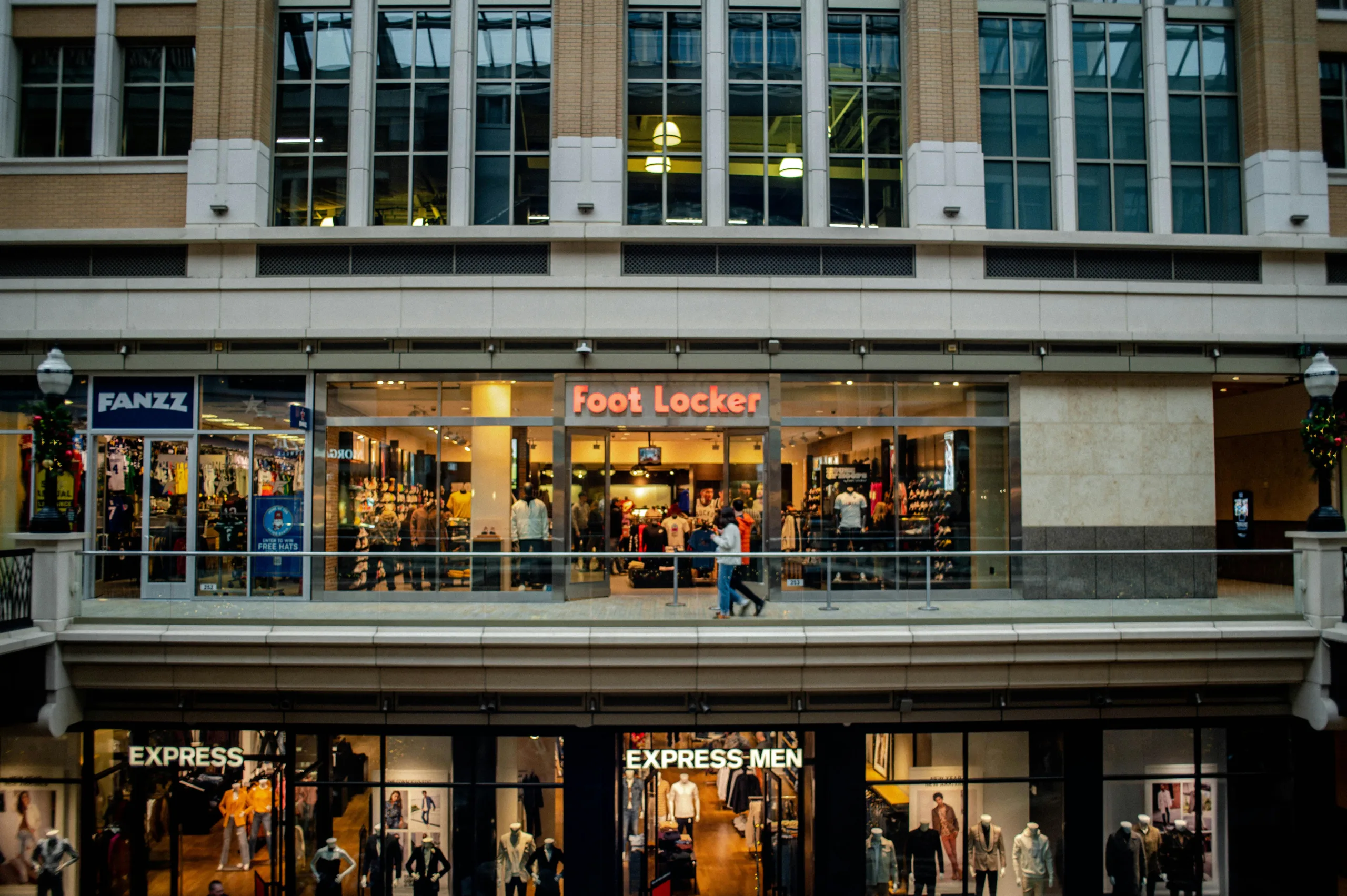
- Dick’s Sporting Goods will expand its Fast Break remodel initiative from roughly 100 Foot Locker locations to about 250 stores globally after early performance exceeded expectations.
- Refreshed stores delivered double-digit comparable-sales growth in Q1 and improved merchandise margins, according to company executives.
- The rollout highlights how retailers are leaning on targeted, lower-cost store upgrades rather than large-scale redevelopment projects to improve performance and protect market share.
Dick’s Sporting Goods is moving faster than expected on its plan to revive Foot Locker, betting that targeted store upgrades can help reignite growth at the athletic footwear chain. CoStar reports that after acquiring Foot Locker for $2.4B in September 2025, Dick’s says its Fast Break remodel program is already producing measurable sales gains, prompting a significant expansion ahead of the critical back-to-school shopping season.
The decision comes as Foot Locker posted its first quarter of positive comparable sales since Q4 2024, according to Dick’s management. Encouraged by those results, the retailer also raised its broader corporate outlook for the year.
Get Smarter about what matters in CRE
Stay ahead of trends in commercial real estate with CRE Daily – the free newsletter delivering everything you need to start your day in just 5-minutes
A Key Piece of the Foot Locker Turnaround
Dick’s launched Fast Break as an 11-store pilot designed to modernize Foot Locker locations without requiring extensive capital investment. The concept focuses on retail fundamentals: simplifying product presentation, improving visual merchandising, highlighting key footwear launches, and creating more cohesive apparel assortments.
What started as a test quickly expanded. The company added approximately 90 stores to the program, bringing the total to about 100 locations during the first phase. Following strong early results, Dick’s now plans to extend Fast Break upgrades across roughly 250 Foot Locker, Kids Foot Locker, and Champs Sports stores globally before the back-to-school season.
Executive Chairman Ed Stack told investors during the company’s Q1 earnings call that the refreshed stores generated double-digit comparable-sales growth and meaningful merchandise margin improvements.
The Fast Break Details
Unlike major store redevelopment projects, Fast Break emphasizes speed and efficiency. According to Dick’s, most remodels can be completed within a few days and require limited capital investment.
A central component of the strategy is reducing product clutter. Stack said Foot Locker historically presented shoppers with too many footwear options, making it difficult to identify priority products and key brand stories. To address that issue, Dick’s cut product assortments by roughly 30%, concentrating inventory around core styles, colors, and launches.
The company has also been reshaping the broader Foot Locker portfolio. During fiscal 2026, Foot Locker closed 62 underperforming stores as Dick’s worked to streamline operations and eliminate excess inventory. The retailer now operates more than 3,000 stores globally, including 1,537 Foot Locker, Champs Sports, Kids Foot Locker, and WSS locations across the US and Canada.
Management says the first full buying season under Dick’s ownership is now underway, giving the company greater control over product selection heading into the second half of the year.
Athletic Retail Remains Highly Competitive
The turnaround effort comes amid fierce competition in the athletic footwear and apparel sector. While consumer demand for sneakers and performance apparel remains strong, retailers continue battling for market share through store investments, exclusive product launches, and omnichannel capabilities.
The company is also leveraging Foot Locker’s international footprint to expand its reach across global athletic retail markets. JD Sports remains one of Foot Locker’s largest competitors in the category. However, the UK-based retailer recently signaled a more cautious approach in the US, announcing plans to close approximately 175 Hibbett stores as part of a portfolio optimization effort, according to company announcements.
Dick’s appears to be taking the opposite approach—selectively pruning weaker locations while investing in stores it believes can drive growth.
The company is also preparing a broader brand relaunch for Foot Locker and says improvements to its supply chain are helping move products more efficiently to the right markets while supporting more disciplined pricing decisions.
Why It Matters
For retail landlords and investors, Foot Locker’s performance offers an early indication of whether Dick’s acquisition strategy is gaining traction. The chain remains a major mall tenant across North America, and stronger store productivity could help stabilize occupancy and traffic at shopping centers that depend on athletic retailers as anchor brands.
The results also reinforce a broader retail real estate trend: operators increasingly favor targeted, lower-cost store refreshes over expensive full-scale renovations. If retailers can achieve double-digit sales gains through merchandising and layout improvements alone, capital-light strategies may become more attractive across the sector.
Meanwhile, Dick’s continues expanding its own experiential retail footprint. The company ended fiscal 2025 with 35 House of Sport locations and plans to open approximately 14 additional stores during fiscal 2026. According to CEO Lauren Hobart, landlords continue showing strong interest in the format because of its ability to fill large vacant spaces and generate customer traffic.
What’s Next
The next major test will come during the back-to-school shopping season, when 250 Fast Break locations are expected to be operating across the Foot Locker portfolio. Investors will be watching whether the strong early sales gains can be sustained as the concept scales.
Beyond store remodels, Dick’s plans to continue refining Foot Locker’s merchandise strategy, supply chain operations, and brand positioning. If positive comparable-sales growth persists through 2026, the retailer could establish a clearer roadmap for revitalizing one of the athletic retail sector’s most recognizable brands while strengthening its position in a highly competitive market.