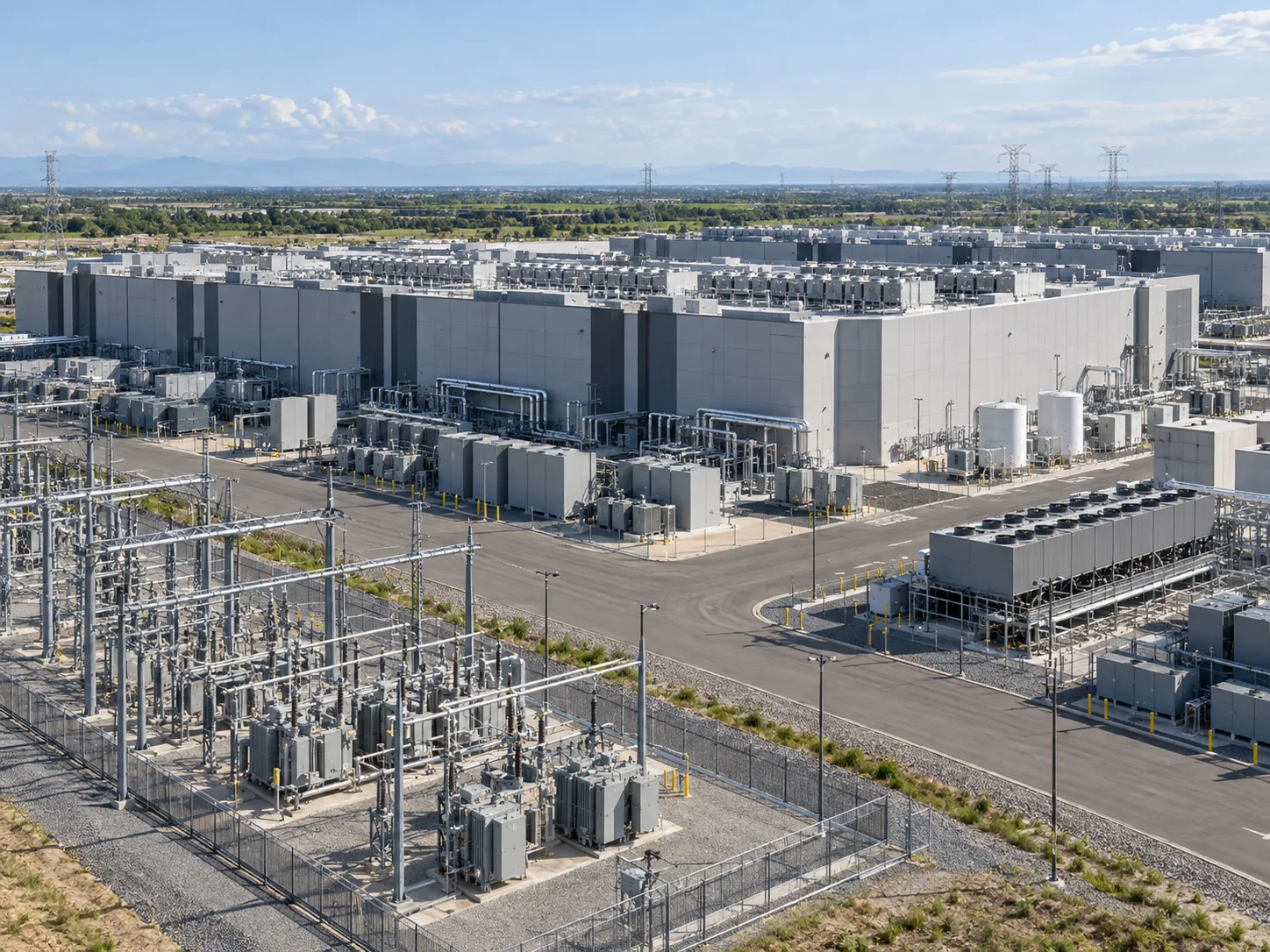





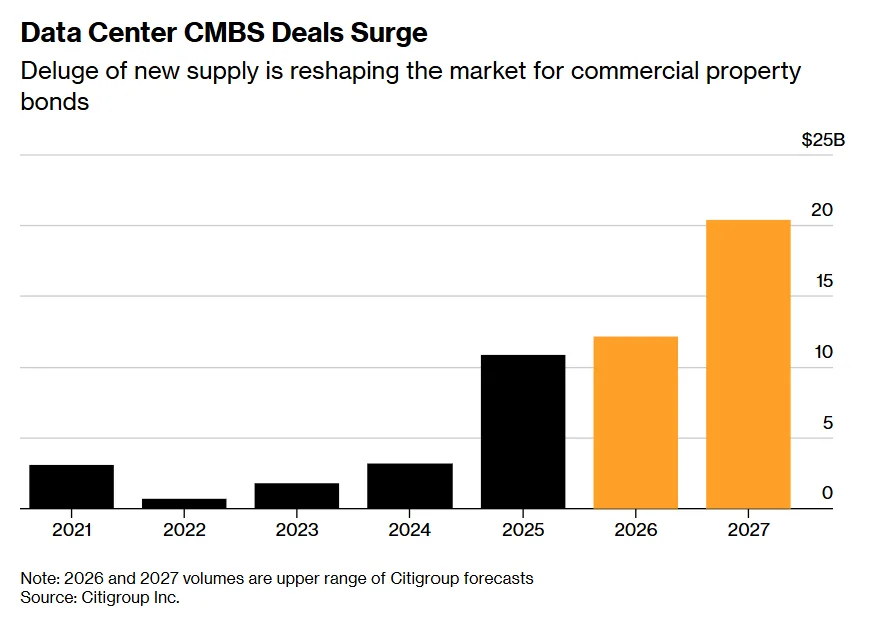
- About $17B of data center CMBS has been issued since the start of 2025, more than triple the prior two years.
- Data centers now represent roughly 8% of new commercial property bond deals, with billions more financing in the pipeline.
- Investors are widening their underwriting lens to power access, cooling needs, tenant concentration and technology-driven obsolescence.
Bloomberg reports that data center financing is reshaping the commercial mortgage-backed securities market. The source’s data center CMBS analysis shows a new underwriting challenge for bond investors. Power availability, grid capacity, cooling systems and computing density now sit beside familiar property metrics. About $17B of data center CMBS has been issued since the start of 2025. That is more than triple the amount sold during the previous two years. Data centers now represent roughly 8% of new commercial property bond deals.
Get Smarter about what matters in CRE
Stay ahead of trends in commercial real estate with CRE Daily – the free newsletter delivering everything you need to start your day in just 5-minutes
Data Center CMBS Changes the Playbook
Most data center CMBS deals use single-asset, single-borrower structures, known as SASBs. One large mortgage often backs a single facility or complex. That concentrates risk around a small number of tenants and highly specialized buildings. CWCapital’s Alex Killick said his firm is developing new stress tests for the sector.
He said traditional property can be re-underwritten using familiar operating metrics. Data centers can change much faster as technology, power needs and tenant requirements evolve. Axonic Capital has responded cautiously and keeps data centers a small portfolio allocation. The firm also emphasizes diversification across tenants, uses and geographies. Portfolio manager Steven Jury said Axonic also questions what these facilities will be worth in five, 10 or 20 years. He pointed to changes in technology, tenant demand and supply as major uncertainties.
The Details
Lease economics can determine how much cash remains available for debt service. Power costs, capacity commitments and downtime provisions decide who absorbs unexpected expenses. Tenant identities and lease details may also remain confidential. Beach Point Capital Management’s Ben Hunsaker said that opacity complicates underwriting.
Location analysis is different as well. Prime sites depend heavily on cheap electricity and available transmission capacity. Those factors can matter more than transportation links, amenities or proximity to a city center. They can also determine how competitive a facility remains when the loan matures. Confidentiality can make those risks harder to price because hyperscale tenants often limit disclosure. The same opacity can make lease rollover analysis less straightforward than in office or industrial deals.
Risk Premiums Widen
Re-leasing risk is unusually technical. A new tenant may need different electrical or cooling systems before occupying a facility. That can mean higher capital spending and longer periods without rent. It can also reduce recoveries after borrower distress. Barclays data show AAA data center bonds averaging 1.65 percentage points over their floating-rate benchmark.
Office averages 0.93, retail 1.05 and industrial 1.25. A recent $356M bond on a 30-megawatt Illinois facility also priced wider than initial guidance. Data center CMBS issuance is becoming a larger portfolio consideration for bond buyers. The wider spreads indicate investors are demanding more compensation for the sector’s unfamiliar risks. They also show that strong demand for data center debt does not eliminate underwriting concerns.
Why It Matters
Technology can shorten the useful life of the underlying real estate. New AI chips can require sharply more power and cooling. A facility built around one hardware generation can therefore lose competitiveness within a few years. Trepp’s Stephen Buschbom said these assets resemble infrastructure and technology plays more than conventional property. Local opposition adds another layer of uncertainty. Communities are debating utility costs and infrastructure strain from new projects. That makes future development rules harder for investors to predict.
What’s Next
Supply risk is rising beside strong demand. Big tech has issued more than $429B of debt globally this year to fund AI infrastructure. Financing fatigue is now reaching commercial property bonds. Citigroup expects data center CMBS issuance to rise about 50% next year. Its forecast calls for $18B to $20B of issuance.
Demand for computing capacity still exceeds available supply today. However, a larger financing pipeline could create mark-to-market pressure if demand weakens or projects become harder to refinance. Citigroup warned that rising supply creates longer-term mark-to-market risk. That risk would become more important if demand becomes less certain. Investors are therefore balancing today’s capacity shortage against tomorrow’s refinancing and obsolescence questions.