




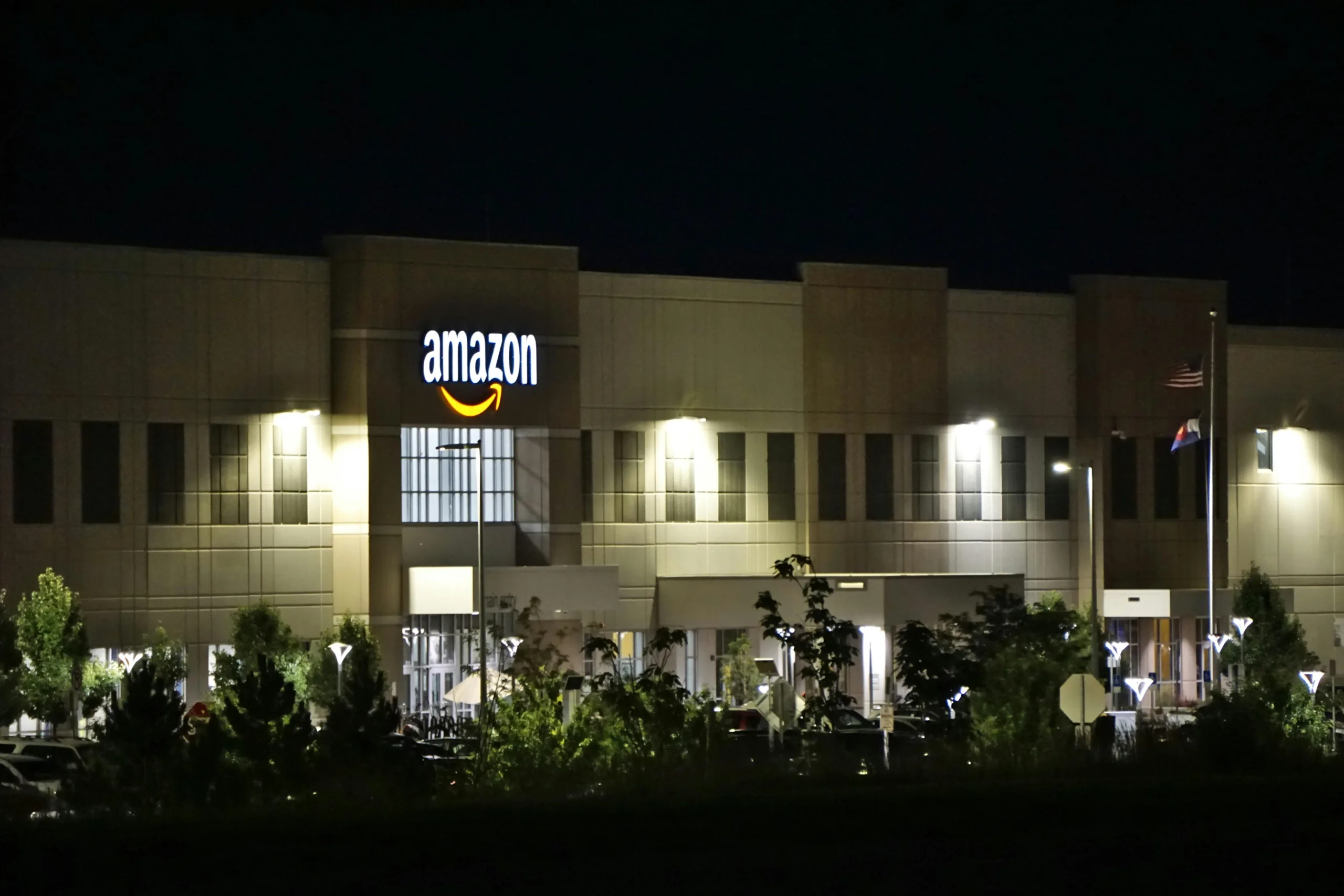
- Amazon launched Amazon Supply Chain Services, giving retailers and shippers access to its warehouses, freight network, aircraft, and delivery infrastructure through a unified logistics platform.
- Third-party logistics firms leased more than 30M SF in Q1 2026, according to JLL, making the sector one of the strongest drivers of industrial demand as other occupiers slowed expansion.
- Analysts say Amazon’s entry could pressure smaller 3PL operators, encourage consolidation, and eventually soften warehouse leasing demand if companies shift space needs into Amazon’s existing network.
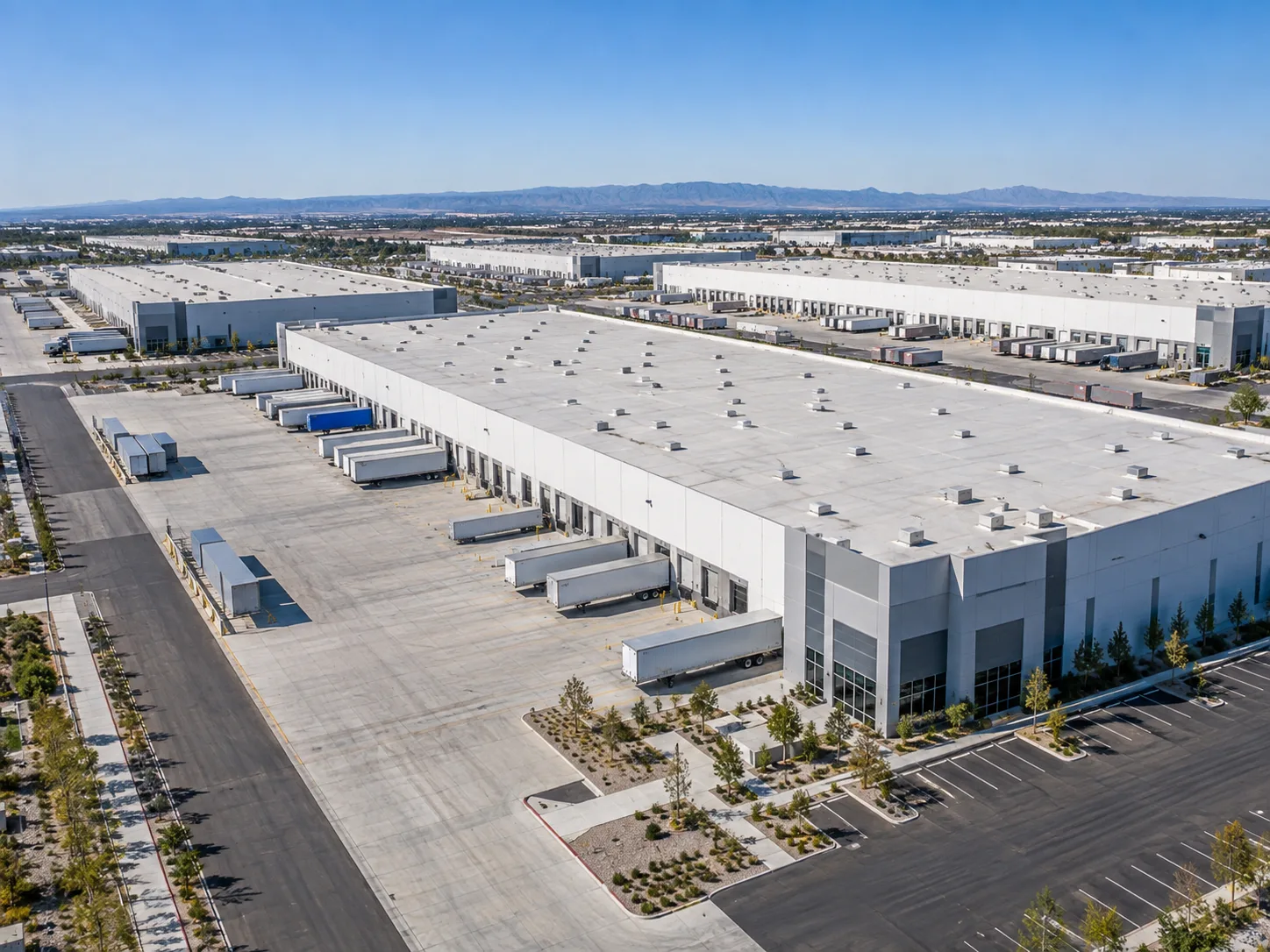
Bisnow reports that Amazon is taking direct aim at the third-party logistics industry with the launch of Amazon Supply Chain Services (ASCS), a new offering that opens the company’s sprawling logistics network to outside retailers and freight customers. The move gives businesses access to Amazon’s fulfillment centers, transportation infrastructure, and delivery capabilities while creating a new competitive challenge for 3PL operators that have become a major force in industrial leasing.
The rollout comes at a pivotal moment for warehouse demand. Industrial leasing activity has slowed across parts of the market as tariffs, geopolitical uncertainty, and elevated supply levels weigh on occupier decisions. Yet 3PL providers have continued expanding aggressively, helping stabilize leasing volumes for large-format distribution space.
Get Smarter about what matters in CRE
Stay ahead of trends in commercial real estate with CRE Daily – the free newsletter delivering everything you need to start your day in just 5-minutes
Why Amazon Is Opening Its Logistics Network
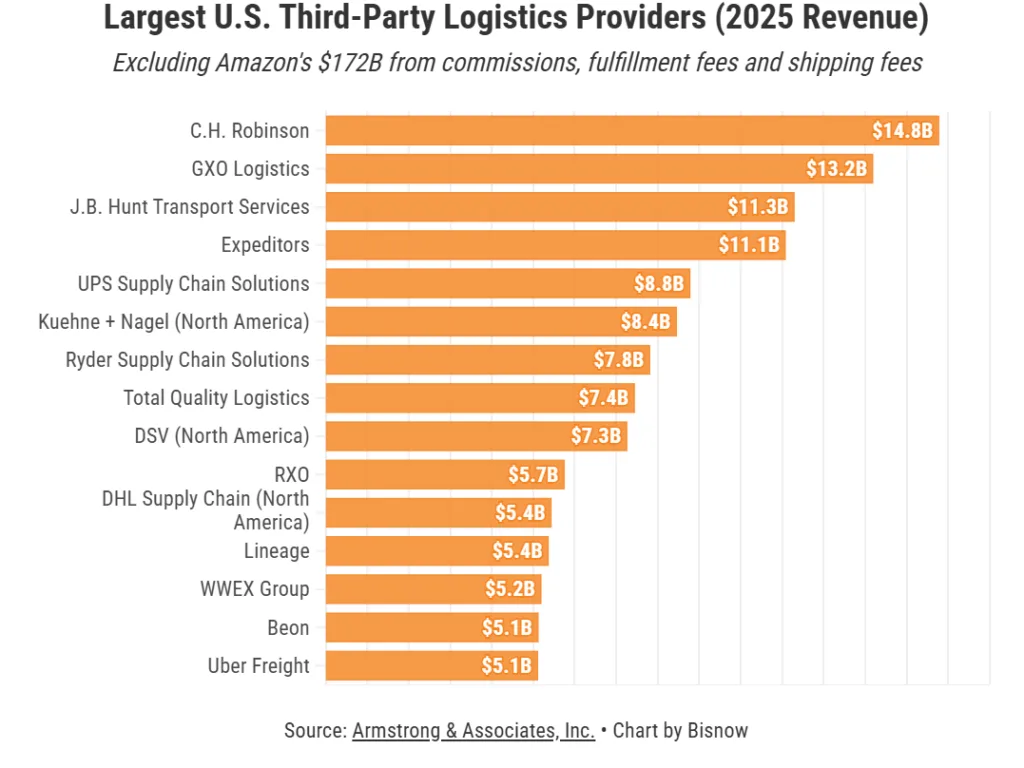
Amazon has spent years building one of the world’s largest supply chain operations to support its e-commerce business. According to consulting firm Armstrong & Associates, Amazon generated roughly $172B in 2025 revenue tied to marketplace commissions, fulfillment, and shipping-related services, dwarfing the broader US 3PL industry.
Now, the company is commercializing that infrastructure. ASCS allows businesses to purchase logistics services individually or as a bundled platform covering freight forwarding, warehousing, fulfillment, and last-mile delivery. The offering includes access to Amazon’s fleet of more than 80,000 truck trailers, more than 100 aircraft, and thousands of third-party delivery vans.
Supply chain investor Benjamin Gordon, founder of Cambridge Capital, described the strategy as a familiar Amazon playbook: build infrastructure internally, scale it, then monetize excess capacity by opening the network to outside customers.
The Details on Industrial Leasing Exposure
The launch carries meaningful implications for industrial real estate because 3PL firms have emerged as one of the sector’s largest leasing engines. According to JLL’s Q1 2026 industrial report, 3PL companies leased more than 30M SF during the quarter, up 65% year-over-year and representing roughly 20% of all US industrial leasing activity.
JLL also reported that industrial tenants signed 145M SF in leases during Q1 while absorbing 51M SF more than they vacated. Large-box leasing activity above 500K SF climbed 81% year-over-year, driven in part by logistics operators expanding amid elevated inventory levels and shifting supply chains. That momentum has remained resilient into 2026, particularly as logistics operators continue driving warehouse demand despite broader uncertainty around tariffs and supply chain costs.
Amazon’s new offering could alter that equation over time. Instead of leasing their own warehouse footprints, some businesses may increasingly rely on Amazon’s existing network capacity. Analysts say that shift would not immediately reverse demand because industrial leases typically run for multiple years, but it could gradually reduce incremental leasing activity from 3PL providers.
Colorado State University supply chain professor Zac Rogers said the pressure will likely fall hardest on smaller operators that lack scale advantages. Consolidation across the 3PL industry could follow if Amazon aggressively expands the platform.
A Growing Battle for Logistics Market Share
Despite the competitive threat, analysts do not expect Amazon to immediately dominate the entire 3PL sector. Many large retailers remain cautious about handing sensitive consumer and logistics data to a direct competitor.
That dynamic may protect larger incumbents such as C.H. Robinson and other enterprise-focused logistics providers, particularly for multinational accounts with highly customized supply chains. According to Armstrong & Associates, the nine largest non-Amazon US 3PL providers generated roughly $90B in combined 2025 revenue, led by C.H. Robinson’s $15B business.
Still, Amazon has already secured several recognizable brands for the ASCS rollout, including Procter & Gamble, 3M, Lands’ End, and American Eagle Outfitters. Analysts say those early partnerships validate market demand for a more integrated logistics platform.
The offering may prove especially attractive for small and midsized businesses seeking scalable fulfillment and transportation without investing in dedicated warehouse networks.
Why It Matters
The industrial sector has leaned heavily on 3PL expansion to offset slowing activity from retailers, manufacturers, and importers navigating economic uncertainty. Markets such as Savannah and California’s Inland Empire have already seen 3PL tenants emerge as critical warehouse occupiers over the past two years.
If Amazon successfully captures a larger share of outsourced logistics demand, industrial landlords could eventually face slower absorption growth from independent 3PL operators. The impact may be most pronounced in bulk distribution markets where logistics providers dominate leasing pipelines.
At the same time, Amazon’s strategy could improve efficiency across the broader supply chain by utilizing excess transportation and warehouse capacity more effectively during slower shipping periods.
What’s Next
The pace of disruption will largely depend on pricing. Analysts say Amazon has historically shown a willingness to sacrifice short-term profits to gain market share, though logistics remains a lower-margin business than many of its other operations.
For now, the launch signals a new phase in the evolution of industrial real estate demand: warehouse users may no longer need to lease space directly if logistics giants can provide nationwide fulfillment as a service. Landlords, brokers, and 3PL operators will be watching closely to see whether Amazon becomes simply another competitor—or a structural shift in how warehouse demand is generated.