







- Amazon Supply Chain Services is prompting occupiers to rethink warehouse and logistics strategies.
- The service could concentrate demand in top logistics hubs and challenge small 3PL providers.
- Developers and investors may see growing demand for highly functional, modern industrial space.
Efficiency, Not Expansion, Drives the Shift
Amazon’s rollout of its new Supply Chain Services platform is sending ripple effects through the industrial real estate sector, per Commercial Property Executive. The service, which lets companies access Amazon’s extensive freight, warehousing, and delivery network, comes at a time when maximizing efficiency is now the priority for logistics occupiers, not rapid portfolio growth.
Industry experts note this shift could change how warehouse users evaluate portfolios, pushing them to utilize shared infrastructure and rethink the scale and location of their dedicated facilities. Sourcing and distribution strategies are shifting in response to persistent economic uncertainty and an evolving third-party logistics (3PL) landscape.
Get Smarter about what matters in CRE
Stay ahead of trends in commercial real estate with CRE Daily – the free newsletter delivering everything you need to start your day in just 5-minutes
The Amazon Effect Intensifies
Amazon’s entry into supply chain outsourcing opens its US-leading logistics infrastructure to a broader set of occupiers. Michelle Comerford of Biggins Lacy Shapiro & Co. told CPE that access to Amazon’s network could enable occupiers to shrink their warehouse footprints, as reliance on dedicated space may decrease. However, if adoption scales, Amazon itself may seek to add warehouse capacity.
Demand for third-party logistics is already fueling industrial leasing, with more companies outsourcing distribution functions amid higher rates and inflation. David Greek of Greek Development believes Amazon’s scale and capital will pressure smaller 3PL providers, potentially accelerating consolidation. Larger, well-funded competitors are best positioned to weather the challenge as the market restructures around national networks.
Consolidating Power in Prime Logistics Hubs
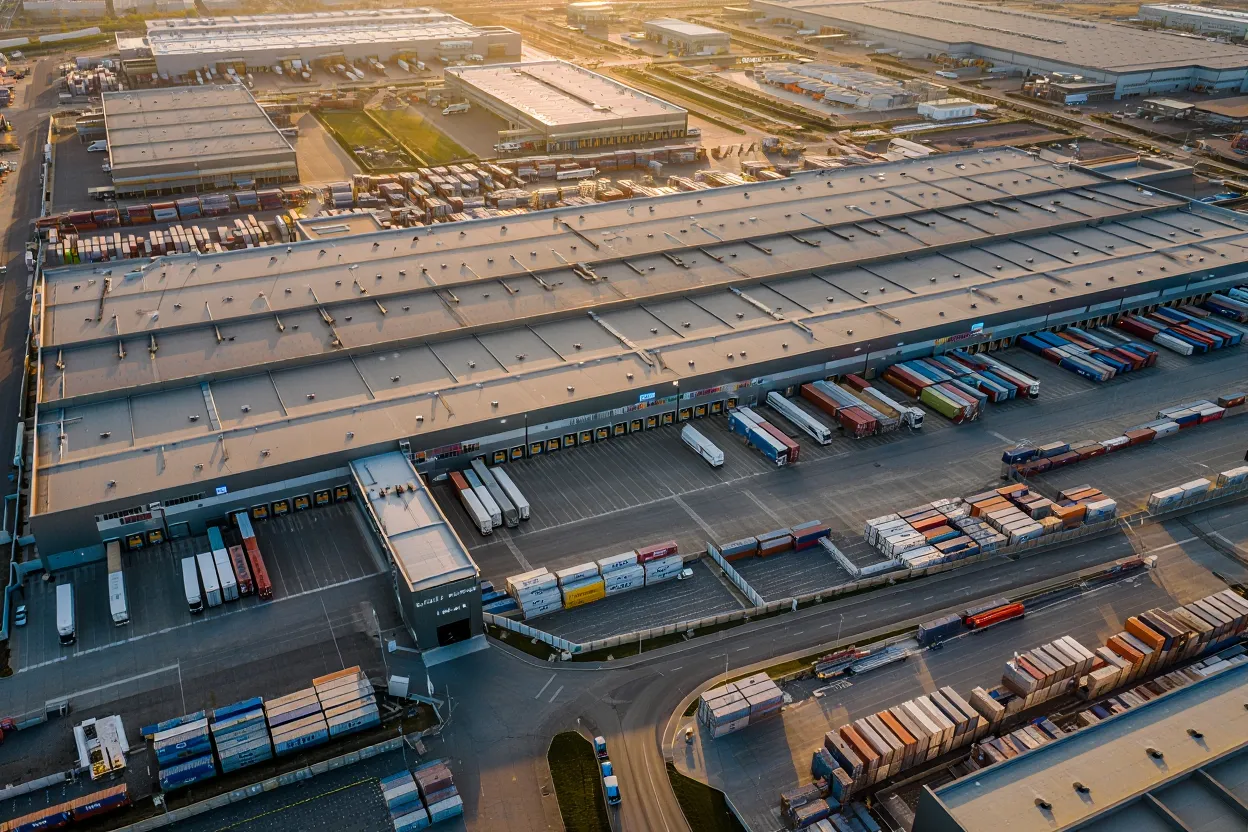
The strategic launch coincides with a broader “flight-to-quality” trend. Top logistics markets, including Northern New Jersey and Chicagoland, stand to benefit from shifting demand. Occupiers are prioritizing efficient, modern facilities near consumers and transportation infrastructure. Facilities with generous clear heights are increasingly in demand. Ample loading, parking, and advanced utilities also command a premium, according to experts from Newmark and Darwin Realty cited by Commercial Property Executive.
This mirrors a sector-wide approach prioritizing asset function and location over raw expansion. The last market cycle’s warehouse land rush is giving way to optimization of footprint and inventory—trends that supply chain giants like Amazon are built to exploit.
Why It Matters
Amazon’s entrance pushes the industrial market’s efficiency imperative to new heights. CBRE’s 2026 industrial outlook found that 3PLs accounted for 41% of all new leasing activity over the past year, and this share is likely to grow as occupiers weigh outsourcing against costly internal expansion.
Experts interviewed by Commercial Property Executive do not expect Amazon to reduce overall industrial demand. Instead, they believe the company will push occupiers toward best-in-market assets. Gonzalo Vivanco of First Capital says functional, well-located facilities will become even more valuable. That is especially true for properties in major distribution corridors. Meanwhile, obsolete or poorly located assets risk falling behind.
Occupiers seeking to “do more with less” are increasingly attracted to platforms allowing them to tap warehousing, fulfillment, and transportation without significant capital outlays. Amazon’s investment in logistics systems and real-time inventory software creates an off-the-shelf solution for supply chain optimization. This could reverberate throughout the sector, from site selection and design specs to the types of leases and partnerships landlords pursue. Smaller 3PLs face pressure to scale or exit, and developers may double down on top-tier building specs to capture shifting demand.
What’s Next
Industrial fundamentals likely remain strong, with demand focusing even more on infill and last-mile facilities in strategically situated markets. If Amazon’s Supply Chain Services sees wider adoption, competition for best-in-class industrial assets will intensify. Consolidation among 3PL providers could also accelerate. Developers and investors will continue refining their product offerings to meet the standards of logistics heavyweights. Smaller providers may need to adapt their strategies. Some could also pursue mergers and acquisitions to remain competitive. The sector’s big question: who can make the best use of Amazon’s new model—occupiers, 3PLs, or landlords?