






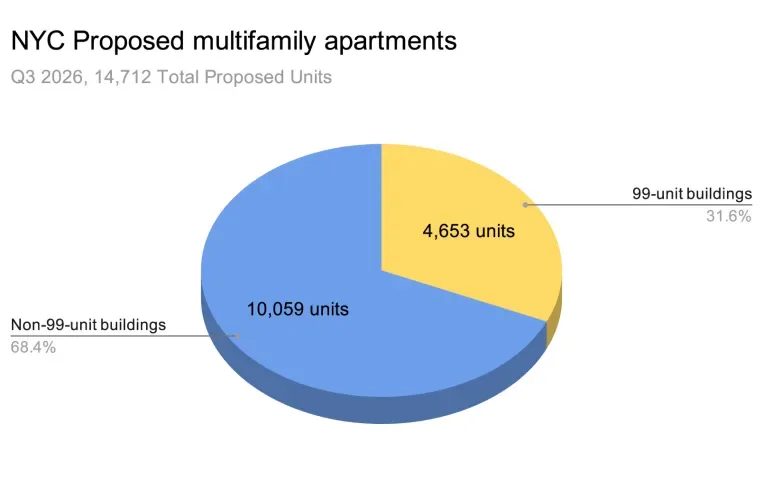
- Developers filed 47 proposals for 99-unit buildings in Q3, covering 4,653 of the 14,712 proposed apartments (31.6%), according to the Real Estate Board of New York.
- REBNY counted 172 such proposals from July 2024 through September 2026, against just 13 exact-99 filings across 2008 to 2023, and links the jump to 485-x labor costs.
- Brooklyn, the Bronx and Queens account for nearly all of the Q3 filings, raising the question of whether the tax program steers housing into smaller buildings than the city needs.
New York developers keep filing 99-unit buildings, and REBNY blames the 485-x tax incentive.
In Q3, 47 such projects hit the Department of Buildings docket. Together they hold 4,653 apartments, about 32% of the 14,712 multifamily units proposed that quarter.
Get Smarter about what matters in CRE
Stay ahead of trends in commercial real estate with CRE Daily – the free newsletter delivering everything you need to start your day in just 5-minutes
Why 99?
485-x took over from 421-a and was meant to spur affordable housing. Developers dislike its prevailing-wage rules, which kick in at 100 units.
Stopping one apartment short sidesteps that cost. That’s the pattern REBNY sees in the filings.
By the Numbers
REBNY tallied 172 proposals for 99-unit buildings between July 2024 and September 2026. Of those, 49 appeared in housing department 485-x registrations and 123 in Buildings Department filings.
The earlier baseline is tiny. Only 13 exact-99 buildings were filed from 2008 through 2023.
Outer Boroughs Lead
Brooklyn logged 18 of the Q3 plans, the Bronx 16 and Queens 12. Manhattan had one, and Staten Island had none.
Zoom Out
The broader pipeline has been shrinking. REBNY data we covered earlier showed multifamily construction filings sliding 52% from Q1 to Q2, to 172 projects and 8,064 apartments, as 421-a expired and 485-x got off to a slow start.
Why It Matters
Basha Gerhards, REBNY’s executive vice president of public policy, said in a statement that New York can’t solve its housing shortage with small buildings. She wants policy that favors more homes near transit and contributions from every neighborhood.
The city puts the need at 700,000 homes over a decade. Our look at the city’s housing plan found its district targets are nonbinding and that developers say added affordability and labor costs can sink deals.
What’s Next
If filings keep bunching at 99, REBNY’s case that the program shrinks buildings will be hard to dismiss. Any change to the 100-unit trigger would show up first in these filings.