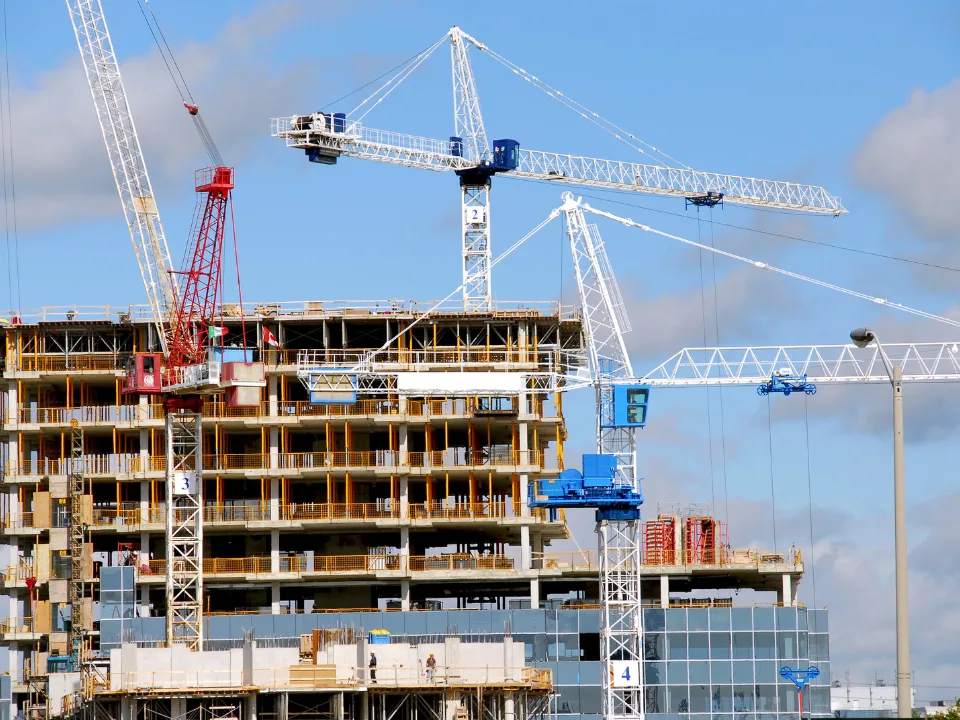







- Yardi Matrix counts about 1.2 million apartments under construction for delivery through 2030, and roughly 85% of them are due by the end of 2027.
- Greystar leads with more than 15,500 units, followed by Mill Creek and NRP Group, yet no operator holds more than 2% and small builders account for 63% of supply.
- Texas has more than 173,000 units underway and New York City leads all markets at 54,000, while high costs and capital access decide who keeps building.
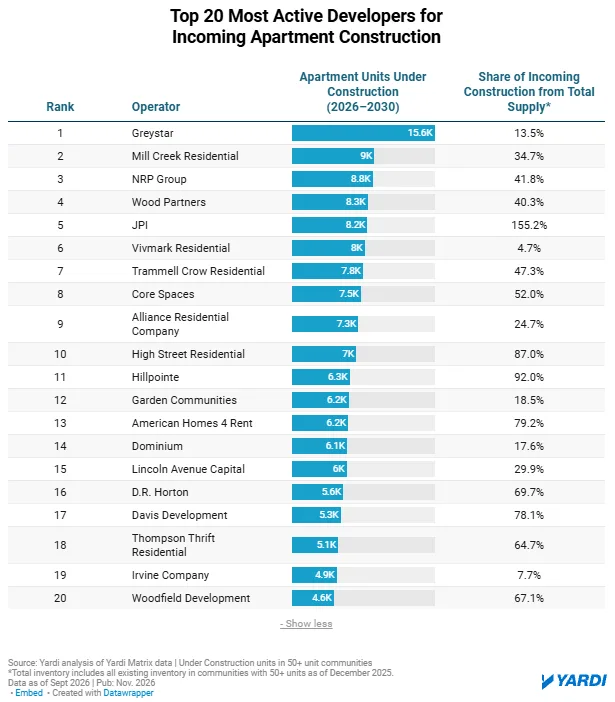
Greystar is building more apartments than any other developer in the U.S., with a pipeline north of 15,500 units through 2030, a Yardi Matrix analysis finds.
The analysis finds 1.2 million apartments being built nationwide, and about 85% of them are scheduled to open by the end of 2027.
Get Smarter about what matters in CRE
Stay ahead of trends in commercial real estate with CRE Daily – the free newsletter delivering everything you need to start your day in just 5-minutes
Greystar Leads, Nobody Dominates
Over 8,000 of Greystar’s units are in the South, including 740-plus in San Diego. It grew by almost 58,000 units between 2015 and 2025, more than half its portfolio.
Still, Greystar’s slice is under 2%. Roughly 3,350 developers are active, and small builders with under 1,000 units apiece are behind 63% of what arrives by 2030.
The Rest of the Top 10
Mill Creek Residential ranks second with 9,000-plus units, about a third of what it already owns. NRP Group has 8,800-plus, and Wood Partners has close to 8,300, which is 40% of Wood’s portfolio.
JPI, based in Dallas, is adding almost 8,250 units to a base of about 5,320, and 12 of its 19 sites sit in the Dallas-Fort Worth area. Vivmark Residential, created by August’s Equity Residential and AvalonBay merger, has roughly 7,960 units coming, with Durham, N.C., its largest city at 930.
Where the Cranes Are
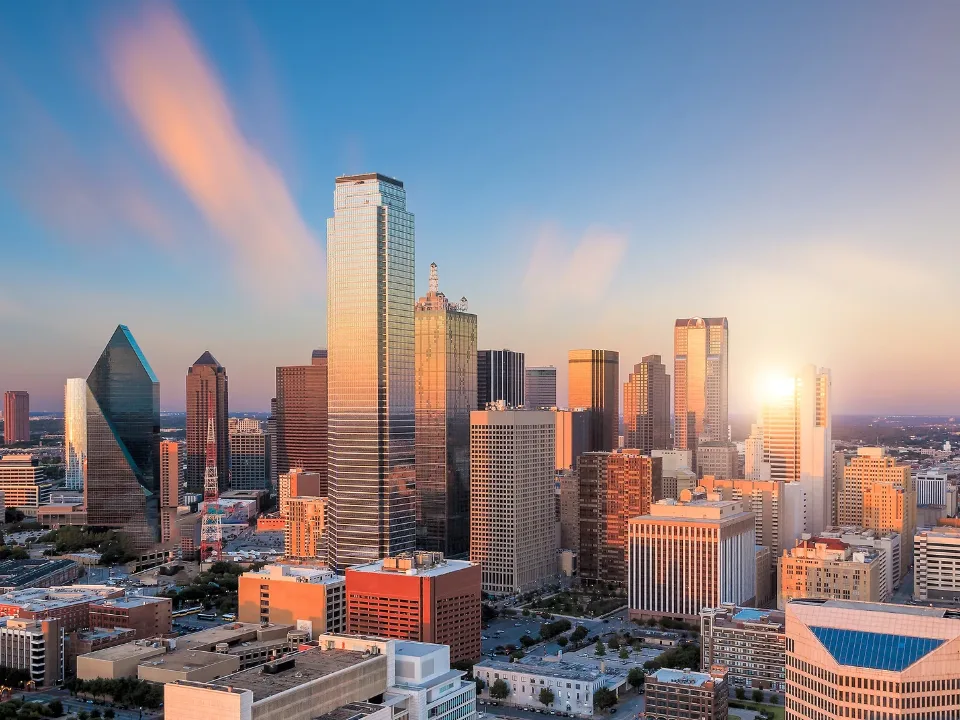
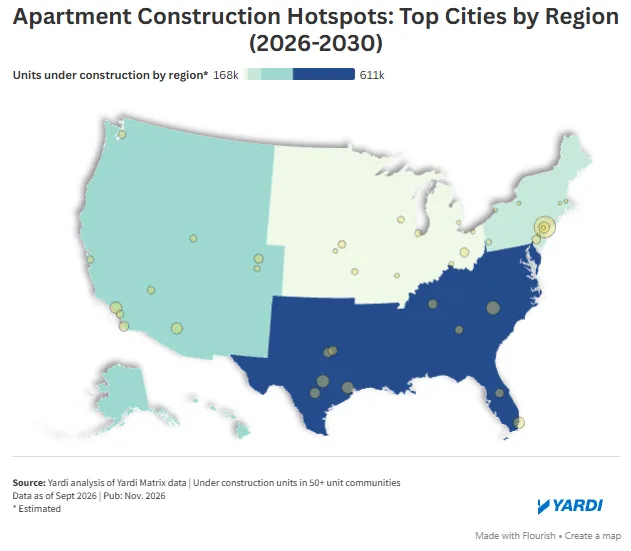
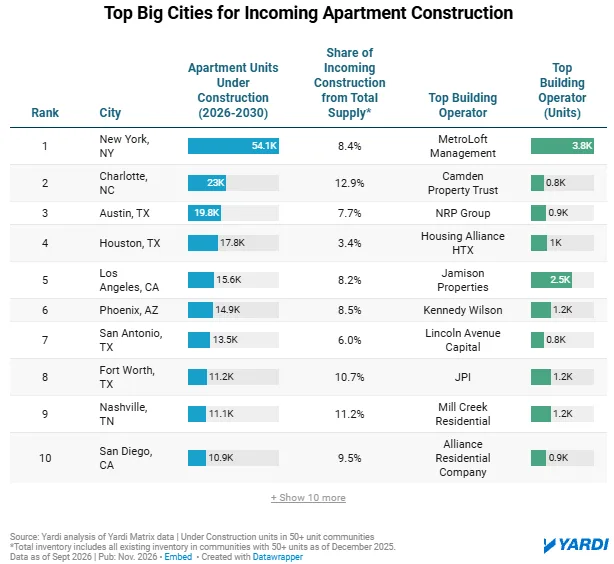
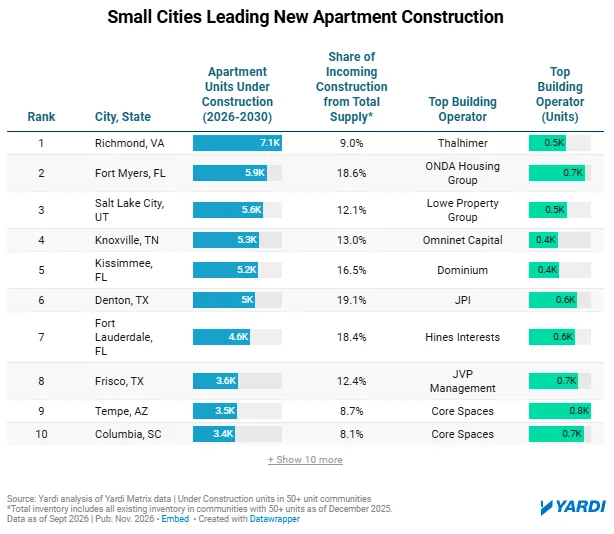
The South leads the nation. Texas has 173,000-plus units under way, the most of any state. New York City is the busiest single market at 54,000, which Yardi describes as a modest first installment against the city’s needs.
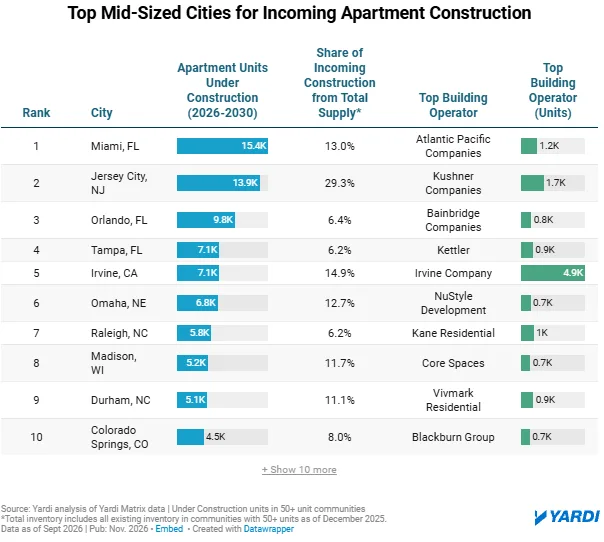
Charlotte is second at roughly 23,000 and Austin third at nearly 20,000. Houston is near 18,000, with Los Angeles and Phoenix at about 15,000 apiece, and Miami tops 15,000.
Why Building Has Slowed
Yardi says the 3.2 million units finished from 2020 through 2025 marked the peak. Since then, builders face elevated costs, insurance renewals that rewrite budgets mid-deal and lenders pricing in higher rates for longer.
Yardi’s Doug Ressler said demand is strengthening and the real question is which operators can actually get projects built. NMHC’s Caitlin Sugrue Walter told Yardi that capital access separates developers who keep growing from those who stall.
Zoom Out
The slowdown shows up in the forecasts. We reported that Yardi Matrix’s completions forecast calls for 513,883 deliveries in 2026, down 22% from 2025, and a bottom of 450,964 units in 2027.
Why It Matters
Yardi cites an estimate from the National Multifamily Housing Council and the National Apartment Association that the country will need 4.3 million additional apartments by 2035. Walter warned that depressed starts could create a renewed shortage in fast-growing markets late in the decade.
Texas shows both sides. We covered how Dallas-Fort Worth demand is rising as Colliers projects absorption of 21,514 units by Q3 2027, while 42,212 units were still under construction.
What’s Next
Since most deliveries land before 2028, Yardi sees a shorter, more concentrated end to this construction wave.