






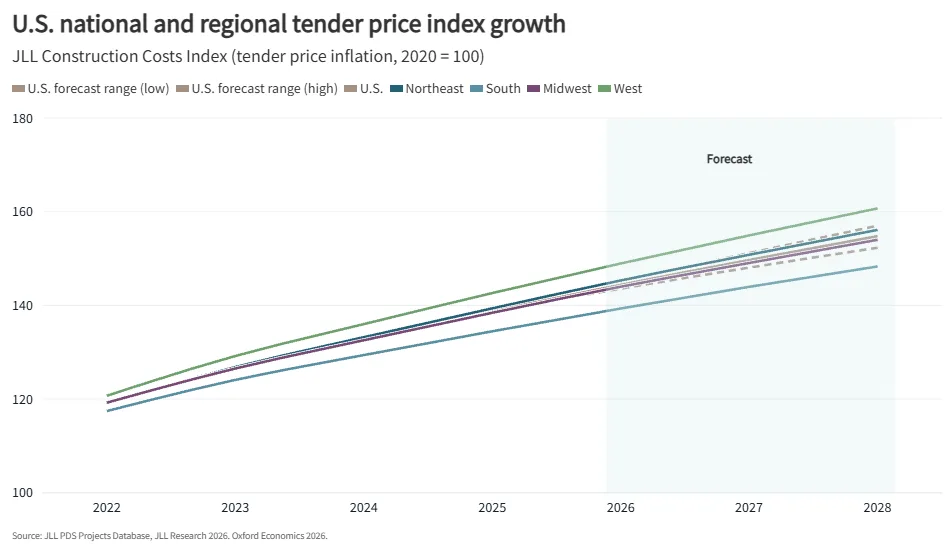
- JLL forecasts U.S. tender prices rising between 3.1% and 4.2% in 2027, slower than recent years but above the 2% to 3% annual norm that held before 2020.
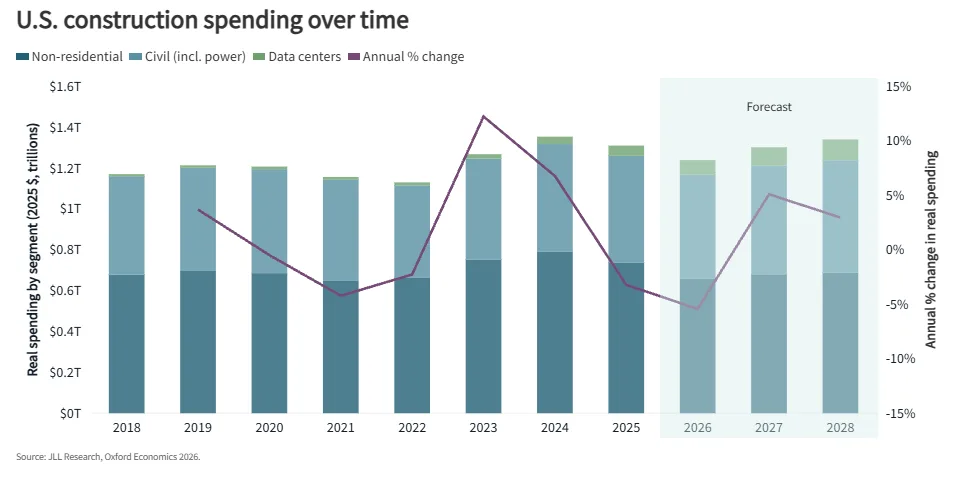
- Real construction spending falls for a second straight year in 2026, with data centers the only growing segment, yet concentrated demand for the same trades keeps bids climbing.
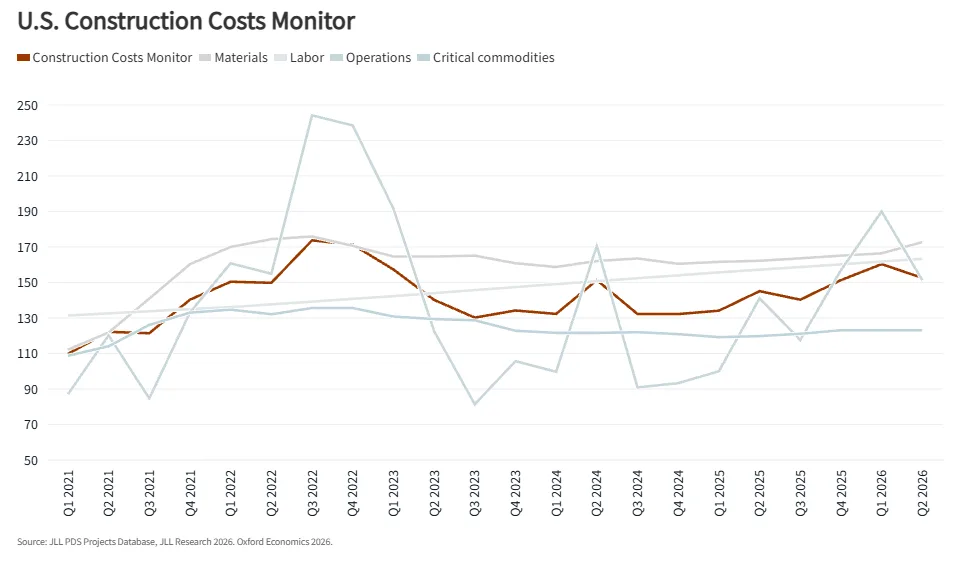
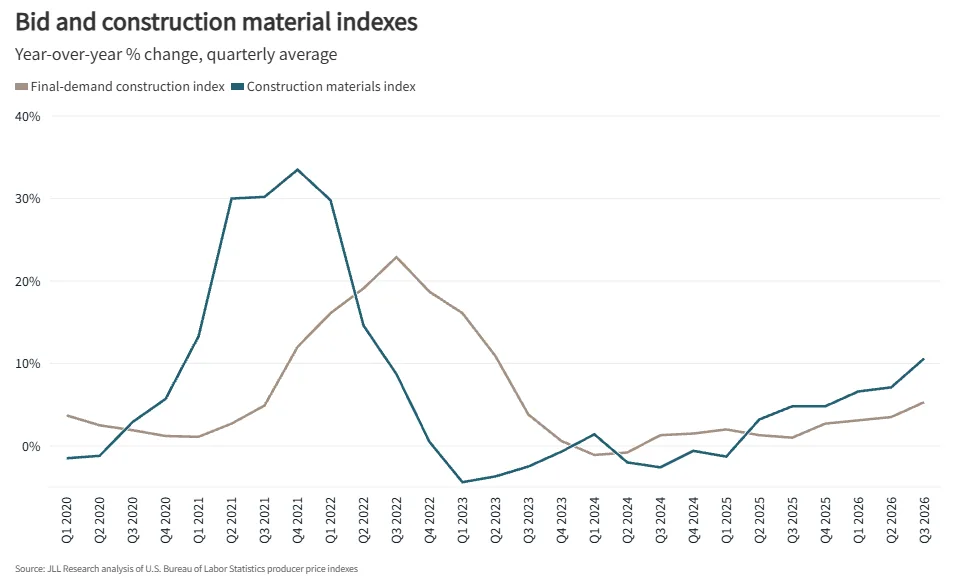
- Material costs have outrun bid prices since mid-2025, so contractors with big data center backlogs will move first to rebuild margins, shifting risk onto owners.
Building will stay expensive in 2027, though costs should climb more slowly, according to JLL’s construction outlook.
The firm forecasts U.S. tender prices rising 3.1% to 4.2%. That still tops the 2% to 3% annual pace seen worldwide before 2020.
Get Smarter about what matters in CRE
Stay ahead of trends in commercial real estate with CRE Daily – the free newsletter delivering everything you need to start your day in just 5-minutes
Less Spending, Higher Bids
Inflation-adjusted construction outlays are headed for a second annual decline in 2026, with data centers the lone segment still expanding.
A partial rebound is expected through 2028, though outlays stay below the 2024 high. Shrinking demand usually frees up contractors. Here it doesn’t, since what’s left is packed into a handful of sectors and metros chasing identical crews.
The Trade Squeeze
Data center and power builds rely on electrical and mechanical trades, pipefitters among them. In JLL’s 2026 global cost index, MEP work eating 50% to 58% of a data center budget, against 28% to 32% for ordinary commercial buildings.
In markets where such projects pile up, nearby builders of any type pay more for the same labor.
Materials Outrun Bids
Since mid-2025, input costs have climbed faster than what contractors charge. Tariffs are propping up metal and equipment costs, and Middle East-linked energy prices lift imported materials.
JLL said tender prices tend to trail inputs by roughly nine months, so late-2026 increases will land in 2027 tenders. Firms carrying big data center order books will reprice first.
The South Pulls Ahead
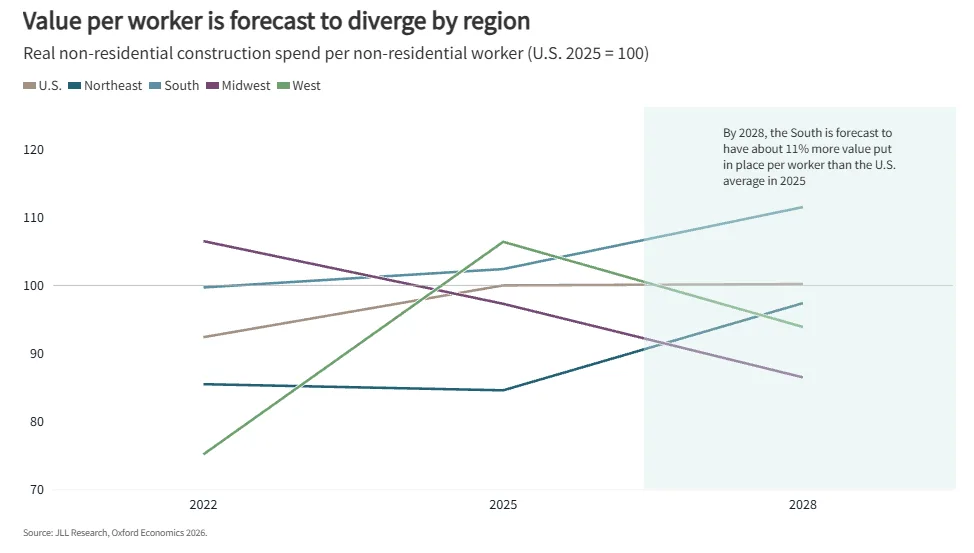
JLL expects output per worker in the South to reach roughly 11% over the 2025 national average by 2028. The Midwest and West slide, and the Northeast stays under the line.
The South also posts the lowest price forecast range of the four regions, where strain appears more as longer schedules and scarce trades.
Zoom Out
Builders already feel this at the housing end. We covered how home building costs are climbing under tariffs, labor and rates.
That pressure shows in sentiment too, with developer confidence slipping as the NAHB multifamily index hit 41.
Why It Matters
JLL says owners will pay one way or another: bigger bids, larger contingencies, or contracts that push price and lead-time risk back on them.
Its advice: refresh estimates at each milestone instead of trusting a single escalation assumption set on day one.
What’s Next
JLL is watching three things: the data center pipeline as local opposition grows, trade policy, now that USMCA is on annual reviews after a July 2026 decision not to extend it, and whether projects pencil.
Deferred projects could come back quickly if financing eases, which would add pressure in busy markets.