







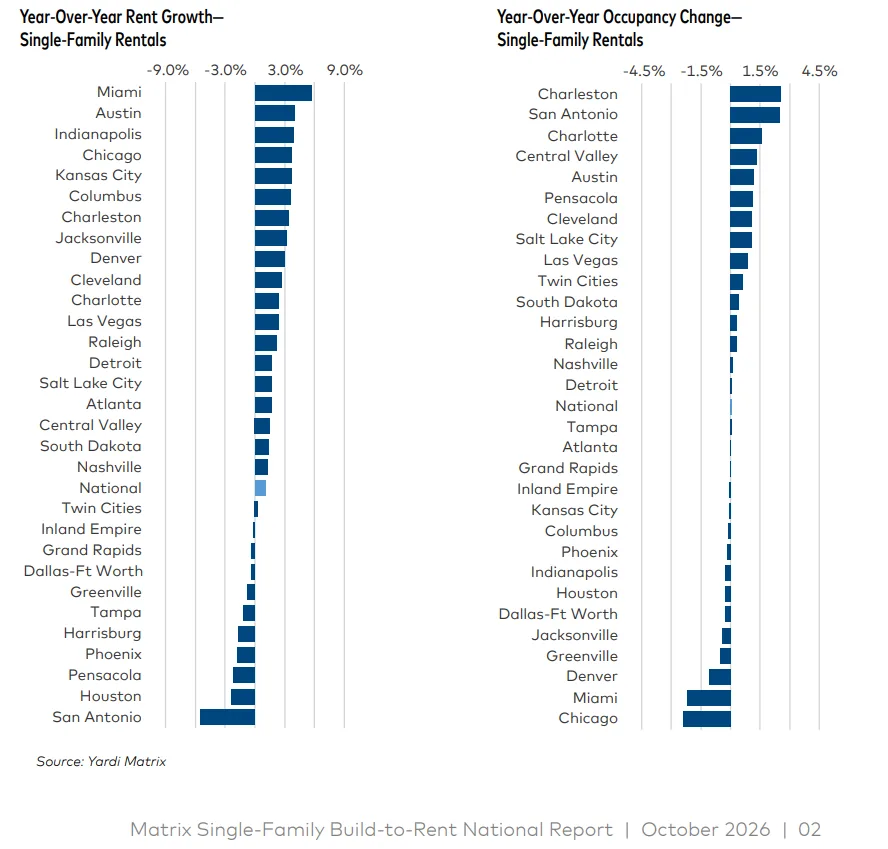
- Advertised rents for single-family build-to-rent homes fell $4 to $2,247 in October, still up 1.1% from a year earlier, while national occupancy rose 10 basis points year over year to 94.9%.
- Renter-by-necessity communities outperform: 96.9% occupancy versus 94.6% at Lifestyle properties, and 2.6% annual rent growth versus 0.8%, with Las Vegas, the Twin Cities and Austin near 99% occupied.
- Performance is uneven across the Sun Belt, with Miami rents up 5.6% and Austin 3.9% year over year, while San Antonio is down 5.5% and Houston down 2.4%.
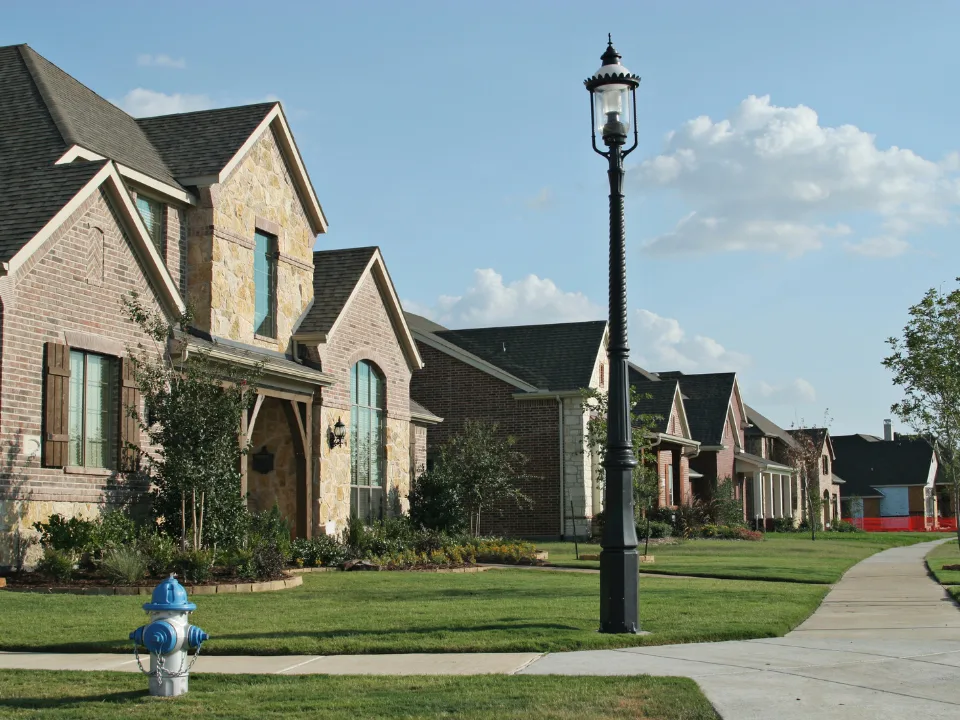
Single-family rental occupancy held steady at 94.9% in October even as build-to-rent asking rents dipped, Yardi Matrix’s October single-family rental report shows.
Advertised rents for build-to-rent homes fell $4 to $2,247, a 1.1% gain from a year earlier. Occupancy rose 10 basis points year over year.
Get Smarter about what matters in CRE
Stay ahead of trends in commercial real estate with CRE Daily – the free newsletter delivering everything you need to start your day in just 5-minutes
Soft Rents, Solid Demand
Yardi reads the combination as stable demand with seasonal pricing softness. High occupancy gives rents a supportive base, though results differ widely by market and product type.
The data cover build-to-rent communities of 50 homes or more.
Where Occupancy Is Tightest
The Central Valley led all markets at 98.1% occupied. Grand Rapids followed at 96.9%, then Indianapolis at 96.7% and the Inland Empire at 96.6%.
In the renter-by-necessity (RBN) segment, which skews to more affordable rentals, Las Vegas reached 98.9%, the Twin Cities 98.6% and Austin 98.5%.
Affordable Tier Pulls Ahead
RBN communities were 96.9% occupied nationally, versus 94.6% for Lifestyle properties. They also grew rents faster, 2.6% year over year versus 0.8%.
A Split Sun Belt
Miami posted the strongest annual rent growth at 5.6%, with Austin next at 3.9%. At the other end, San Antonio fell 5.5% and Houston 2.4%, and both continue to face pricing pressure.
Why It Matters
The mixed picture matches other data points. Cotality’s index showed single-family rents up 2.0% year over year in August, and our report noted Chicago led at 4.9%, per the Cotality index.
Supply pressure is also local. Build-to-rent chatter concentrates in smaller suburbs, as GatherGov data showed, with Texas, Georgia and Florida leading the mentions.
What’s Next
Yardi describes rent performance as uneven across markets and segments. Watch whether occupancy in the weaker Texas markets keeps holding up as asking rents soften.