




- A 75-SF home office takes 7.6% to 11% of an average apartment across 20 cities, costing over $540 a month in New York and $370 in Boston.
- Downsizing from a three-bedroom to a two-bedroom and using coworking plus a 5×5 storage unit saves roughly $880 to $1,340 a month in New York, Philadelphia, San Francisco and Seattle.
- In lower-rent markets such as Houston, Dallas, Austin and Charlotte, downsizing saves less than coworking and storage cost, so keeping the apartment and renting storage works better.
A home office takes up more space and money than renters expect, according to a StorageCafe analysis of Hubble’s home office study of the 20 largest U.S. cities.
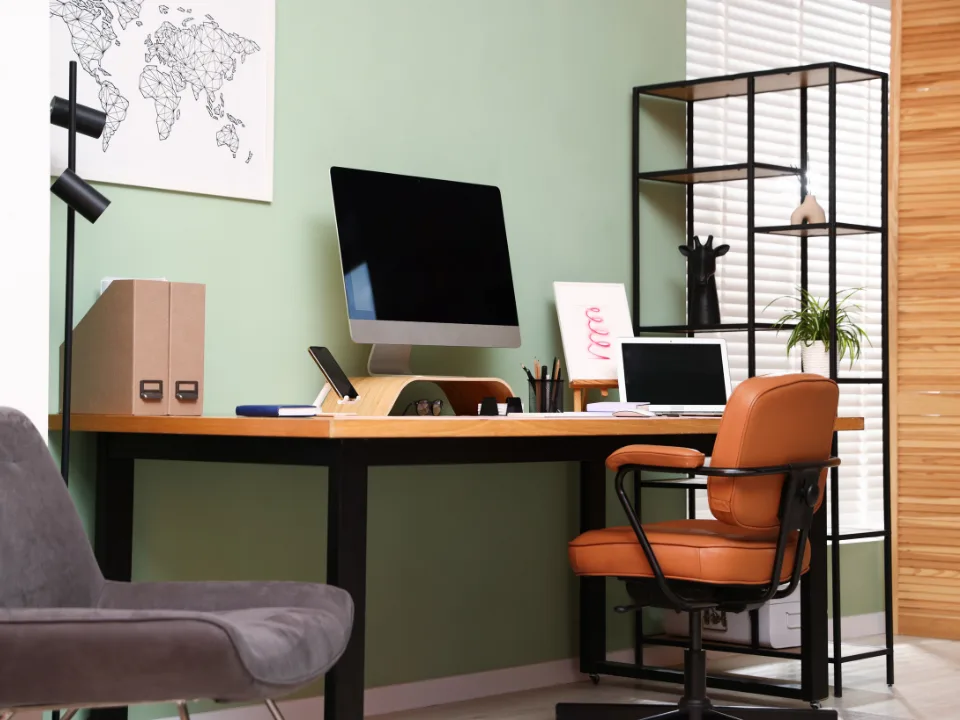
In New York, a 75-square-foot office costs over $540 a month at an average of about $7.30 per square foot. With a workspace that size, renters can lose more than 10% of their apartment, and the share climbs for anyone who dedicates a full room.
Get Smarter about what matters in CRE
Stay ahead of trends in commercial real estate with CRE Daily – the free newsletter delivering everything you need to start your day in just 5-minutes
What a Home Office Costs
Rent per square foot turns the desk into a budget line. The same 75 SF costs about $410 a month in San Francisco, $370 in Boston, $280 in San Jose and $260 in Los Angeles.
Those figures climb for a full-room office of 100 SF or more. Where apartments are small and rents are high, even a modest office takes a big share of living space and rent.
Where the Squeeze Is Tightest
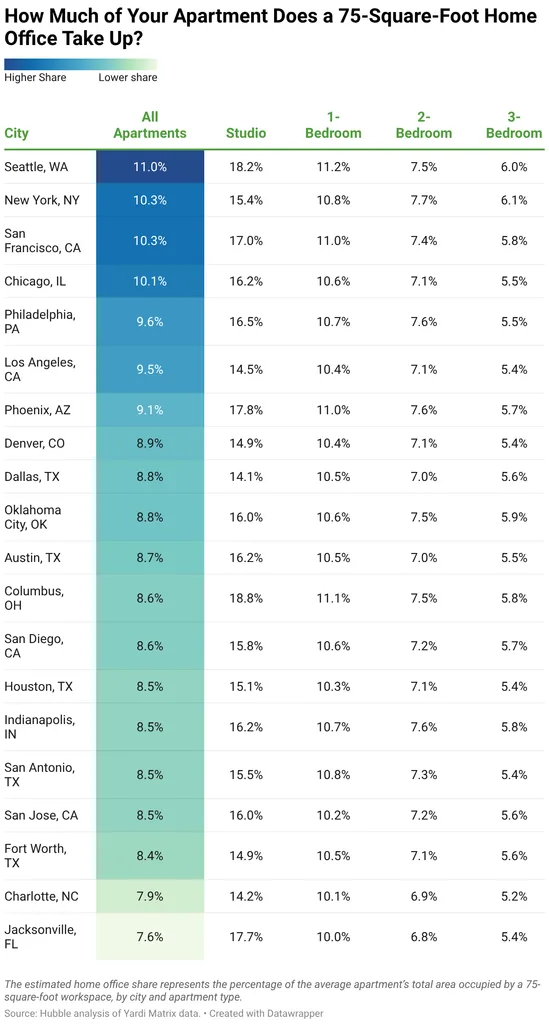
Coastal hubs with compact apartments make a home workspace hardest to afford. A 75-SF office takes 11% of the average apartment in Seattle and 10.3% in both New York and San Francisco. Those gateway cities are also the most rent-pressured, so a bigger apartment costs more per square foot.
At the other end, Jacksonville has the largest average apartments of the 20 cities, and the same office takes a more manageable 7.6%. Larger homes across the South help, with Charlotte, Fort Worth and Houston also scoring well. At 100 SF, the office claims 10% to 15% of the average apartment in every city.
Studio Dwellers Feel It Most
Seattle has the smallest average apartment overall, but the smallest studios are in Columbus at 400 SF on average, versus 412 in Seattle.
For a remote worker in a Columbus studio, a dedicated desk leaves little room for anything else. That is the case where moving belongings to storage makes the most sense.
Coworking Plus a 5×5 Unit
A 5-by-5-foot unit measures 25 SF, the same footprint as the small desk in the analysis. Many remote workers are ditching pandemic-era home office setups because they feel isolated or want a firmer line between work and home, StorageCafe says. That choice can carry a financial upside: downsize, rent a coworking desk and use storage for the belongings that no longer fit.
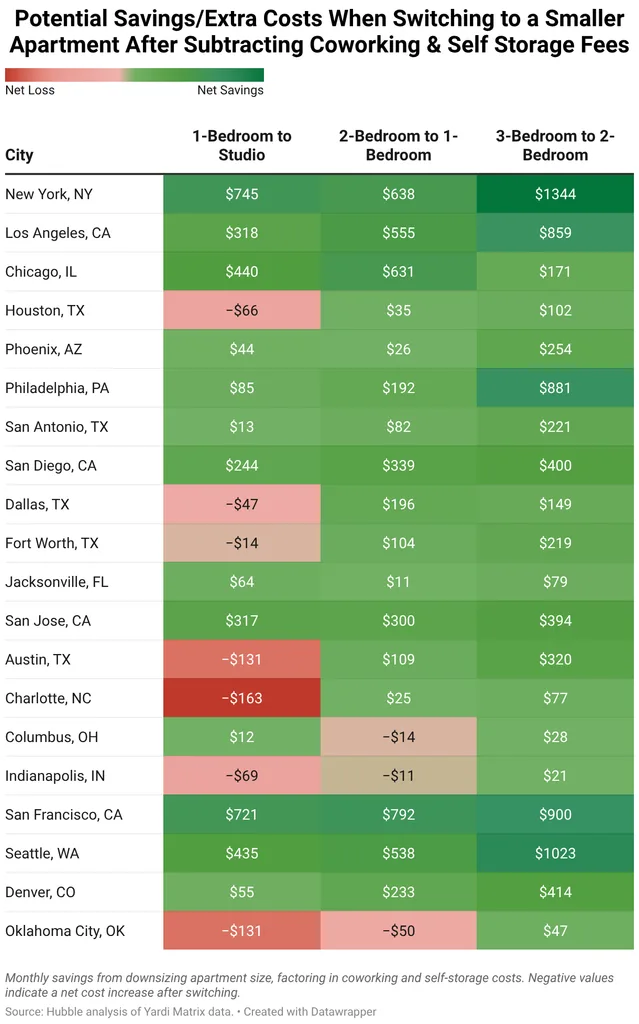
Los Angeles shows how it plays out. Moving from a three-bedroom to a two-bedroom cuts rent by an average of $1,210 a month. Coworking plus a 5×5 unit averages $350 combined, for a net saving of $859.
In New York, Philadelphia, San Francisco and Seattle, the same move saves roughly $880 to $1,340 a month after coworking and storage fees. New York leads at $1,344.
Where the Math Fails
Lower-rent markets flip the result, because a smaller apartment saves less than coworking and storage cost. A one-bedroom to studio move adds to monthly spending in Houston (-$66), Dallas (-$47), Fort Worth (-$14), Austin (-$131), Oklahoma City (-$131), Charlotte (-$163) and Indianapolis (-$69).
Two-bedroom to one-bedroom moves also come out negative in Columbus (-$14), Indianapolis (-$11) and Oklahoma City (-$50). There, StorageCafe suggests keeping the apartment and using storage only to free up room for a desk.
What to Move Into Storage
Good candidates include seasonal items, extra furniture, archived paperwork, spare office equipment such as old monitors and printers, and boxes unopened since the last move.
A 5×5 unit works for a handful of boxes and small furniture, while a larger unit suits the contents of a spare room. StorageCafe advises picking the smallest size that fits, since every extra square foot adds to the bill.
Why It Matters
The analysis shows how hybrid work still shapes demand across property types: flex office demand and storage both benefit when residents rethink how much space they pay for at home.
StorageCafe is a storage-industry publication, so the framing favors storage. The cost figures still show how rent per square foot drives choices in high-rent metros, a dynamic self-storage operators watch closely.
What’s Next
Watch whether high-rent metros see more renters trading bedrooms for coworking and storage, and whether lower-rent markets stick with keeping the apartment and renting a small unit.
Research linking a boundary between work and home to remote workers’ mental health suggests demand for separate workspaces will persist.