





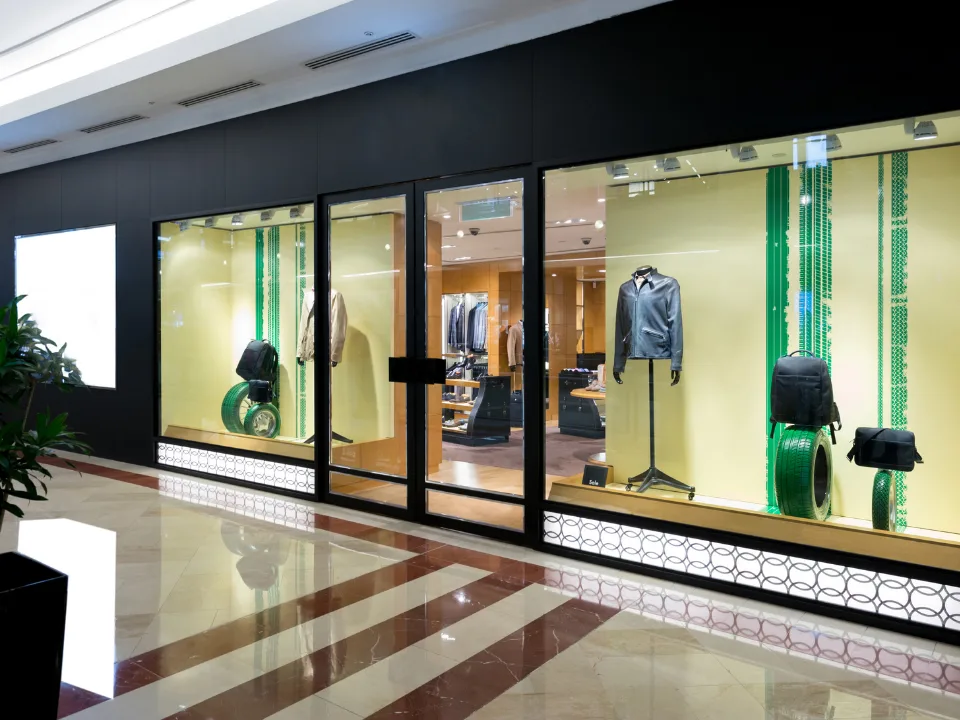
- Citi says U.S. luxury credit card spending fell 6% year over year in September, after 4% declines in both July and August, challenging a source of strength for luxury retail.
- Higher earners drive demand: Moody’s Analytics found households earning about $250,000 or more account for 49.7% of consumer spending, up from roughly 36% three decades earlier.
- The data does not show falling rents or occupancy yet, but landlords with luxury tenants have reason to watch tenant performance as consumer confidence weakens.
U.S. credit card luxury spending fell 6% year over year in September, following 4% declines in both July and August, according to Citi data reported by Reuters and GlobeSt.
The third straight monthly drop raises a warning for investors in high-end stores and shopping centers whose performance depends on affluent shoppers.
Get Smarter about what matters in CRE
Stay ahead of trends in commercial real estate with CRE Daily – the free newsletter delivering everything you need to start your day in just 5-minutes
A Weakening Source of Growth
Luxury brands had counted on wealthy U.S. shoppers, including a growing group of AI millionaires, to offset weakness in China and the economic fallout of the Iran war. September’s results suggest that demand is giving less support than retailers expected. The deepening decline challenges a source of strength for luxury-focused retail properties earlier this year.
Citi named Tapestry, owner of Coach and Kate Spade, LVMH, whose brands include Louis Vuitton and Tiffany, and Ferragamo as the companies most exposed to U.S. spending.
Not All Luxury Spending Is Alike
The slowdown was uneven. Spending on leather goods and ready-to-wear improved sequentially in September, while watches and luxury jewelry weakened further.
Citi also separated brands serving the wealthiest shoppers from those with a broader base. “Brands with greater exposure to higher-end consumers should remain relatively resilient,” the bank said, citing equity-market wealth effects.
Most soft luxury brands raised prices by low single digits this year, slightly below the low to mid-single-digit increases from watch and jewelry makers.
Strength Earlier This Year
The numbers contrast with momentum reported in March, when shopping centers with luxury brands, open-air layouts and a new generation of shoppers pulled ahead in sales productivity. Landlords in tight markets such as Manhattan retail have also benefited from scarce space.
Three consecutive months of declining luxury spending now raise questions about how durable that momentum will prove.
Affluent Shoppers Carry Outsized Weight
The stakes reach beyond luxury storefronts because higher-income households drive a disproportionate share of purchases. Bank of America economists reported in July that the top 10% of earners spend as much on discretionary items as the bottom 70% combined.
Separately, Moody’s Analytics, using Federal Reserve figures, found households earning about $250,000 or more accounted for 49.7% of all consumer spending, up from roughly 36% three decades earlier.
The measures cover different categories, but both show a small group of households supplying a large share of demand. With consumer spending at 69% of GDP, a broader pullback by affluent households would reach well beyond luxury.
Confidence Adds to the Concern
The decline comes amid growing economic unease. Reuters cited Conference Board and University of Michigan surveys showing rising concern ahead of the Nov. 3 midterm elections, when voters decide control of Congress.
The OECD’s U.S. consumer confidence measure, available through the St. Louis Fed, has trended down since March 2024 despite volatility. In May 2026 it reached its lowest level since January 1960.
Economists say rising Treasury yields and mortgage rates could cool activity further, and the run-up to elections often brings heightened caution among consumers and businesses.
Why It Matters
For landlords, the question is whether a sustained slowdown weakens the retailers that support their properties. The card data does not show that rents, occupancy or leasing demand have fallen, but it gives owners a reason to track tenant performance more closely.
Supply is also tight, with record diesel prices squeezing the retail development pipeline. Morgan Stanley said in September that the downturn leaves brands little room to deliver the long-awaited return to growth after two straight years of contraction.
What’s Next
Earnings season will show how brands read U.S. demand. Morgan Stanley expects luxury groups to flag weaker U.S. demand, starting Oct. 12 when LVMH, a bellwether for the sector, reports third-quarter sales.
Kering reports Oct. 22 and told analysts last week to expect a U.S. slowdown, according to Italian brokerage Equita. For investors, the broader question is whether affluent consumers keep supporting retail demand as confidence weakens.